The Houthis
New Houthi Front Widens Iran-Israel War
India Keeps Supplies Steady Amid War Risks
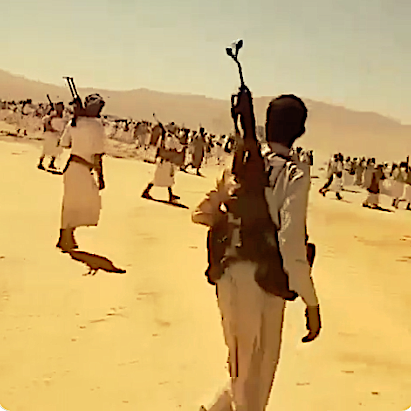
Yemen’s Iran-aligned Houthis have formally entered the ongoing war, launching multiple waves of missiles and drones toward Israeli targets beginning March 28, 2026, and following up with additional strikes within 24 hours, while declaring that their operations will continue in coordination with Iran and aligned actors. Interceptions were reported over Israel, with attacks directed toward sensitive Israeli military areas in the south, including zones oriented toward Eilat. The strike packages have included combinations of ballistic and cruise missiles alongside drones, all of which have been intercepted so far. Houthi military spokesperson Yahya Saree has framed these operations as part of a coordinated response aligned with Iran. The group has also explicitly signalled that commercial shipping linked to the Red Sea will be treated as an operational domain. Early indicators of maritime response are already visible, with shipping firms reassessing risk exposure, insurance premiums rising, and initial rerouting considerations emerging. Based on prior operational patterns, the threshold between threat signalling and active interdiction has historically been crossed rapidly, placing the Bab al-Mandeb chokepoint under immediate operational risk and integrating the Red Sea into the conflict as an active maritime theatre alongside the Strait of Hormuz.
The timing and framing of the Houthis’ entry reflect a phased activation model within a distributed conflict structure. The group has justified its intervention as a response to ongoing strikes on Iran and allied networks, but the delayed formal entry indicates calibrated sequencing designed to expand pressure across multiple fronts without triggering simultaneous escalation. Their geographic positioning along a critical maritime corridor underscores a functional role in economic disruption, linking maritime vulnerability directly to the broader strategic contest.
Hostilities between Iran and Israel have continued with sustained missile and air exchanges over the past 24 hours. Iran has launched additional missile barrages toward Israel, most of which were intercepted, while Israel has carried out strikes targeting Iranian military and industrial infrastructure. Joint operations involving the United States and Israel have degraded segments of Iran’s launch capacity, though Iran has maintained operational continuity through dispersal, redundancy and multiple launch vectors, indicating that tactical degradation has not translated into decisive strategic constraint.
Recent strike activity in southern Iran includes a confirmed strike in the vicinity of Bandar Khamir in Hormozgan province near the Strait of Hormuz on March 29. The strike hit a quay or pier facility, killing at least five individuals and injuring four, and damaging two vessels and a vehicle. This represents a direct maritime-adjacent strike, reinforcing the shift of the conflict into the Hormuz theatre and directly challenging Iran’s control narrative over the strait. Such targeting increases the likelihood that Hormuz could transition from controlled signalling to active confrontation, with systemic implications for global energy flows.
Maritime dynamics now reflect a dual-chokepoint structure with differentiated risk profiles. The Red Sea axis represents the more immediate disruption threat due to lower barriers to entry and demonstrated Houthi willingness to target shipping. The Strait of Hormuz remains the higher-impact escalation theatre. Oil markets have responded accordingly, with benchmark prices moving above $100 per barrel and recording intra-day spikes in the $110–120 range during peak uncertainty, before stabilising in the range of approximately $110–112 in the latest trading window. Insurance premiums for vessels transiting high-risk zones have risen sharply, and early rerouting patterns—including diversions via the Cape of Good Hope—are increasing transit times, freight costs, and supply chain strain. These developments are also affecting LNG cargo flows and fertiliser-linked supply chains, amplifying second-order economic effects.
The conflict has extended geographically across the Gulf, including a significant direct strike on Prince Sultan Air Base. The attack involved a coordinated wave of approximately six ballistic missiles and 29 drones and resulted in injuries to between 12 and 15 United States personnel, including several reported serious injuries, while also damaging refuelling aircraft on the base. This represents one of the most consequential direct hits on U.S. forces in the current conflict and marks a notable escalation in the targeting profile. Additional alerts, incidents and heightened security responses have been reported across Saudi Arabia, the United Arab Emirates, Kuwait and Bahrain, while further U.S. deployments reflect a posture combining deterrence with preparedness for escalation contingencies.
Maritime flows through the Strait of Hormuz remain constrained under Iran’s selective control regime. Vessel movement continues on a regulated, case-by-case basis, including clearance granted to approximately 20 Pakistan-flagged vessels at a controlled pace. This reflects calibrated signalling rather than normalisation, allowing Iran to demonstrate both its capacity to disrupt and its willingness to regulate flows without fully closing the route. In parallel, the activation of the Red Sea axis through Houthi operations introduces a dual-chokepoint dynamic in which both Hormuz and Bab al-Mandeb exert pressure on global trade routes.
Pakistan’s diplomatic engagement has been led by Ishaq Dar, who is concurrently serving as Deputy Prime Minister and Foreign Minister of Pakistan. Dar has coordinated outreach with Iran, Saudi Arabia, Turkey and Egypt, and has offered to facilitate talks between Tehran and Washington. Pakistani statements indicate that both sides have expressed confidence in dialogue pathways and that talks could take place in the coming days, reflecting an optimistic framing from Islamabad. However, these claims remain contested by Iranian public positions, which continue to reject assertions of active negotiations. Pakistan’s role remains that of a signalling intermediary rather than a decisive mediator, constrained by limited leverage, economic dependencies and the need to maintain balanced relations across competing alignments. The clearance of Pakistan-linked vessels through Hormuz can be interpreted as reciprocal signaling reinforcing this intermediary role.
Public messaging from the United States reflects a dual-track approach combining military engagement with calibrated signalling. Donald Trump has amplified maritime clearance developments as indicators of progress, while U.S. operations against Iranian-linked targets continue. A limited pause on strikes targeting Iran’s energy infrastructure remains in place, but does not extend to military targets. Iranian officials have repeatedly rejected claims of active negotiations, underscoring a divergence between U.S. narrative framing and Iranian threat perception.
Iran’s strategic posture reflects a combination of deterrence, strategic depth and distributed engagement. Continued missile launches and activation of allied networks indicate an effort to sustain pressure across multiple fronts while avoiding decisive vulnerability in any single domain. At the same time, Iran’s escalation capacity is bound by internal constraints, including economic pressure, energy infrastructure strain, and emerging signs of domestic stress such as localised disruptions and reports of power shortages.
Israel’s operational approach indicates a focus on degrading Iran’s long-term military capacity and preventing consolidation of a multi-front threat environment. However, the absence of a clearly defined end-state introduces the risk of prolonged engagement across multiple theatres. Over time, this raises the possibility of war fatigue across multiple actors, which could emerge as a secondary driver of de-escalation, though not in the immediate term.
Developments across Iraq and the Levant indicate broader activation of Iran-aligned networks. The United States has condemned a drone attack attributed to Iran-backed militias on the private residence of Kurdistan Region President Nechirvan Barzani in Duhok. The attack involved at least one explosive-laden drone striking the residence, while air defences intercepted an additional drone. No casualties were reported in the primary strike. Additional militia activity in Iraq, combined with continued exchanges involving Hezbollah in Lebanon—including cross-border strikes and retaliatory actions—points to a distributed pressure network operating across multiple fronts.
Global economic impacts continue to deepen beyond immediate energy markets. Oil price volatility, elevated insurance costs, shipping rerouting, and extended transit times are contributing to inflationary pressures and supply chain disruptions affecting major economies, including China and European states.
India has undertaken extensive measures to manage domestic impacts arising from the evolving situation. Adequate stocks of petrol and diesel are available across the country, with all refineries operating at high capacity and maintaining sufficient crude inventories. Domestic LPG production from refineries has been increased to support consumption, and all retail outlets are functioning normally. The government has reduced excise duty on petrol and diesel by ₹10 per litre and imposed export levies on diesel and aviation turbine fuel to ensure domestic availability. Public advisories have been issued against panic buying following localised surges in demand driven by misinformation.
In the natural gas sector, India has prioritised supplies to domestic PNG and CNG transport at 100 per cent levels, while maintaining approximately 80 per cent supply to industrial and commercial consumers. Supply to urea plants is steady at around 70–75 per cent of recent averages, with additional LNG and regasified LNG cargoes being sourced. City Gas Distribution entities have been directed to prioritise PNG connections for commercial establishments, while policy measures—including accelerated approval frameworks and new regulatory orders under the Essential Commodities Act—have been introduced to expand pipeline infrastructure and improve last-mile connectivity. During March, more than 2.9 lakh connections across domestic, commercial and institutional categories have been gasified.
LPG supply remains affected but operational. There are no reported dry-outs at distributorships, and deliveries continue at scale, with more than 55 lakh refills delivered in a single day and online bookings rising significantly. Delivery authentication mechanisms have been strengthened to prevent diversion. Commercial LPG allocation has been increased in phases to approximately 70 per cent of pre-crisis levels, with prioritisation across sectors including food services, industry and public welfare schemes. Additional kerosene allocations have been made to states, and enforcement actions—including thousands of raids and inspections—have been carried out to prevent hoarding and black marketing.
Maritime operations linked to India continue under close monitoring. Indian-flagged vessels and seafarers in the western Persian Gulf region are being tracked through a 24/7 control room, which has handled thousands of calls and communications since activation. No incidents involving Indian vessels have been reported in the past 24 hours. Two LPG carriers carrying approximately 94,000 metric tonnes of cargo have safely transited the region and are en route to Indian ports. Port operations across India remain normal, with no congestion reported.
The safety and welfare of Indian nationals in the region remain a priority. Missions are operating round-the-clock helplines, providing visa, consular and logistical support to seafarers, students and other nationals. Since late February, more than 5.24 lakh passengers have returned to India through coordinated evacuation and travel facilitation efforts across multiple countries, with alternative routes arranged where airspace restrictions persist.
The humanitarian situation remains under strain across multiple theatres, including Gaza and Lebanon, where access to essential supplies such as food, fuel and medical care remains constrained and civilian infrastructure has been affected.
At the systemic level, the conflict reflects an integrated multi-domain structure combining direct state confrontation, distributed proxy engagement, and economic and maritime pressure. The escalation ladder can be assessed by probability and impact. The most immediate risk lies in sustained disruption in the Red Sea driven by Houthi operations. The most consequential risk remains escalation in the Strait of Hormuz, particularly following recent strike activity near key coastal zones. A secondary tier includes expanded state-level confrontation in the Gulf, while lower-probability but high-impact scenarios include direct ground engagement involving United States forces.
Legal and diplomatic frameworks remain contested, with no unified position emerging within the United Nations. External actors, including China and Russia, continue to shape the broader environment through energy markets and diplomatic positioning without direct military involvement.
Current conditions indicate a transition from a contained bilateral confrontation to a sustained, interconnected multi-theatre conflict characterised by active maritime risk, distributed proxy engagement, and systemic economic effects. Communication channels, including those facilitated by Pakistan, remain active, but persistent divergence in stated positions, continued military operations, and expanding operational theatres indicate that diplomatic signalling has not yet translated into negotiation momentum, while the risk of incremental escalation across maritime and proxy domains remains elevated under conditions of ongoing uncertainty.
– global bihari bureau