Modi Calls Iranian President, Focus on Indian Safety
India Urges De-escalation Amid West Asia War
New Delhi/Tehran/New York/Jerusalem/Geneva: A telephone conversation between Indian Prime Minister Narendra Modi and Iranian President Masoud Pezeshkian has brought India’s concerns over the rapidly widening West Asia war into sharp focus, even as the conflict continues to expand across multiple fronts and trigger mounting humanitarian and diplomatic alarm. During the call, Modi conveyed India’s deep concern over the deteriorating security situation across the region and emphasised the need for de-escalation and dialogue. According to official accounts, the Indian leader underlined New Delhi’s priority of ensuring the safety of Indian nationals living and working across West Asia and highlighted the potential implications of the conflict for global energy supplies and maritime trade routes on which India’s economy depends.
The conversation reflected the broader anxiety felt by countries far beyond the immediate theatre of war as hostilities between Israel and Iran—and the network of regional actors aligned with them—continue to intensify. Governments across Asia, Europe and the Middle East have been closely monitoring the conflict’s trajectory, mindful that disruptions to shipping lanes or energy infrastructure in the Persian Gulf could quickly reverberate through global markets and supply chains. For India, which imports a substantial portion of its crude oil through the Gulf and maintains a vast diaspora across the region, the crisis has rapidly evolved from a distant geopolitical confrontation into an issue of immediate economic and strategic concern.
While the Modi–Pezeshkian exchange centred primarily on India’s concerns and the wider regional situation, Tehran has separately articulated the conditions it believes must be met before the conflict can end.
Iran Sets Conditions to End War as Region Burns
Iranian officials have stated that any lasting cessation of hostilities would require three elements: recognition of Iran’s legitimate rights and security interests, compensation for the destruction inflicted during the war, and binding international guarantees that attacks on Iranian territory will not be repeated. The formulation of these conditions has become central to Tehran’s diplomatic messaging as it seeks to frame the conflict not merely as a military confrontation but as a broader question of sovereignty, deterrence and the security architecture of the region.
New Delhi’s diplomatic outreach has unfolded alongside an expanding set of operational challenges. As the conflict spreads across multiple theatres—including Israel’s northern frontier, the eastern Mediterranean and parts of the Persian Gulf—India has intensified consultations with regional governments while monitoring the safety of maritime routes that sustain global energy flows. The Ministry of External Affairs confirmed that External Affairs Minister Subrahmanyam Jaishankar had recently spoken on several occasions with Iran’s Foreign Minister Abbas Araghchi to discuss the evolving situation.
During a weekly briefing in New Delhi, the ministry’s spokesperson Randhir Jaiswal told reporters that the two ministers had addressed concerns related to shipping safety and India’s energy security. The spokesperson said the conversations reflected India’s effort to remain closely engaged with regional actors while assessing the implications of the escalating confrontation for trade routes and energy supplies vital to the country’s economy.
Maritime security has emerged as one of the most immediate dimensions of the crisis. The conflict has already begun to affect commercial shipping moving through the Persian Gulf and the Strait of Hormuz, one of the world’s most strategically significant maritime chokepoints. The passage carries a large share of globally traded oil and liquefied natural gas, making it central not only to regional economies but to the functioning of energy markets worldwide.
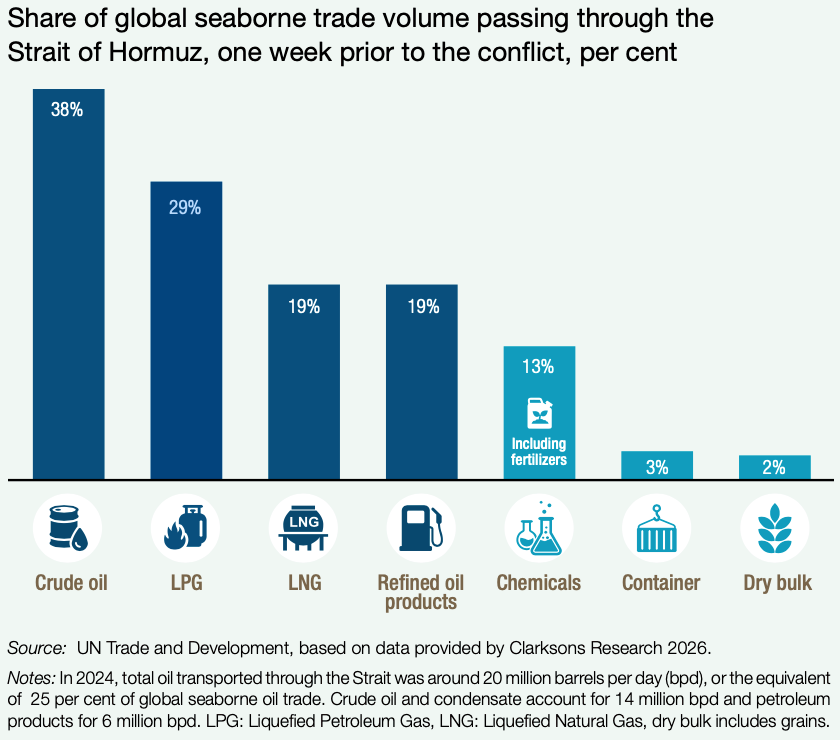
India’s concerns were heightened after reports emerged that the Thai-flagged cargo vessel Mayuree Naree, which was travelling toward the Indian port of Kandla, had come under attack while transiting the Strait of Hormuz. New Delhi condemned the targeting of commercial vessels and warned that attacks on civilian shipping threaten the lives of seafarers and the principle of freedom of navigation. Officials noted that earlier maritime incidents linked to the conflict had already claimed lives, including those of Indian nationals, underscoring the growing risks faced by merchant shipping operating in the region.
The episode illustrated the way in which the expanding confrontation between Israel and Iran is increasingly intersecting with global trade networks. Maritime security experts have long warned that even limited disruptions in the Strait of Hormuz could trigger significant volatility in oil prices and shipping costs. For India—one of the world’s largest energy importers—the stability of these routes remains a critical national interest.
At the same time, Indian authorities are closely tracking the welfare of citizens in the region. According to the Ministry of External Affairs, approximately 9,000 Indian nationals are currently present in Iran. These include students, professionals, businesspersons and religious pilgrims. The government had issued advisories earlier in the year encouraging citizens to consider leaving the country as tensions mounted. Many students and residents returned home in the weeks preceding the outbreak of hostilities.
Once the war intensified, the Indian mission in Tehran began coordinating relocation efforts for those still in the country. Students living in the Iranian capital were moved to safer locations, while citizens wishing to depart were assisted in travelling through land routes into neighbouring Armenia and Azerbaijan. From there, they could board commercial flights back to India. Officials said the embassy has continued to facilitate visas and travel arrangements for individuals choosing to leave Iran, while maintaining contact with those who remain.
The evolving maritime situation has also intersected with a separate naval development involving Iran. In a statement to Parliament earlier this month, Jaishankar confirmed that Tehran had sought permission for several Iranian naval vessels to dock at Indian ports shortly before the conflict escalated. New Delhi approved the request, and one of the vessels—the Iranian ship IRIS Lavan—subsequently arrived in the southern port city of Kochi, where its crew members have been accommodated at naval facilities.
Indian officials have refrained from offering extensive details about the vessel’s mission or the future status of its crew, noting only that the government continues to monitor the situation closely. The episode nevertheless highlights the complicated diplomatic terrain India must navigate as the war reshapes regional alignments and security dynamics.
Beyond bilateral diplomacy and maritime concerns, the conflict has also triggered intense debate at the United Nations. The Security Council has been grappling with competing resolutions addressing the escalation.
During the Security Council debate, Israel’s representative defended military actions as responses to sustained Hizbullah attacks, citing hundreds of projectiles and drones fired toward Israeli communities since early March. Israeli diplomats described Hizbullah as a proxy for Iran with a missile arsenal threatening Israel’s security. The United States supported this position and urged Lebanon to enforce the prohibition on Hizbullah military activity.
India co-sponsored a GCC-led resolution initiated by the Gulf Cooperation Council, which is a regional political and economic alliance of six Middle Eastern countries: Saudi Arabia, United Arab Emirates, Kuwait, Qatar, Bahrain, and Oman, at the UNSC, which reflects India’s positions emphasising civilian protection, the need to de-escalate, and the importance of energy and maritime security. India has issued multiple statements reiterating its commitment to humanitarian principles while condemning attacks on civilians.
One resolution—eventually adopted as Security Council Resolution 2817—condemned Iranian attacks on several Gulf states and reaffirmed support for their sovereignty and territorial integrity. The measure received strong backing from many countries, reflecting widespread concern about the expanding scope of the confrontation.
Israel is bombing Iranian historical monuments dating as far back as the 14th century. Multiple UNESCO World Heritage Sites have been struck.
It’s natural that a regime that won’t last a century hates nations with ancient pasts. But where’s UNESCO? Its silence is unacceptable. pic.twitter.com/7eu09Cjiyf
— Seyed Abbas Araghchi (@araghchi) March 12, 2026
However, the vote also exposed deep divisions among major powers. Russia and China abstained, arguing that the resolution did not adequately address the broader circumstances that led to the escalation. Moscow subsequently proposed a separate draft resolution calling for immediate de-escalation and dialogue without explicitly assigning responsibility for the conflict, but that proposal failed to secure sufficient support in the Council.
The diplomatic debate has unfolded alongside mounting humanitarian alarm and parallel international legal proceedings. On March 12, 2026, the International Court of Justice (ICJ) at The Hague issued Press Release No. 2026/5, announcing that the Netherlands and Iceland filed declarations of intervention under Article 63 of the Court’s Statute on March 11, 2026, in the ongoing case Application of the Convention on the Prevention and Punishment of the Crime of Genocide in the Gaza Strip (South Africa v. Israel). Initiated by South Africa on December 29, 2023, the case alleges Israeli violations of the 1948 Genocide Convention in Gaza, with the Court having issued provisional measures orders on January 26, 2024; March 28, 2024; and May 24, 2024. Article 63 permits parties to the Genocide Convention to intervene when its interpretation is at issue, rendering the Court’s eventual construction binding on interveners. The Netherlands and Iceland join prior interveners, including Colombia, Libya, Mexico, Palestine, Spain, Türkiye, Chile, Maldives, Bolivia, Ireland, Cuba, Belize, Brazil, Comoros, Belgium, and Paraguay (the latter on March 3, 2026). South Africa and Israel have been invited to submit written observations on the latest declarations. These interventions amplify global legal scrutiny of Gaza’s humanitarian crisis—aligning with UN-reported shortages, infrastructure damage, displacement, and health emergencies—while reinforcing calls for accountability, civilian protection, and adherence to international law amid the broader conflict.
The Office for the Coordination of Humanitarian Affairs (OCHA), led by Tom Fletcher, Under-Secretary-General for Humanitarian Affairs, reported that over 1.2 million civilians in Gaza and 450,000 in the West Bank are experiencing acute shortages of food, water, and medical supplies. Fletcher highlighted that damage to hospitals, schools, and critical infrastructure has compounded civilian suffering and stressed the need for safe humanitarian corridors.
Fletcher said in Geneva that Lebanon in particular was facing a severe crisis as the confrontation between Israel and Iran spilt across its borders through fighting involving Hezbollah and Israeli forces. The ongoing conflict has intensified along the Israel–Lebanon frontier. More than 570 people have been reported killed and over 1,400 injured since early March, while mass displacement has accelerated dramatically. According to humanitarian assessments, more than 750,000 people are now registered as displaced, primarily from the Beirut southern suburbs, Bekaa, and Baalbek regions.
Further details presented to the Security Council illustrated the scale of the escalation along the Israel–Lebanon frontier. Rosemary DiCarlo, UN Under-Secretary-General for Political and Peacebuilding Affairs, told Council members that the latest crisis was triggered after Hizbullah launched attacks against Israel on 2 March, firing hundreds of projectiles toward Israeli territory and the occupied Syrian Golan. Israel subsequently carried out extensive air strikes across southern Lebanon, including in Beirut’s southern suburbs as well as the Bekaa and Baalbek regions. The confrontation, she warned, had drawn Lebanon into a conflict “it neither sought nor can afford,” despite the Lebanese government’s earlier efforts to establish exclusive state control over weapons following a ceasefire arrangement reached in late 2024.
Security conditions on the ground were described as increasingly fragile by Jean-Pierre Lacroix, UN Under-Secretary-General for Peace Operations, who briefed the Council on the situation facing the United Nations Interim Force in Lebanon. According to Lacroix, UN peacekeepers have continued implementing their mandate “as far as the security circumstances allow,” even as hostilities intensify around them. Since the beginning of March, UNIFIL has recorded more than 4,000 projectile trajectories across the Blue Line and over 300 Israeli air attacks in areas where the mission operates. Peacekeepers themselves have faced direct risks, with several incidents threatening personnel and installations.
Lebanon’s government has simultaneously sought to prevent the crisis from escalating further. Addressing the United Nations Security Council in New York, the Lebanese representative said Beirut was prepared to pursue direct negotiations with Israel aimed at securing a comprehensive truce. The government has also prohibited Hizbullah’s military and security activities as part of efforts to restore state authority over armed groups operating within its territory. Lebanese officials called on the international community to support this initiative, urging Israel to withdraw from Lebanese territory and release detainees as part of any broader de-escalation framework.
Several Council members emphasised the growing risks faced by peacekeepers and humanitarian personnel, with France highlighting attacks on UN personnel earlier in March and urging international support for the Lebanese Armed Forces as essential to stabilising the country.
Schools have been converted into emergency shelters, disrupting the education of tens of thousands of children. Humanitarian agencies have distributed roughly half a million hot meals and hundreds of thousands of litres of drinking water, yet access to large areas of southern Lebanon remains severely restricted because of ongoing military operations. Fletcher warned that the ability of aid workers to reach vulnerable populations was tightening by the day as the conflict intensified.
The humanitarian consequences extend far beyond Lebanon. In Gaza, international agencies report that the health system is approaching collapse. Hospitals are running almost entirely on generators operating around the clock, yet shortages of spare parts and lubricating oil threaten their continued functioning. If these generators fail, officials warn, essential medical services could be disrupted across the enclave.
Public health conditions have also deteriorated sharply in overcrowded displacement camps. According to data shared by humanitarian partners and Gaza’s health authorities, nearly 23,000 suspected cases of insect-borne infections were recorded in a single month. Aid organisations say the spread of disease is being exacerbated by limited access to hygiene supplies, insecticides and medical treatment.
These concerns were echoed during a daily briefing by Stéphane Dujarric, Spokesperson for the UN Secretary-General, who reinforced the urgency of protecting civilians and maintaining impartial access for relief operations. According to the UN, continuous shelling, drone strikes, and restrictions on supply routes have critically limited the distribution of essential services, leaving local populations increasingly vulnerable. Dujarric warned that restrictions on humanitarian operations were worsening an already critical situation in the occupied Palestinian territories. Movement restrictions in the West Bank have impeded access to workplaces and essential services, while violence linked to settler attacks has displaced hundreds of residents.
According to UN figures, more than 180 Palestinians have recently been displaced by such incidents, bringing the number of people displaced in the territory this year to over 1,500. Children account for roughly forty per cent of those affected, illustrating the disproportionate toll the conflict continues to take on vulnerable populations.
Amid these humanitarian crises and the conflict’s financial underpinnings, efforts to disrupt funding networks sustaining militant activities have intensified. On March 12, 2026, the U.S. Department of the Treasury’s Office of Foreign Assets Control (OFAC) designated four sham charities—Türkiye-based Ghazi Destek Dernegi (GDD), Hayat Yolu, and Palestinian White Hands Assistance and Solidarity Association (Palestinian White Hands), along with Indonesia-based Komite Nasional Untuk Rakyat Palestina (KNRP)—for materially supporting Hamas’s Military Wing (Izz al-Din al-Qassam Brigades). These entities are accused of channelling funds under humanitarian pretexts to Hamas-controlled projects in Gaza, supporting fighters, construction benefiting Hamas, and integration with its security apparatus, based on captured Hamas documents. Hayat Yolu is also identified as an operational hub for the Muslim Brotherhood. The designations, under Executive Order 13224 (as amended), build on prior actions (e.g., October 7, 2024; June 10, 2025; January 21, 2026). Treasury Secretary Scott Bessent stated that “Hamas continues to finance its military wing by exploiting sham charities to support terrorist operations,” emphasising protection of the charitable sector and disruption of networks prolonging Palestinian suffering. Sanctions block U.S.-related assets and transactions, with secondary sanctions risks for foreign institutions. This action highlights international measures against duplicitous funding amid Gaza’s aid shortages and proxy escalations (e.g., Hezbollah’s role), reinforcing the urgency of de-escalation and humanitarian access.
Even as humanitarian agencies struggle to respond, the military confrontation itself shows few signs of slowing. Missile launches, drone attacks and retaliatory air strikes have been reported across several theatres of the conflict. Israeli cities have experienced repeated air-raid alerts following projectile launches, while Israeli forces have continued targeting locations believed to host Iranian-aligned military infrastructure in neighbouring territories.
These real-time battlefield developments underscore the volatility of the conflict and the risk that it could escalate further into a broader regional war. Analysts note that the involvement of multiple armed groups, regional governments and external powers has created a complex and unpredictable security environment.
For India, the unfolding crisis presents both immediate and long-term challenges. The safety of its citizens abroad, the security of maritime trade routes and the stability of global energy markets are all directly affected by developments in West Asia. At the same time, India’s longstanding relationships across the region require careful diplomatic balancing as tensions rise between competing powers.
New Delhi has therefore emphasised dialogue, restraint and adherence to international law while continuing to engage with multiple stakeholders. The conversation between Modi and Pezeshkian—though focused on India’s own concerns—reflects a broader recognition that the conflict’s consequences extend far beyond the battlefield.
As the war continues to spread across political, humanitarian and economic spheres, the stakes for the wider international community are becoming increasingly clear. What began as a confrontation between regional adversaries now threatens to reshape geopolitical alignments, disrupt global trade routes and deepen humanitarian crises across several territories. For countries like India, the challenge will be to safeguard national interests while supporting efforts to prevent the conflict from spiralling into an even more destructive regional war.