 By Deepak Parvatiyar*
Nuclear Fears Rise as Iran War Reshapes Geopolitics
World Powers Warn of Nuclear Ripple from Iran War
A widening nuclear debate has emerged as the central geopolitical concern in the rapidly escalating US–Israeli military campaign against Iran, now entering its sixth day of sustained operations, with major powers warning that strikes targeting Iran’s suspected nuclear infrastructure—despite no confirmed possession of nuclear weapons—could trigger a destabilising nuclear arms race across the Middle East and potentially beyond.
The proliferation risk moved quickly to the forefront of diplomatic discourse after Russian Foreign Minister Sergey Lavrov warned on March 3 that the US and Israeli attacks risk undermining global non-proliferation norms. Speaking at a joint press conference in Moscow with Brunei’s Second Minister of Foreign Affairs Erywan Yusof, Lavrov said military action against a state suspected—but not proven—to be pursuing nuclear capability could spur not only Iran but also neighbouring Arab states to seek nuclear deterrence as a matter of survival, eroding the Treaty on the Non-Proliferation of Nuclear Weapons (NPT) at its core.
Lavrov’s warning quickly echoed across international capitals. United Nations Secretary-General António Guterres warned that the strikes risked squandering a chance for diplomacy and called for an immediate ceasefire, urging the International Atomic Energy Agency (IAEA) to gain access to affected nuclear sites to assess damage and potential proliferation risks. IAEA Director General Rafael Grossi said there was no indication so far that key facilities such as Bushehr, the Tehran Research Reactor, or Natanz had been hit or damaged, but stressed the urgent need for verification amid continuing strikes. Officials in several European capitals privately acknowledged that the confrontation has revived questions about the credibility of extended deterrence guarantees and the long-term risks of regional nuclear proliferation. French President Emmanuel Macron has signalled readiness to discuss extending France’s nuclear umbrella to NATO allies, while British leaders reiterated that the United Kingdom’s independent deterrent remains a cornerstone of national and allied security amid rising geopolitical uncertainty.
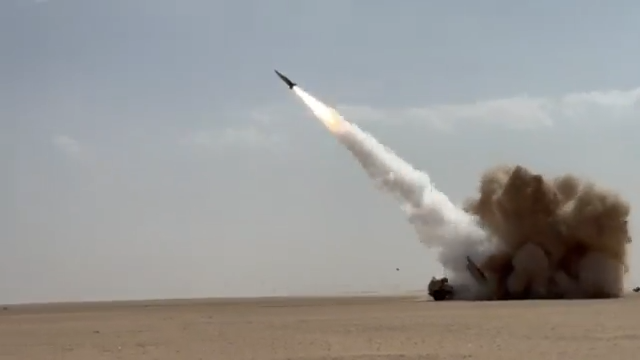
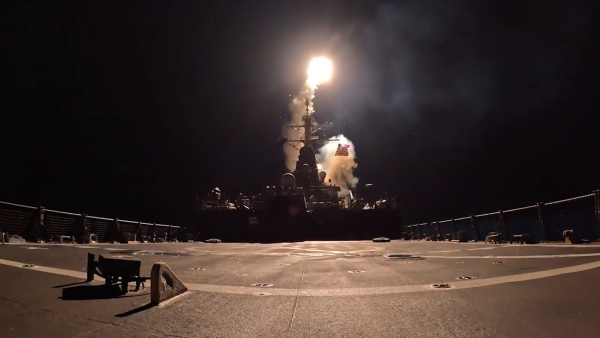
These nuclear concerns have unfolded alongside intensifying military operations and sharply competing battlefield narratives. Israeli Prime Minister Benjamin Netanyahu, in a March 3 interview, described the campaign as a “quick and decisive” effort to dismantle Iran’s nuclear programme, ballistic missile capabilities and command structures, saying it would not become a prolonged war and could reshape the regional balance. US Central Command (CENTCOM) reported the destruction or sinking of more than 20 Iranian naval vessels during operations, including “Operation Epic Fury”, which featured the combat debut of long-range Precision Strike Missiles and reportedly involved contributions from a US submarine. CENTCOM dismissed Iranian claims that US destroyers had been sunk, aircraft shot down, or heavy casualties inflicted on American forces as disinformation, describing them as part of an intensifying information-warfare campaign.
Iran has presented a sharply different account. The Islamic Revolutionary Guard Corps (IRGC) has asserted operational control over the Strait of Hormuz—the narrow maritime corridor through which roughly one-fifth of the world’s traded oil normally passes—and warned that vessels attempting transit risk missile or drone strikes. Ship-tracking data from industry monitoring services indicate traffic through the strait has dropped dramatically since late February, with only isolated transits reported amid missile incidents and rescue operations involving commercial vessels. The disruption has left hundreds of tankers waiting outside the strait, heightening fears of global supply shocks. Escalation has also spread through Iran’s network of regional allies: Hezbollah has launched rocket barrages toward northern Israel, Yemen’s Houthi movement has intensified drone and missile attacks on Red Sea shipping lanes, and Iranian strikes have targeted US bases and energy infrastructure in parts of the Gulf.
Chinese Foreign Ministry spokesperson Mao Ning emphasised the strait’s critical importance as a global energy and trade route, urging all parties to halt military operations and prevent further escalation that could damage global economic stability. Russia’s Foreign Ministry spokesperson Maria Zakharova characterised the confrontation as aggression by Washington and Tel Aviv, warning of cascading regional consequences, including disrupted aviation routes, strained logistics networks, rising energy prices and increased risks linked to military strikes near nuclear facilities.
Diplomatic manoeuvring has accelerated amid visible strains among allies. US Secretary of State Marco Rubio held a series of telephone calls on March 4 with foreign ministers from Saudi Arabia, Türkiye, Italy and Cyprus to coordinate responses and reaffirm bilateral partnerships. In Washington, a bipartisan push for a War Powers Resolution led by Representative Thomas Massie failed in the Senate along party lines, preserving President Donald Trump’s authority to continue military operations despite polls showing significant public concern about the prospect of a prolonged conflict. In Europe, Spain declined a US request to use American military facilities at Naval Station Rota and Morón Air Base for operations linked to the Iran campaign, citing constitutional and legal considerations. Trump warned that Washington could reconsider aspects of its trade relationship with Spain if security cooperation faltered, prompting China’s Mao Ning to criticise what she described as the weaponisation of trade while reiterating Beijing’s view that the strikes violate international law.
The humanitarian dimension of the crisis has expanded rapidly. The US State Department said more than 17,500 American citizens have been repatriated from the Middle East since February 28, including more than 8,500 who departed on March 3 alone through charter flights organised from regional hubs in the United Arab Emirates, Qatar, Saudi Arabia, Israel and Jordan. Thousands more Americans have sought assistance as airspace closures disrupted travel across the region.
China said it had evacuated roughly 470 additional citizens from Iran through land border crossings with Azerbaijan, Armenia, Türkiye, Iraq and Turkmenistan. Russia reported similar measures, relocating families of diplomatic personnel from Tehran through Azerbaijan while advising Russian citizens to depart Iran via registered land routes.
Global markets have reacted with sharp volatility. Brent crude futures have climbed above $83 a barrel in recent trading, extending a multi-day rally driven by fears that prolonged disruption in the Strait of Hormuz could tighten global oil supplies. Shipping insurance premiums for vessels transiting the Gulf have more than doubled, with analysts warning that sustained disruptions could add billions of dollars to global trade costs and potentially push energy prices significantly higher if escalation continues.
For India—heavily dependent on Gulf energy imports and home to nearly 10 million citizens living and working across West Asia—the conflict has prompted heightened vigilance in New Delhi. Airlines, including Air India and IndiGo, have rerouted flights to avoid affected airspace, while the Ministry of External Affairs said it was closely monitoring maritime security and the safety of Indian nationals across the region.
As the conflict deepens—with fresh Iranian missile launches intercepted over Israel, continued US strikes, and no immediate diplomatic off-ramp in sight—the convergence of battlefield escalation, nuclear proliferation fears, maritime disruption, proxy attacks and mass evacuations has transformed what began as a targeted military campaign into a widening geopolitical crisis. Whether intensified international diplomacy can contain the spiral—and prevent the nuclear anxieties now dominating global discourse from turning into policy realities across the region—remains one of the most pressing strategic questions confronting the international community.
*Senior journalist