Deadly Bhiwadi Blaze Underscores India’s Factory Risk Problem
Bhiwadi (Rajasthan): At least seven workers were killed in a devastating fire that broke out at a factory in the industrial area of Bhiwadi this morning, triggering an extensive rescue operation and renewing scrutiny of safety standards and regulatory enforcement in one of Rajasthan’s most densely industrialised zones.
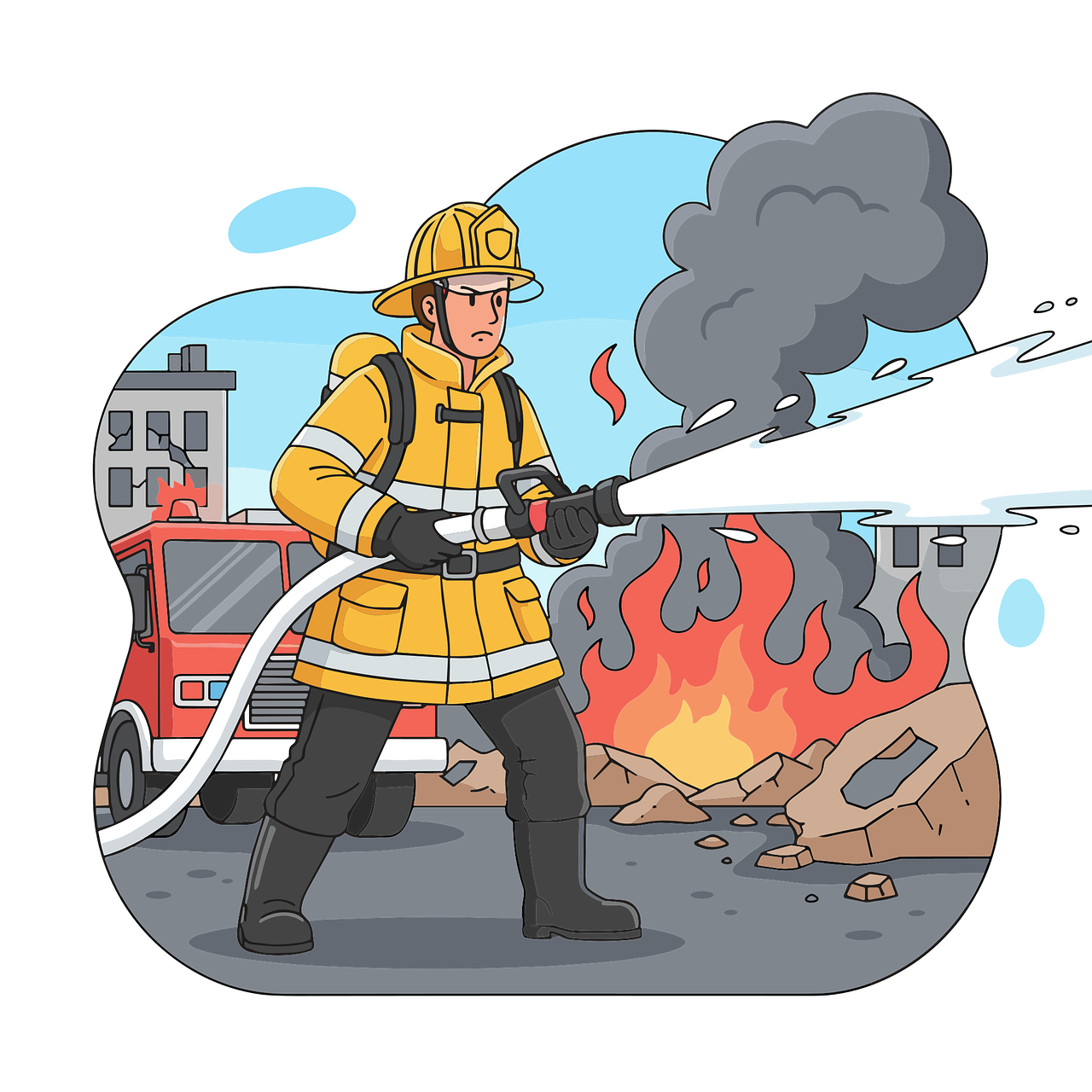
The blaze erupted around mid-morning at a unit located in the Khushkhera–Khairthal–Tijara industrial belt. According to officials, the fire spread rapidly through sections of the premises where combustible materials were stored. Fire tenders from Bhiwadi and nearby towns were rushed to the spot after police noticed the blaze during routine patrolling and alerted the district administration. Firefighters battled the flames for more than an hour before bringing the situation under control, after which search and rescue teams entered the charred structure.
Authorities confirmed that seven bodies were recovered from inside the factory. Preliminary information indicated that around 20 to 25 workers were present at the time of the incident. Several workers managed to escape with injuries and were taken to nearby hospitals for treatment. Rescue teams continued combing the premises for several hours to rule out the possibility of more people being trapped inside.
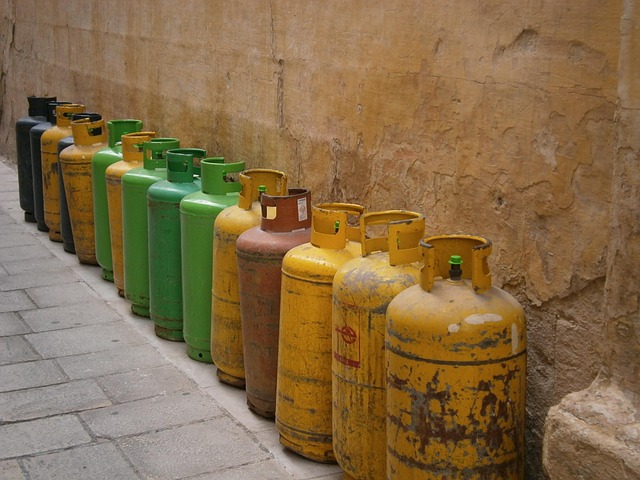
Officials said the exact cause of the fire has not yet been established. Initial assessments suggested that the presence of combustible materials may have intensified the blaze. Reports of a possible explosion, including a suspected gas cylinder blast, are also being examined. While some local accounts have raised questions about whether the unit was engaged in activities beyond its licensed purpose, authorities have stated that the nature of operations at the factory and the validity of its clearances will be verified as part of the official inquiry.
The district administration has ordered a detailed investigation to determine the circumstances leading to the fire and to examine whether the factory had valid fire safety permissions, whether hazardous materials were stored in accordance with approved norms, and whether mandatory safety audits and inspections had been conducted. Investigators are also assessing whether the unit had in-house firefighting arrangements, whether emergency exits were accessible, and whether workers had received evacuation and safety training.
Senior police and administrative officers reached the site to supervise rescue and relief operations. Hospitals in the region were placed on alert, and arrangements were made for post-mortem examinations and identification of the deceased. Officials said a comprehensive report would be prepared after completion of the search operation and preliminary forensic assessment. Decisions on accountability, registration of cases, and compensation for victims’ families are expected to follow once initial findings are finalised.
The tragedy drew condolences from the country’s top leadership. Vice-President C. P. Radhakrishnan expressed profound grief over the loss of lives. In a message shared on social media, he said he was “deeply saddened” by the incident, conveyed his condolences to the bereaved families, and prayed for the speedy recovery of the injured.
Prime Minister Narendra Modi also condoled the deaths. The Prime Minister’s Office said in a post on X: “The fire mishap in Bhiwadi, Rajasthan, is tragic and deeply saddening. My condolences to those who have lost their loved ones. I pray for the speedy recovery of those injured.”
While the February 16 incident is among the deadliest industrial fires in the region in recent years, it is not the first such tragedy in Bhiwadi’s industrial belt. In October 2024, a major fire at a chemical and pharmaceutical unit in the Khushkhera Industrial Area claimed four lives after an explosion reportedly triggered by an electrical short circuit. Earlier in 2024, a chemical tanker caught fire while unloading turpentine oil at a factory in the Sherpur area of the Bhiwadi zone, narrowly averting a larger disaster. Separate incidents involving boiler explosions and factory fires have also been reported over the past two years, pointing to a recurring pattern of industrial accidents rather than an isolated lapse.
These repeated incidents have brought into focus deeper challenges related to safety standards, compliance enforcement, and risk management in Bhiwadi’s rapidly expanding manufacturing hub. One key concern stems from regulatory capacity constraints. Bhiwadi’s pace of industrial growth has outstripped the ability of authorities to effectively monitor and enforce safety and environmental norms. Official reporting on regulatory functions in the area shows that the Rajasthan State Pollution Control Board operates with a staffing shortfall of nearly 50 per cent of its sanctioned strength, even as it handles one of the highest volumes of industrial permit applications in the state. This shortage has contributed to a decline of about 40 per cent in field inspections, reducing on-the-ground oversight of industrial units.
Officials have also noted that the board’s laboratory facilities lack the capacity to test for heavy metals and several hazardous pollutants. As a result, samples often have to be sent to Alwar for analysis, causing delays in enforcement action and weakening compliance tracking. These limitations have made it more difficult to detect violations early and ensure that factories dealing with chemicals and other hazardous substances strictly adhere to safety standards.
Urban and industrial planning shortcomings have further compounded the risk. In several parts of Bhiwadi, industrial units operate in proximity to residential colonies, schools, and commercial establishments, with little or no buffer zones. This overlap heightens the danger posed by fires, explosions, or toxic emissions and complicates evacuation and emergency response when accidents occur.
There have also been verified instances in recent years of factories operating without proper approvals or using unapproved fuels, leading to closures ordered by authorities. Reports linked to the present fire have raised questions about whether the unit involved was functioning strictly within its licensed activity, an issue now under official scrutiny. Investigators are also examining labour conditions at the factory, including whether the victims were contract or migrant workers and whether safety training and protective measures were in place.
Environmental and health concerns add another layer to the problem. Bhiwadi has repeatedly recorded very poor air quality levels, prompting authorities to impose curbs on polluting units. Despite periodic enforcement drives, residents and health professionals continue to report respiratory and pollution-related ailments, suggesting that implementation of safety and environmental norms remains uneven.
The latest tragedy has revived calls for stronger regulatory oversight, improved industrial zoning, and stricter enforcement of fire and occupational safety standards across the industrial region. Officials said the inquiry would not only focus on the immediate cause of the blaze but also examine systemic lapses, including regulatory capacity, factory compliance, emergency preparedness, and accountability mechanisms.
As rescue and cooling operations concluded, the incident stood as the latest reminder of the vulnerabilities within one of north India’s busiest industrial corridors, where rapid growth has not always been matched by commensurate strengthening of safety enforcement and risk management systems.
– global bihari bureau