New PMO Complex Inaugurated Under Central Vista Project
PM Inaugurates Seva Teerth Amid Debate Over Central Vista Cost
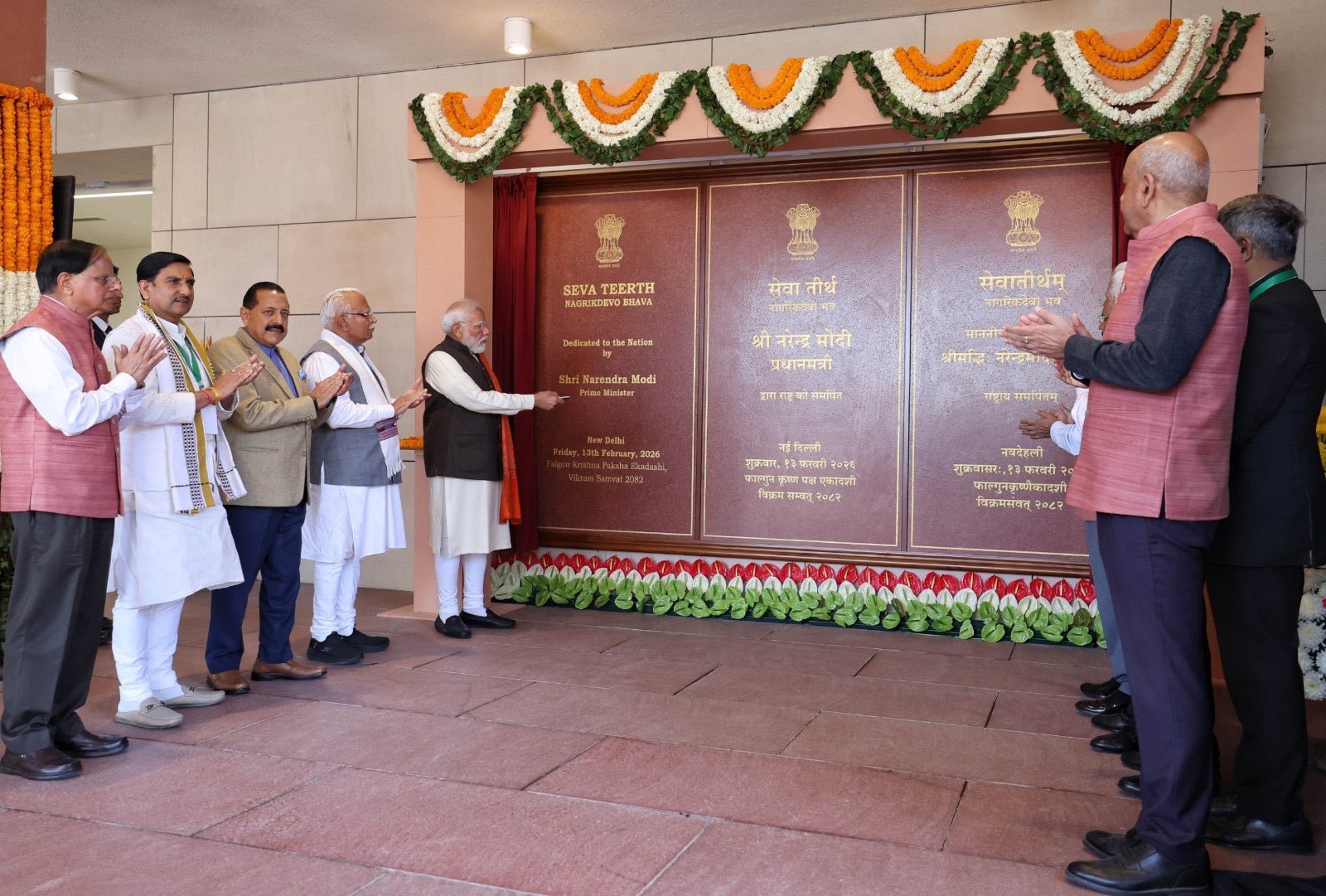
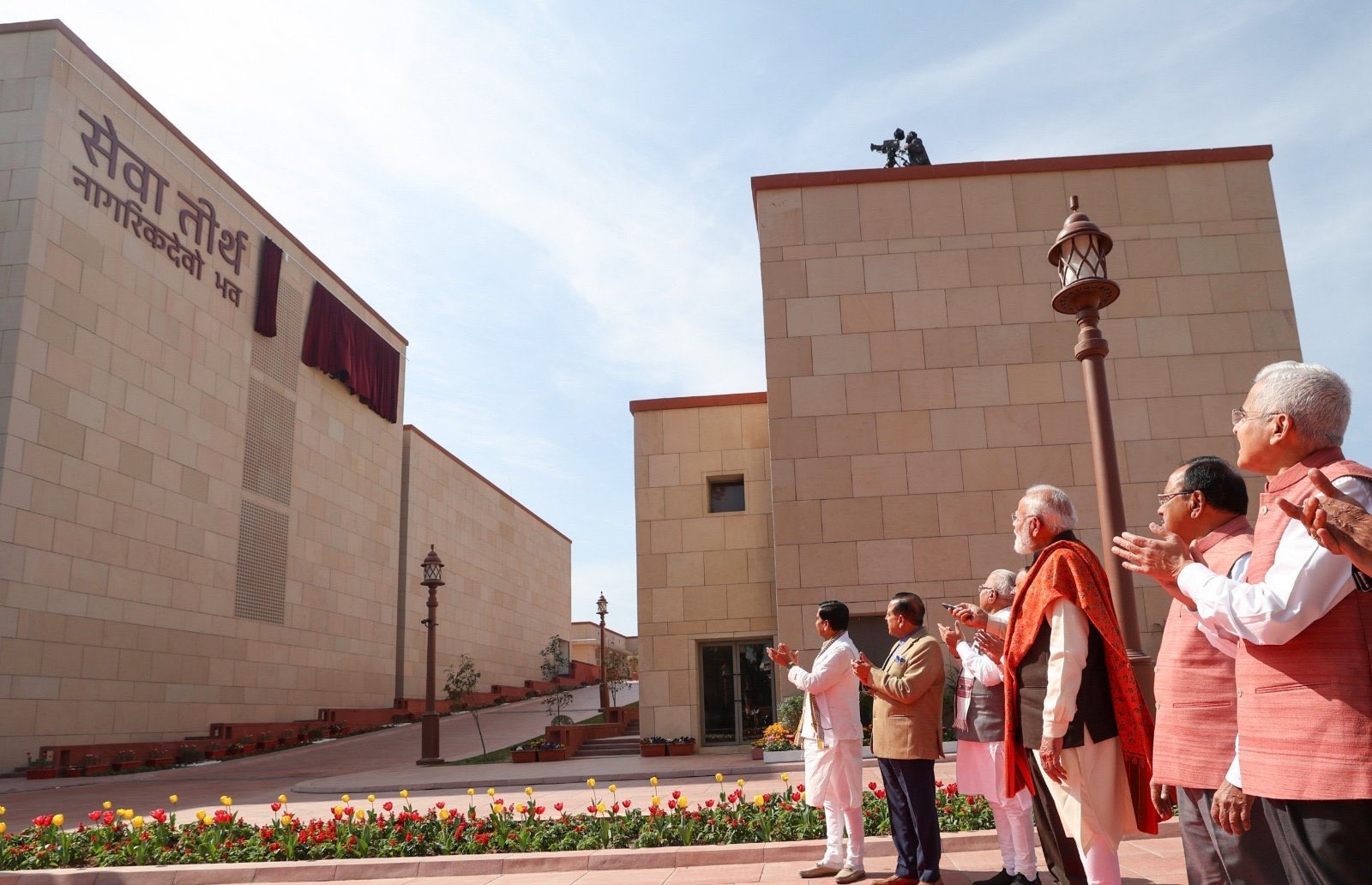
New Delhi: Prime Minister Narendra Modi today inaugurated and dedicated the new Prime Minister’s Office complex, Seva Teerth, to the nation, describing it as being guided by the idea of ‘Nagrikdevo Bhava’. The inauguration marked the formal shift of the Prime Minister’s Office from the colonial-era South Block to a newly constructed administrative complex developed under the Central Vista redevelopment programme.
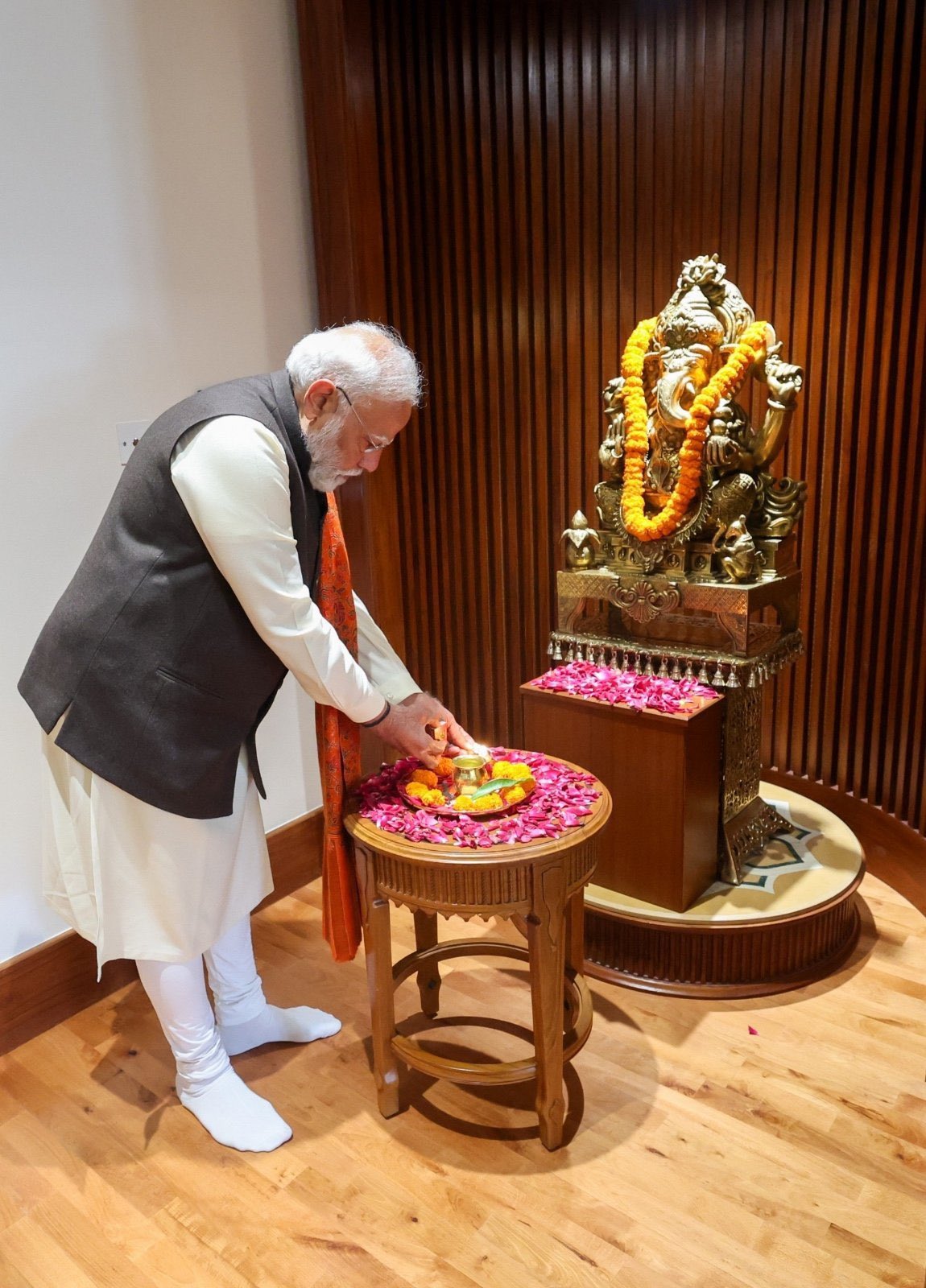
In a statement issued after the inauguration, the Prime Minister said the dedication of Seva Teerth reflected a commitment to public service and the welfare of citizens. He stated that the complex should stand as a symbol of duty, compassion and commitment to the principle of India First, and expressed the hope that it would inspire future generations to follow a path of selfless service and sustained dedication to the well-being of all.
In a post on X, the Prime Minister said that Seva Teerth had been dedicated to the nation with an unwavering resolve to serve the people of India and that it was guided by the spirit of Nagrikdevo Bhava. He added that the complex should remain a symbol of duty, compassion and commitment to India First, and that it should motivate people to work with dedication for the welfare of every citizen.
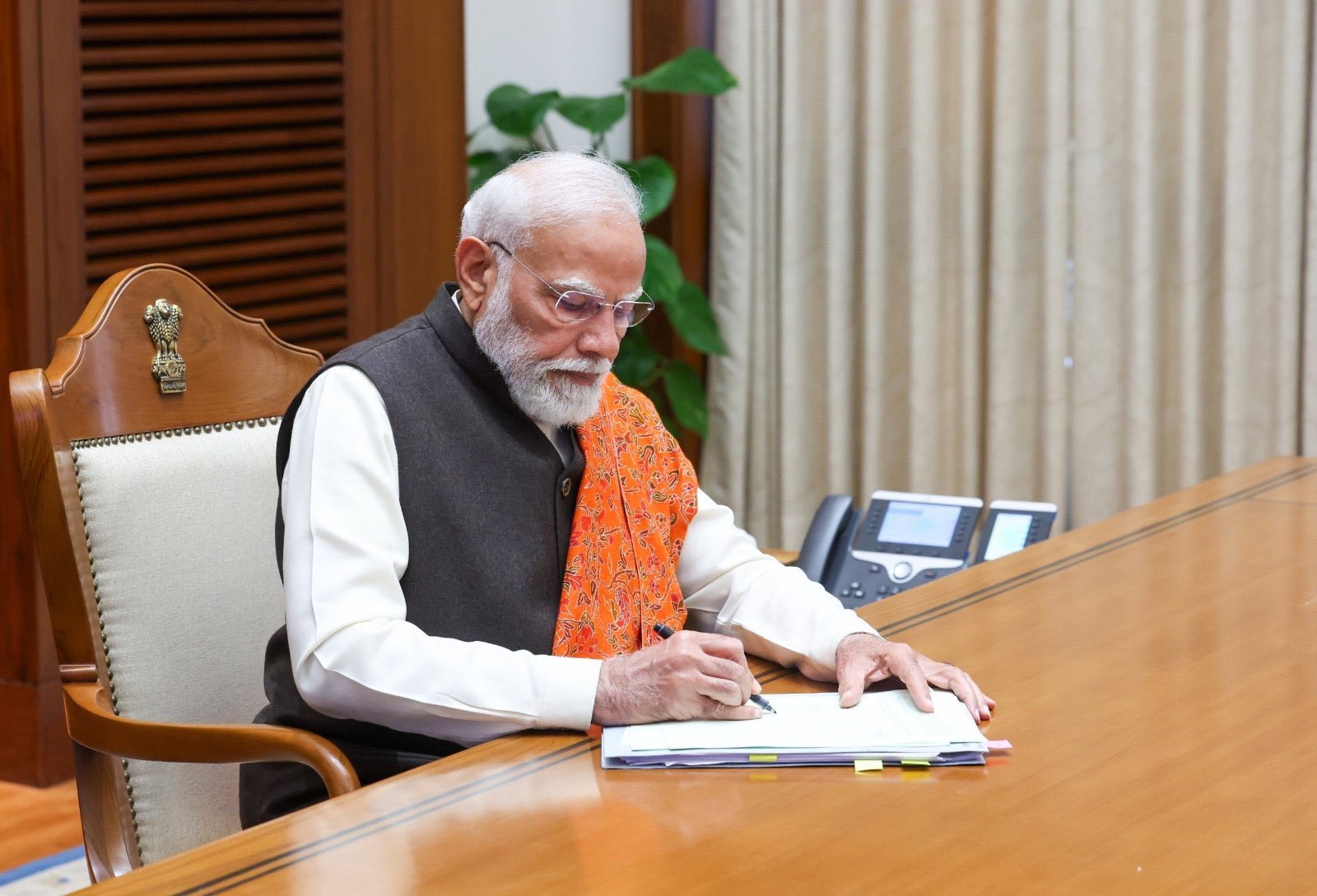
Union Home Minister and Minister of Cooperation Amit Shah described the inauguration as a historic day in the direction of placing public service at the centre of Indian democracy. In his post on X, he said that the opening of Seva Teerth symbolised the government’s commitment to service under the Prime Minister’s leadership over the past 11 years. He further stated that by helping ensure that development and welfare initiatives reach every citizen, the new complex would serve as a milestone in building a developed and self-reliant India.
The inauguration also highlighted the administrative reasons cited by the government for creating a new Prime Minister’s Office complex. For more than seven decades, the PMO functioned from South Block, a building constructed during the British period that was not designed to accommodate the scale, technological requirements and security needs of contemporary governance. Officials have noted that the increasing volume of work handled by the Prime Minister’s Office and related bodies necessitated a modern, purpose-built facility with updated digital infrastructure and enhanced security systems.
Seva Teerth has been developed as an integrated complex to house the Prime Minister’s Office along with the Cabinet Secretariat and the National Security Council Secretariat. The consolidation of these offices within a single complex is intended to improve coordination among key decision-making bodies and provide infrastructure suited to present-day administrative and security requirements. The complex spans about 2.26 lakh square feet and has been constructed at an approximate cost of ₹1,189 crore, according to official project-related disclosures. The construction was undertaken as part of the larger Central Vista redevelopment initiative to modernise the core administrative zone of the national capital.
The new complex forms part of the broader Central Vista redevelopment project, which has included the construction of a new Parliament building and new secretariat blocks and the reconfiguration of the central administrative district. Designed with updated technological and environmental standards, Seva Teerth incorporates energy-efficient systems, water conservation measures and contemporary office infrastructure. It has received green building certification under India’s GRIHA framework for sustainability.
While the government has projected Seva Teerth and the wider Central Vista project as necessary for meeting long-term governance needs, the redevelopment programme has drawn sustained criticism from opposition parties since its announcement. Leaders of the Indian National Congress and other opposition formations have questioned the timing and cost of the project, particularly during the COVID-19 pandemic period, arguing that large-scale expenditure on construction should have been deferred in favour of higher spending on public health and economic relief. Some opposition leaders described the Central Vista redevelopment as a “vanity project” and alleged that the resources allocated for it could have been used for welfare and emergency measures.
Senior opposition figures, including Congress leaders Rahul Gandhi and Sonia Gandhi, had earlier criticised the project as an example of misplaced priorities and called for its suspension during the peak of the pandemic. Other opposition parliamentarians raised concerns in public statements and on social media about what they termed excessive expenditure on administrative buildings at a time of economic strain. In addition to political criticism, petitions were filed in court challenging various clearances and land-use changes related to the project, citing environmental and heritage concerns. The Supreme Court subsequently upheld the continuation of the Central Vista redevelopment, allowing construction to proceed.
Beyond questions of cost and timing, some critics have expressed apprehension about the impact of the redevelopment on the historical character of Lutyens’ Delhi and on heritage structures in the central administrative zone. Opposition leaders and civil society groups have argued that the transformation of the area could alter its architectural profile and reduce the prominence of older institutional buildings. The government, however, has maintained that the redevelopment preserves heritage while creating modern facilities required for contemporary administration.
With the inauguration of Seva Teerth, the functioning of the Prime Minister’s Office moves from a colonial-era setting to a newly constructed administrative space intended to meet long-term governance and security needs. Government statements have presented the complex as both an operational shift and a symbolic transition in the working environment of the country’s highest executive office, while opposition parties continue to view it within the larger and contested framework of the Central Vista redevelopment project.
– global bihari bureau