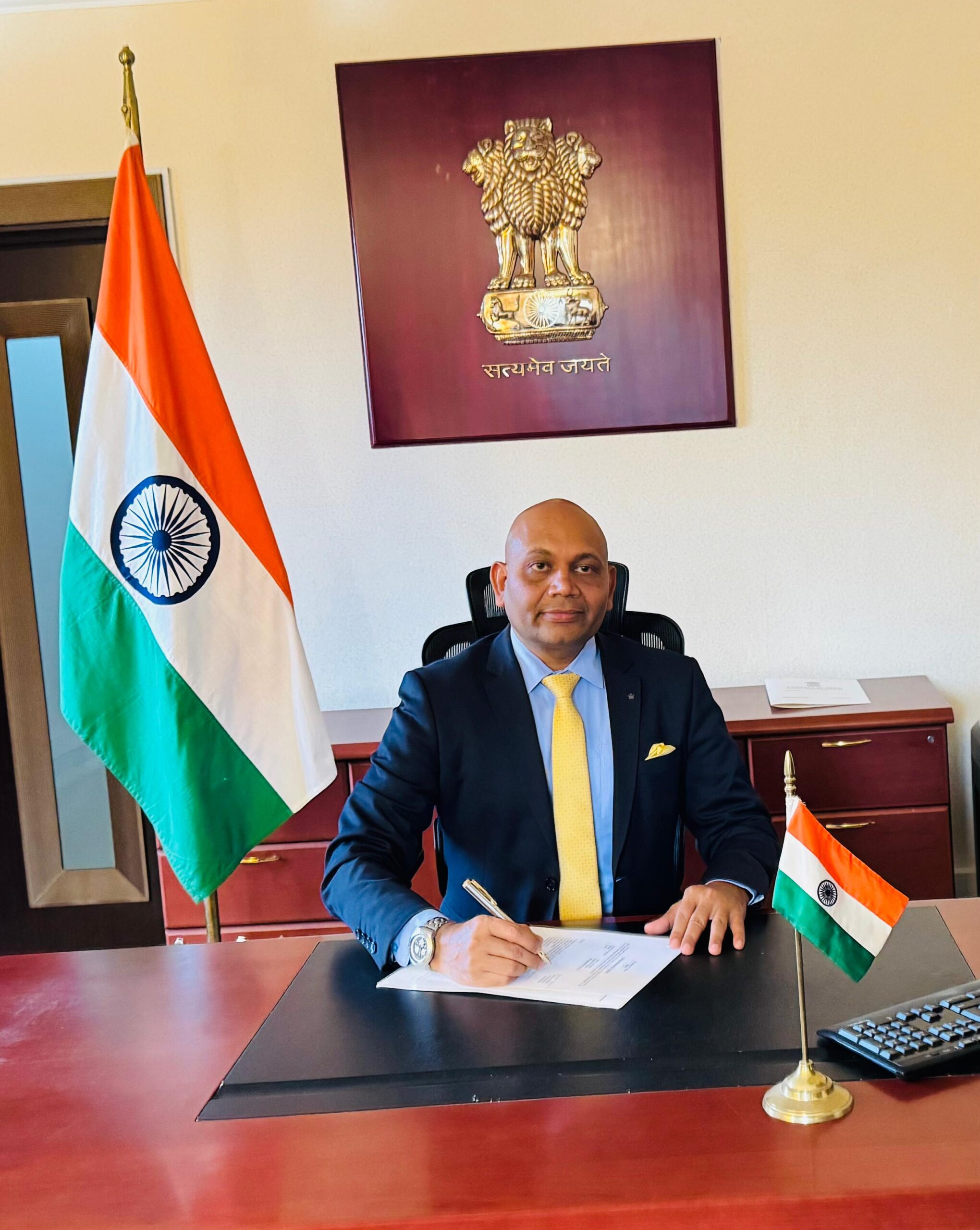
Abhay Kumar takes charge as India's Ambassador in Baku.
New Envoy Takes Charge as Ties with Baku Face Strategic Challenges
New Delhi/Baku: At a time when India’s relations with Azerbaijan are passing through a politically sensitive phase shaped by regional rivalries and differences at multilateral forums such as the Shanghai Cooperation Organisation (SCO), senior diplomat Abhay Kumar assumed charge as India’s new Ambassador to Azerbaijan in Baku today.
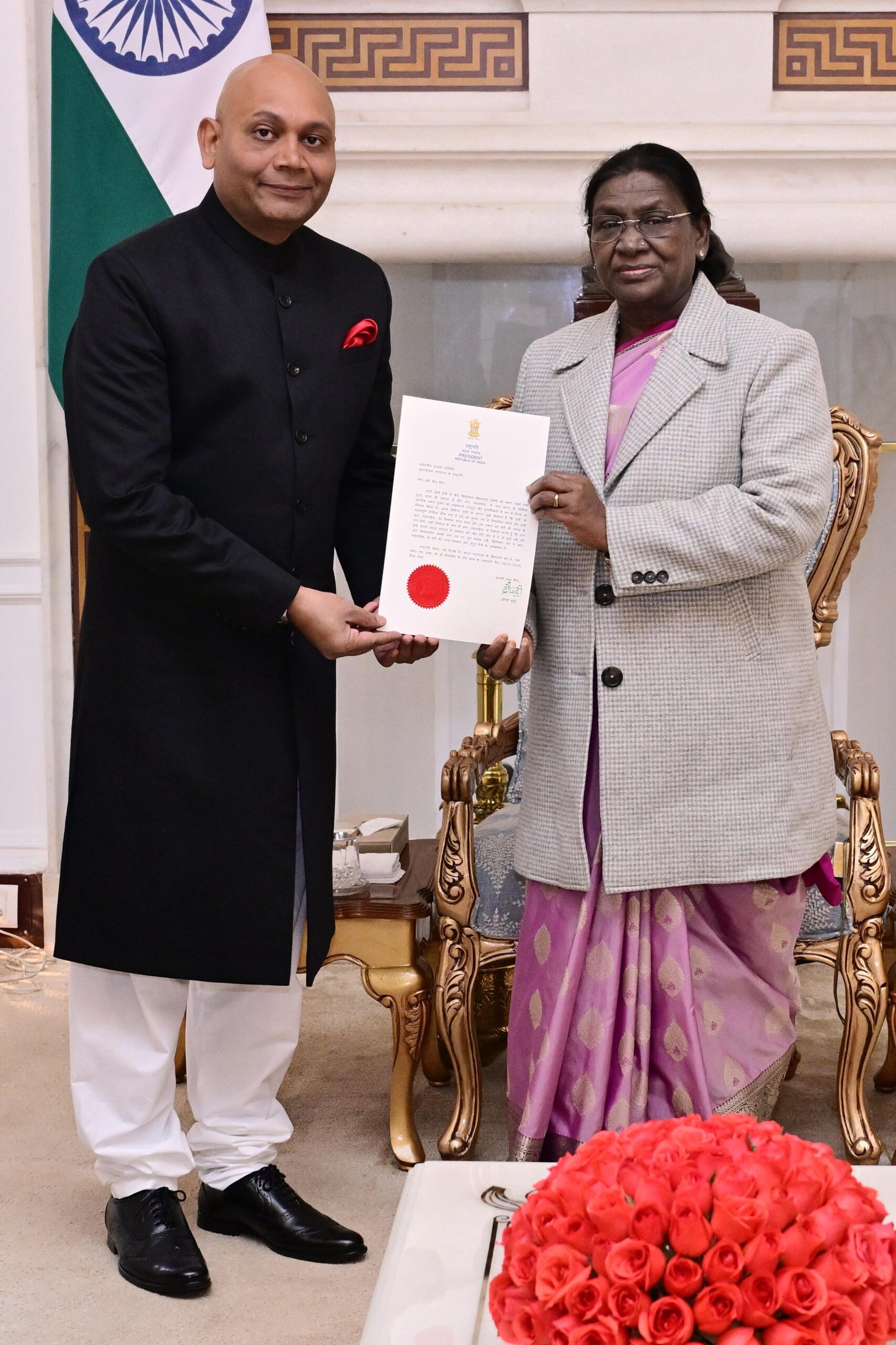
The Indian Embassy in Baku confirmed his arrival in a post on X, stating that Ambassador-designate Abhay Kumar had reached the Azerbaijani capital and formally taken over his responsibilities. Before departing for Baku, Kumar called on President Droupadi Murmu and received his credentials from her.
His appointment comes amid growing diplomatic complexity in India–Azerbaijan relations, driven by shifting alignments in the South Caucasus and South Asia. Azerbaijan’s close strategic partnership with Pakistan and Türkiye, coupled with its past support for Pakistan’s position on Kashmir at international forums, has periodically caused unease in New Delhi. These differences have also surfaced in multilateral settings, including the SCO, where India’s diplomatic positions have not always aligned with those of Baku.
The relationship drew renewed scrutiny in India following ‘Operation Sindoor’, when sections of the Indian media criticised Azerbaijan for what was perceived as a posture sympathetic to Pakistan during the India–Pakistan crisis. While Baku issued calls for restraint, commentators noted its longstanding political alignment with Islamabad and recalled Azerbaijan’s earlier statements on Kashmir at international platforms. The episode reinforced concerns that Azerbaijan’s regional partnerships could increasingly influence its approach to India on sensitive geopolitical issues.
At the same time, India has deepened its strategic cooperation with Armenia in recent years, particularly in the areas of defence and security following the Nagorno-Karabakh conflict. Armenia has emerged as a significant partner for India in the Caucasus, and this evolving partnership has been closely watched in Baku. For Azerbaijan, Armenia remains its principal regional rival, and India’s closer engagement with Yerevan is interpreted within a broader geopolitical context. This triangular dynamic has added sensitivity to India’s engagement with Azerbaijan and forms part of the diplomatic landscape the new ambassador will need to navigate.
Beyond politics, economic and energy ties remain a central pillar of the relationship. India has substantial economic stakes in Azerbaijan’s energy sector through ONGC Videsh Ltd, which holds investments exceeding one billion dollars in major oil and gas projects, including the Azeri–Chirag–Gunashli fields and associated export infrastructure. These investments form an important component of the bilateral economic relationship and continue to shape engagement between the two countries.
More specifically, ONGC Videsh holds stakes in the Azeri–Chirag–Gunashli (ACG) oil fields, amounting to about 2.31 per cent, along with an additional 0.615 per cent acquired from Norway’s Equinor in late 2024. The Indian company also has interests linked to the Baku–Tbilisi–Ceyhan (BTC) pipeline, which transports Caspian crude to global markets. When combined with related infrastructure and associated projects, India’s cumulative investments in Azerbaijan’s energy sector run into several billions of dollars, underscoring the strategic economic dimension of the bilateral relationship.
Trade and commercial cooperation have expanded in recent years, supported by direct air connectivity between Indian cities and Baku and a steady rise in Indian tourist arrivals before 2025. Azerbaijan had also emerged as a destination for Indian students and professionals, while Indian pharmaceutical and information technology firms showed growing interest in the Azerbaijani market. However, tourism flows witnessed a dip after 2025 amid diplomatic tensions, reflecting how political developments have begun to affect people-to-people exchanges.
Connectivity and transit cooperation are other areas of strategic relevance. Azerbaijan occupies a key position on transport corridors linking Europe with Central and South Asia, making it significant for India’s broader connectivity ambitions, including the International North–South Transport Corridor. Enhancing logistical and trade routes through the region has been identified as a long-term objective in India’s engagement with the Caucasus.
People-to-people ties have nonetheless gained momentum over the past decade. The number of Indian visitors to Azerbaijan increased sharply prior to recent strains, and a small but growing Indian community now resides in the country. Consular services, cultural exchanges and educational cooperation remain important elements of bilateral engagement.
Kumar brings extensive diplomatic experience to the post. He earlier headed India’s missions to Madagascar and the Comoros from 2019 to 2022 and served as Deputy Chief of Mission in Brazil from 2016 to 2022. His previous assignments include postings as First Secretary at the Embassy of India in Kathmandu from 2012 to 2016 and in Russia from 2005 to 2010. He also worked as Under Secretary for Public Diplomacy from 2010 to 2012, contributing to India’s digital diplomatic outreach, and later as Deputy Director General of the Indian Council for Cultural Relations from 2022 to 2025, coordinating more than 300 cultural events during India’s G20 presidency.
Diplomatic observers note that the Azerbaijan posting will be shaped not only by routine bilateral priorities but also by the broader geopolitical contest involving the Caucasus and South Asia. Balancing India’s strategic partnership with Armenia, Azerbaijan’s alignment with Pakistan and Türkiye, and India’s positions at multilateral forums such as the SCO will require careful diplomatic calibration.
As the new ambassador begins his assignment in Baku, India’s mission faces the task of sustaining cooperation in trade, energy and culture while managing political differences influenced by regional rivalries and competing alliances, underscoring the sensitivity and strategic importance of the India–Azerbaijan relationship at this juncture.
– global bihari bureau