Image: World Economic Forum
Power Plays Define Davos 2026 Summit
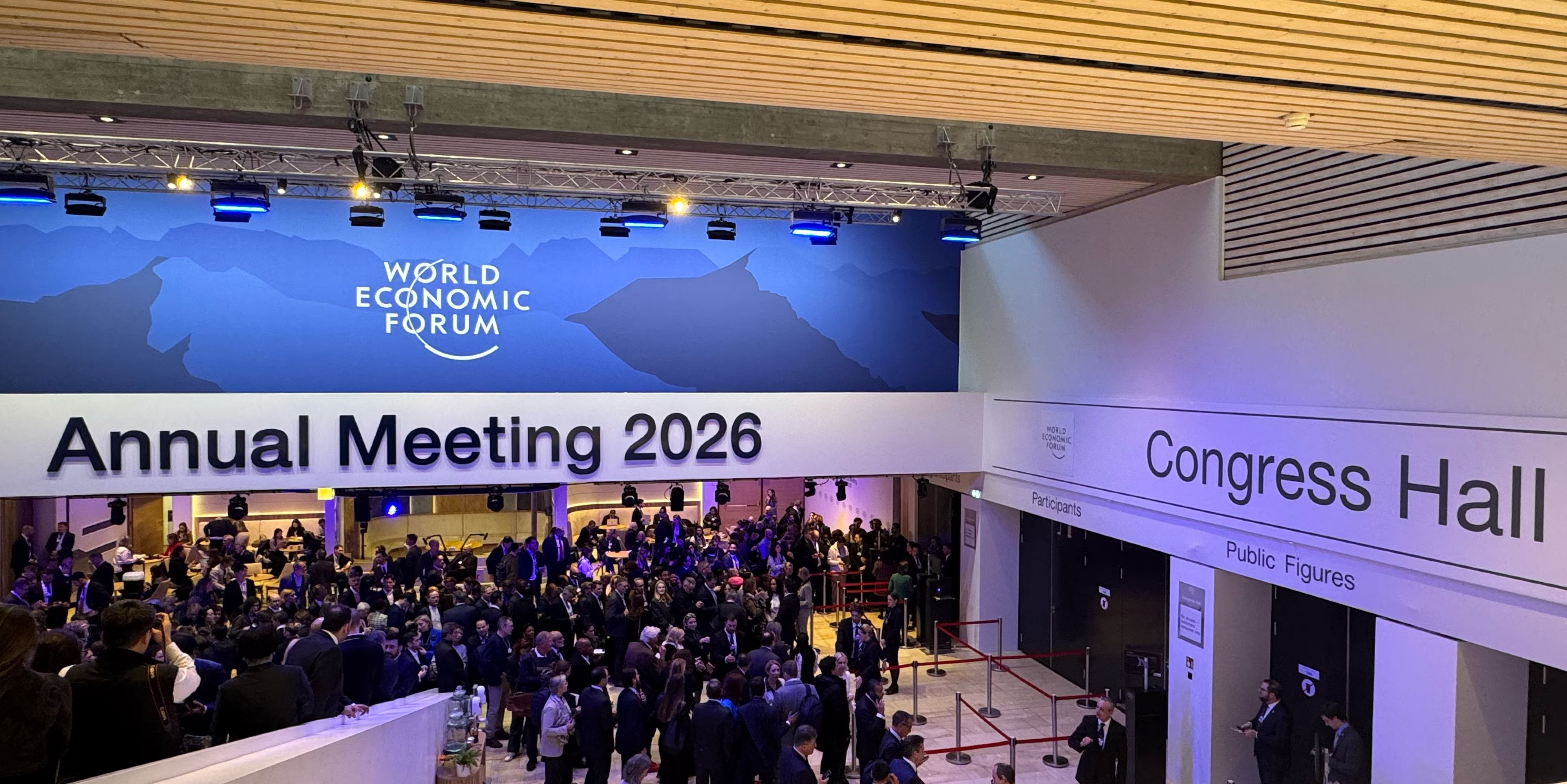
Davos: January 19–23, 2026. Snow lay in delicate layers across the Alpine peaks, frosting rooftops and streets, as the 56th World Economic Forum Annual Meeting unfolded. The village, normally hushed in midwinter, pulsed with energy: motorcades threaded through snow-dusted roads, private jets touched down on nearby airfields, and security convoys ensured the safe movement of hundreds of world leaders, corporate executives, and policymakers. Hotels and conference halls were filled to capacity, buzzing with anticipation, calculation, and the familiar tension of high-stakes diplomacy. Yet this year, Davos promised something different: a forum stripped of its customary veil, where power, tension, and candid disagreement were as visible as the surrounding peaks.
A Summit of Unvarnished Realities
From the first plenary (Day 1, January 19), it was clear that Davos 2026 would not rely on the ritualised courtesies and predictable decorum that had long characterised the event. Leaders addressed global volatility, technological disruption, and economic friction in unvarnished language. Even casual interactions — a brief hallway exchange between ministers, a whispered clarification in elevators, a coffee-lounge debate between corporate executives and policymakers — carried an undertone of strategic observation. The Alpine chill seemed to sharpen every glance and syllable, heightening the sense that nothing was incidental.
Flashpoints and Friction
The first major flashpoint occurred on Day 3 (January 21), during an invitation-only dinner hosted by BlackRock CEO Larry Fink, attended by heads of state, central bankers, and senior policymakers. The event was intended to showcase economic collaboration and foster dialogue among global decision-makers. Instead, it became an unmistakable tableau of transatlantic tension. U.S. Commerce Secretary Howard Lutnick delivered remarks sharply critical of the European Union’s regulatory framework, emphasising that Europe’s economic approach inhibited growth and that unresolved tariff disputes risked escalating into broader economic conflict. Responses ranged from nods of agreement to audible murmurs of discomfort.
Midway through the dinner, European Central Bank President Christine Lagarde rose and left, signalling clear disapproval in a setting meticulously designed for collaboration. The event concluded without dessert, and observers quickly moved into adjoining corridors, where aides whispered analyses and journalists recorded reactions. The room, once a showcase of cultivated consensus, had become a stage for visible tension.
On Day 3, during the main plenary, President Donald Trump delivered his first address of the summit. He emphasised American industrial resurgence and the strategic importance of Greenland, noting that negotiations regarding Greenland would proceed without force and framing U.S. strategy around leverage and national security. Delegates observed the remarks with careful attention, noting their combination of assertiveness and diplomatic form.
Voices of Caution and Observation
Other leaders offered measured counterpoints. Canadian Prime Minister Mark Carney, speaking on Day 2 (January 20), highlighted the strains on the international rules-based order caused by coercive practices and shifting geopolitical alignments. His appeal for middle powers to uphold shared principles earned a standing ovation, signalling recognition that traditional multilateral predictability is under pressure. Delegates in the hall leaned forward, took notes, and discussed these takeaways in hushed conversation, the room itself a stage for strategic observation.
French President Emmanuel Macron provided subtler, humanising moments on Day 3 (January 21), navigating discussions on geopolitical unpredictability while wearing sunglasses indoors due to a minor eye condition. The gesture drew brief laughter and attention, punctuating a week dominated by strategic calculation, and reminding observers that even seasoned leaders remain conscious of optics, presentation, and human perception.
India’s Strategic Momentum
Parallel to these high-profile moments, tangible economic progress continued. India’s delegation, led by Union Minister Ashwini Vaishnaw and Maharashtra Chief Minister Devendra Fadnavis, advanced trade, investment, and cooperation objectives across panels and side meetings from Day 3 through Day 5 (January 21–23). Memorandums of understanding were signed in renewable energy, infrastructure, manufacturing, and IT/data centres, many incorporating significant foreign direct investment. These agreements, though lacking dramatic gestures, underscored the dual nature of Davos: both a forum for signalling and a platform for concrete outcomes.
Panels, Corridors, and Public Debate
Panels on trade, artificial intelligence governance, and global security were especially revealing. Delegates debated tariffs, territorial disputes, and technological competition openly. In one corridor, EU and U.S. trade officials exchanged technical clarifications as journalists observed; elsewhere, CEOs briefed ministers on emerging technological risks, blending negotiation with public visibility. Unlike previous years, disagreements were rarely confined to back rooms; real-time strategic deliberation was on display for all observers.
Midweek Tensions and Strategy
By Day 4 (January 22), midweek plenaries and corridor interactions had established Davos as a theatre of strategy. Walkouts, standing ovations, and pointed statements punctuated ongoing investment deals and policy discussions. Snowstorms intermittently disrupted movement, prompting smaller breakout meetings where informal dialogue proved as influential as plenary speeches. Every hall, corridor, and elevator became a space of observation, calculation, and signalling, emphasising the summit’s layered dynamics.
The Summit in Progress
On Day 5 (January 23), the final day of the summit, delegates will continue to navigate plenaries, panels, and side meetings amid snow-dusted Alpine streets. Discussions and negotiations are ongoing, yet patterns observed across the week already indicated a notable shift: diplomacy was increasingly visible, contested, and direct, with leaders signalling strategy and asserting positions openly in real time. While the summit had not formally concluded, the events of Day 5 are set to continue to reinforce the dual character of Davos 2026: contested yet productive, dramatic yet substantive.
The Alpine environment — snow-lined streets, glass-clad conference halls, and winding corridors — provided both literal and figurative space for negotiation, observation, and signalling. In hallways and elevators, aides exchanged advice; in coffee lounges, delegates debated session takeaways; outside, the stark winter landscape mirrored the high-stakes environment within. Every corner of Davos contributed to a narrative where diplomacy was strategic, visible, and unafraid of friction.
Davos 2026: A Forum Unmasked
Even as panels continued and MoUs were finalised, Davos 2026 has demonstrated that high-level diplomacy in an era of complex global interdependence can no longer be fully confined to closed rooms. Instead, the summit increasingly mirrors the contemporary global order — strategic, contested, and unapologetically direct. Observers noted that leaders were willing to display disagreement openly, negotiate assertively, and signal priorities in real time, even as discussions on the final day are yet to unfold.
– global bihari bureau