When Local Imagination Redefined Ganges Tourism
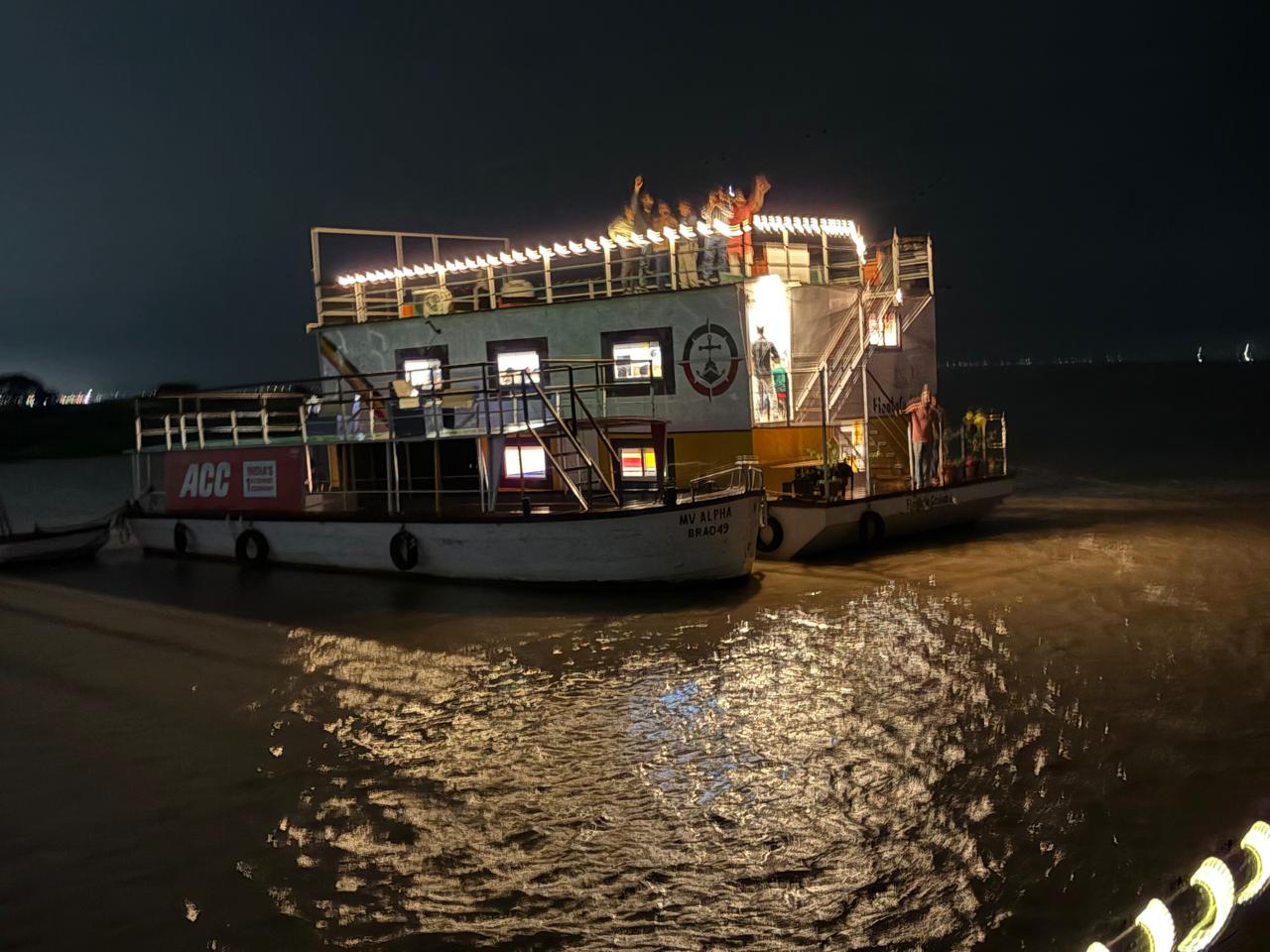
Patna: As evening settles over Patna, the Ganges turns reflective, absorbing the city’s fading lights and returning them as a slow, liquid shimmer. Midstream, a floating hotel glows softly against the dark water, anchored yet unhurried, as if it has always belonged there. For travellers accustomed to river cruises on the Seine or the Danube, the sight is unexpected. This is not borrowed luxury. It is something far more rooted.
Up close, the effect is quietly immersive. Lights ripple and reform across the surface of the river, responding to the Ganges’ unhurried movement, as though the water itself were breathing. Boarding does not feel like stepping onto a vessel so much as entering a story already in progress—one shaped by familiarity, patience and a long-standing conversation with the river.
Floatafe Cruises did not emerge from a tourism blueprint or a master plan. Its origins lie in a lifelong intimacy with the Ganges. Pranav Sahi grew up along these banks, learning the river not as metaphor or spectacle, but as terrain—its currents, its seasons, its silences. A historic family boat from the pre-Independence era offered early lessons in navigation and care, instilling an understanding that the river rewards attention and respect. There was no formal path from these memories to modern design. Patna had no naval schools, no marine industry to lean on, no established framework for river-based hospitality.
What Sahi did have was an unconventional foundation. Years immersed in motorsports and automobile engineering had trained him to think in terms of balance, propulsion, structural integrity and control. To him, the leap from road to river was not as radical as it appeared. The physics remained the same; only the medium changed. In 2011, drawing on this instinctive crossover, he worked with local craftsmen and indigenous Bihar timber to design and build a simple wooden boat. It was modest in scale but quietly radical in intent—a proof that the Ganges could host contemporary experiences without being forced into imported forms.
That first experiment was never about expansion. It was about confidence. Confidence that modern river travel here could be shaped from within, rather than assembled from elsewhere. Over time, that conviction deepened, strengthened by trial, observation and an evolving understanding of the river’s demands. The decisive moment arrived years later, during the stillness of the COVID period, when movement slowed, and attention turned inward. With time reclaimed for family, Sahi designed a yacht for his son, Adwait Pratap Sahi, crafting it with the care one might give to a keepsake rather than a product. Elegant, structurally assured and environmentally mindful, the boat was intended for private moments.
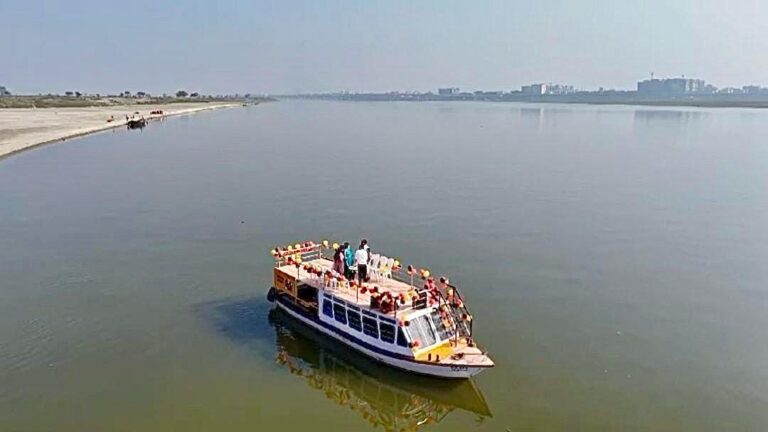
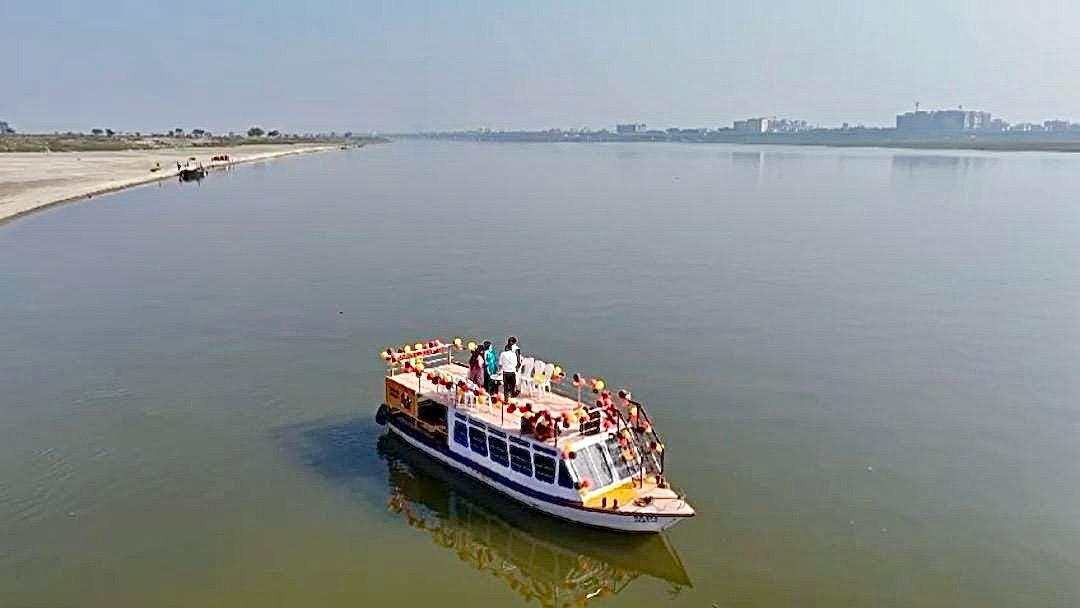
Yet the river had other ideas. Used only occasionally, the yacht soon revealed a wider possibility. When it began operating from Patna’s NIT Ghat in 2021, it tapped into an appetite that had long gone unarticulated. Locals and visitors alike were not drawn by spectacle or scale, but by the promise of experiencing the Ganges differently—without haste, without distance, without the need to frame it from afar. What began as a personal passion quietly evolved into Bihar’s most distinctive river-based hospitality venture.
The transformation owes as much to creative vision as it does to engineering. Sumita Sahi, a filmmaker and creative artist, understood instinctively that tourism is as much about emotion as it is about movement. She saw Floatafe not as a service, but as a narrative space—one where travellers would step into Bihar’s relationship with the Ganges rather than merely pass across it. Her background in visual storytelling shaped every aspect of the experience. Design, lighting and spatial flow were treated with restraint, not as decoration but as atmosphere, ensuring that the river itself remained the central presence rather than a curated backdrop.
Over the next five years, Floatafe Cruises navigated the practical realities of the Ganges—its shifting depths, seasonal volatility and infrastructural limitations—through indigenous solutions rather than imported fixes. Each challenge reinforced the original philosophy: respond to the river, do not attempt to overpower it. The culmination of this approach is the Floatafe Flotel, a floating hotel anchored midstream, its illuminated form reflected in slow-moving water. Modern yet measured, it offers comfort without severing its relationship with place, standing as a quiet statement of what local engineering and creative imagination can achieve together.
For those who spend a night on board, what lingers is not novelty, but perspective. There is a sensation of being suspended between movement and stillness, between history and possibility. Ferries pass, rituals unfold along the ghats, and the river continues its ancient work, carrying daily life downstream. Floatafe does not attempt to redefine the Ganges or reduce it to metaphor alone. It simply invites travellers to meet it differently—through patience, proximity and design shaped by those who have known it all their lives.
In doing so, Floatafe Cruises has quietly redrawn the map of river tourism in Bihar. What began as a child’s dream on the riverbank, shaped by family, craft and a filmmaker’s eye, has become a living example of how heritage and innovation can coexist on water. The result is not a borrowed vision of luxury, but one that feels deeply, unmistakably at home.
– global bihari bureau