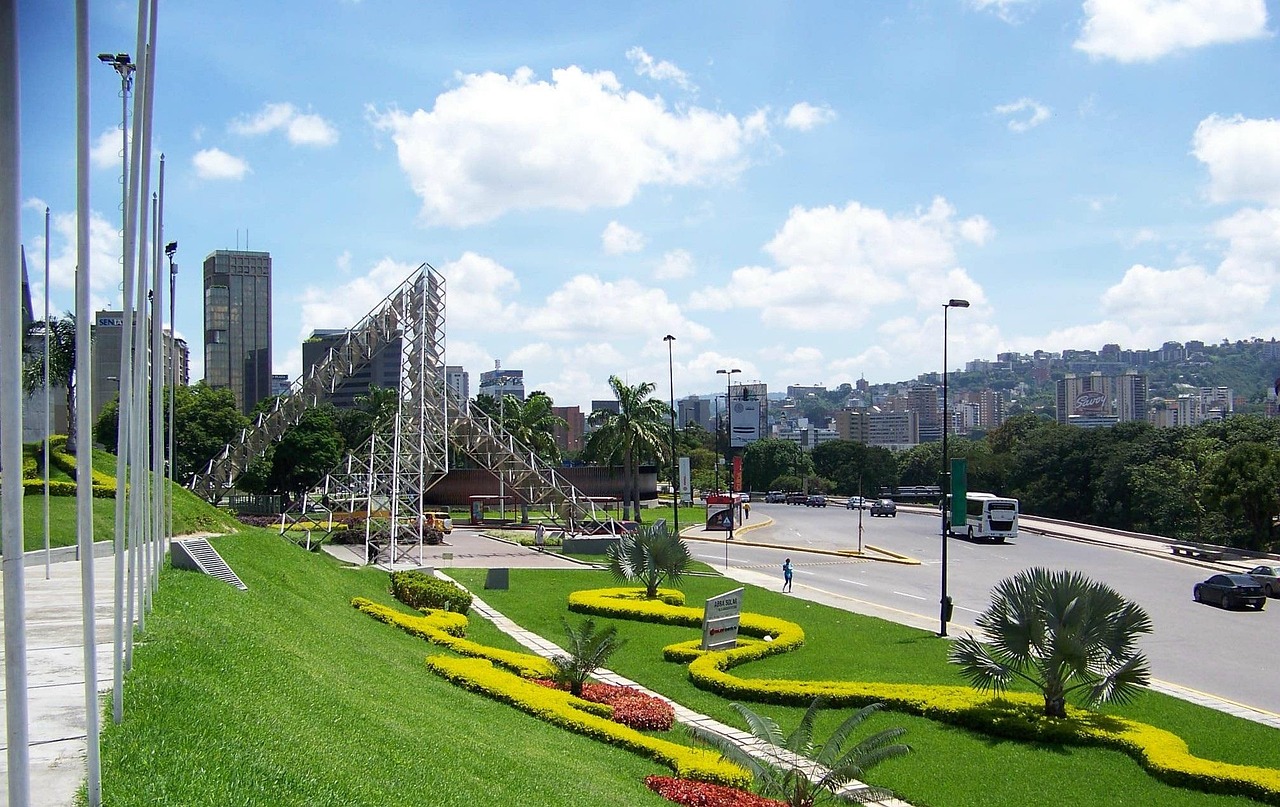
Stock photo of Caracas, the capital of Venezuela
U.S. Seizes Venezuelan Assets Amid Global Outcry
Miami/Caracas: The United States is exercising unprecedented control over Venezuela’s economy and strategic resources, raising urgent questions about legality, sovereignty, and international norms. Nicolás Maduro Moros and his spouse, Cilia Flores de Maduro, are currently in U.S. federal custody in New York, a fact confirmed by Secretary of State Marco Rubio in interviews on January 4, 2026. At the same time, Washington has moved to seize Venezuelan oil cargoes operating under sanctions, freeze state-linked financial assets, and assert operational oversight over parts of the country’s energy and shipping infrastructure. These actions have proceeded without explicit congressional authorisation and without any mandate from the United Nations Security Council, placing the United States at the centre of a rapidly widening global controversy.
In his interviews, Rubio was explicit about how the administration frames the operation. Speaking separately to ABC’s This Week, NBC’s Meet the Press, and CBS’s Face the Nation, Rubio described a strategy that combines law enforcement, sanctions, and diplomatic pressure to reshape the Venezuelan political and economic landscape, while repeatedly framing the initiative as being squarely in the national interest of the United States. He repeatedly rejected the idea that the United States had invaded or occupied Venezuela. “It wasn’t necessary [to notify Congress] because this was not an invasion. We didn’t occupy a country. This was an arrest operation… a very limited and targeted operation,” Rubio said. According to him, the arrests of Maduro and Flores, the seizure of oil vessels, and related enforcement measures were carried out under domestic judicial authority and U.S. law enforcement powers. Rubio stressed that U.S. courts had authorised these actions, though he did not publicly identify the specific courts, judges, or sealed warrants involved, citing legal and security sensitivities. He also emphasised that U.S. actions aim to limit the influence of foreign adversaries in Venezuela, specifically citing Iran, Russia, Hezbollah, and Cuba, and framing the measures as enforcement rather than conquest. Rubio additionally hinted that Cuba could become a focus of U.S. scrutiny next, reflecting concerns over Cuban influence in the region.
Rubio described the operation not as a single event but as a series of coordinated enforcement steps. First came judicially approved actions targeting sanctioned Venezuelan oil shipments and financial channels. These were followed by arrests conducted under U.S. law enforcement authority, culminating in the transfer of Maduro and Flores to federal custody in New York. Only after these steps did the United States move to assert broader oversight over energy-linked assets to prevent what he described as continued misuse of Venezuelan state resources and sanctions evasion. The legal rationale offered by Washington rests on U.S. sanctions law, asset forfeiture statutes, and criminal enforcement authorities tied to narcotics trafficking and related offences. Rubio acknowledged—implicitly if not explicitly—that this framework is domestic, not international. There is no UN Security Council resolution authorising the United States to control Venezuelan state assets, and no multilateral enforcement mechanism in play, though consultations continue with member states over legal clarity and potential multilateral engagement. This gap has triggered concern among international lawyers and diplomats, who argue that domestic court orders, however valid internally, do not automatically confer legitimacy for extraterritorial control over a sovereign state’s core economic infrastructure.
President Donald Trump, in statements made in early January, framed the operation as allowing the United States to temporarily “run” Venezuela using economic and strategic leverage, including the oil blockade and potential escrow or third-party mechanisms to manage state resources. Trump repeatedly emphasised “taking back stolen” oil reserves and suggested that U.S. companies could rebuild infrastructure for profit or reimbursement. He also noted that U.S. forces would not remain in Venezuela “if the vice president does what we want,” a close paraphrase of his remarks conveying that Delcy Rodríguez’s cooperation would determine the duration and scope of U.S. involvement. Rubio referenced such strategic considerations indirectly, underscoring that these measures are aimed at maintaining control over critical Venezuelan resources while limiting adversary access, rather than occupying the country. Vice President Delcy Rodríguez was sworn in as Acting President on January 3, backed by the Venezuelan military.
Venezuela’s oil sector lies at the heart of the dispute and explains much of the global reaction. The country holds the world’s largest proven crude oil reserves, estimated at approximately 303–304 billion barrels, primarily located in the Orinoco Belt. These reserves represent nearly one-fifth of global proven oil reserves. Despite this extraordinary endowment, Venezuela’s oil production has collapsed over the past decade due to mismanagement, lack of investment, infrastructure decay, and sanctions. By late 2025, production fluctuated roughly between 1.0 and 1.2 million barrels per day, far below its historical peak of over 3 million barrels per day. Exports had partially recovered in recent years through sanctioned and semi-authorised channels, with crude shipments primarily destined for China and a limited number of buyers elsewhere. In 2024, Venezuela’s overseas oil sales were estimated at around $17–18 billion, its strongest performance in years, though still well below potential. Venezuelan crude is heavy and sour, requiring specialised refining capacity concentrated in a small number of facilities globally, including along the U.S. Gulf Coast. Any disruption or redirection of these flows, therefore, has outsized consequences for specific refineries, shipping routes, and pricing benchmarks.
By asserting control over sanctioned vessels and energy-linked financial flows, the United States has effectively positioned itself as a gatekeeper for Venezuela’s primary source of national revenue. Energy analysts note that even though Venezuela currently accounts for a modest share of global daily supply, uncertainty over its future output, investment access, and export routes can generate volatility in oil markets, particularly in the heavy crude segment. Short-term price movements of 10 per cent or more are considered plausible under scenarios of prolonged disruption or legal uncertainty. Beyond energy markets, the humanitarian and demographic implications are significant. Venezuela has already experienced one of the largest peacetime migrations in modern history, with roughly 7.5 to 8 million people leaving the country over the past decade. Any further disruption to state revenue, fuel availability, electricity generation, food imports, or public health systems risks accelerating outward migration. Neighbouring countries such as Colombia and Brazil, along with Caribbean states and Central America, are bracing for potential spillover effects. Honduras, which Rubio specifically referenced, is particularly sensitive due to its existing migration pressures and limited capacity to absorb additional inflows.
Officials have vowed national unity and called for the release of Maduro. Venezuelan officials have alleged that U.S. actions involved military force and resulted in civilian and military casualties, with reported figures ranging from 40 to more than 80 deaths, though these claims have not been acknowledged by U.S. authorities. The operation—dubbed “Operation Absolute Resolve”—involved over 150 U.S. aircraft, Delta Force troops, and targeted airstrikes on Venezuelan military positions. Rubio stressed that the operation was framed as law enforcement rather than military conquest, aiming to enforce sanctions, seize assets, and limit the influence of foreign adversaries, including Iran, Russia, Hezbollah, and Cuba.
Global reactions have been swift and sharply divided. Russia condemned the U.S. actions as a violation of international law and warned that unilateral control over another country’s economic assets sets a dangerous precedent. Moscow has signalled that it is reassessing aspects of its political, energy, and security engagement in the region. Iran also criticised the operation, framing it as destabilising and warning that it could escalate tensions far beyond Latin America. Rubio indicated that Washington is closely monitoring Iranian-linked energy and financial networks connected to Venezuela and will not allow sanctions to be circumvented through third parties. Latin America itself is split. Some governments have welcomed the removal of Maduro as a blow against corruption and criminal networks, while others have warned that the U.S. action revives a long history of unilateral intervention in the region. Brazil and Mexico have urged restraint and multilateral engagement, while Argentina and a handful of others have expressed cautious support for the enforcement of sanctions and accountability mechanisms. Europe’s response has been more restrained, with several governments expressing concern about legality even as they acknowledge long-standing issues surrounding Venezuela’s governance.
At the United Nations, the situation has placed renewed strain on an already fragile system. While no Security Council resolution has been adopted, diplomats confirm that consultations are underway with member states over legal clarity and potential multilateral engagement. The core issue is whether domestic law enforcement actions by a powerful state can justify de facto control over another country’s assets in the absence of multilateral authorisation. This question goes well beyond Venezuela and has implications for future sanctions enforcement, asset seizures, and cross-border criminal prosecutions worldwide. Inside the United States, the operation has also reopened debates about executive authority. Rubio’s insistence that this was a law enforcement action rather than a military one is central to the administration’s position. Critics argue that the scale and impact of the operation blur the line between policing and intervention, effectively allowing the executive branch to bypass Congress by framing geopolitical actions as criminal enforcement. Republicans, including Rubio, have praised the operation as “historic,” while Democrats, including Senate Majority Leader Chuck Schumer, have raised concerns about its duration, troop deployment, and the lack of congressional authorisation. Public reaction in U.S. cities with large Venezuelan migrant populations has included both protests and celebrations. Debates about executive authority also invoke historical precedent, including the 1989 Panama invasion to arrest Manuel Noriega on drug charges, which combined law enforcement with military action.
Maduro and Flores remain in federal custody in New York. U.S. officials have not disclosed the precise facility or the full legal timetable ahead, citing judicial process and security concerns. Multiple legal pathways are reportedly under consideration, including criminal prosecution, asset forfeiture proceedings, and negotiated outcomes tied to Venezuela’s political future. Caracas has rejected all U.S. claims of legal authority, describing the arrests as kidnapping and vowing to pursue remedies through international courts and diplomatic channels. What is unfolding is no longer a discrete enforcement action but a test case with global consequences. Energy markets, migration patterns, regional stability, international law, and the balance between domestic authority and multilateral norms are all implicated. The United States insists it is acting lawfully and narrowly. Much of the world is unconvinced. How this standoff evolves will shape not only Venezuela’s future, but the rules governing sovereignty and enforcement in a fractured global order.
– global bihari bureau