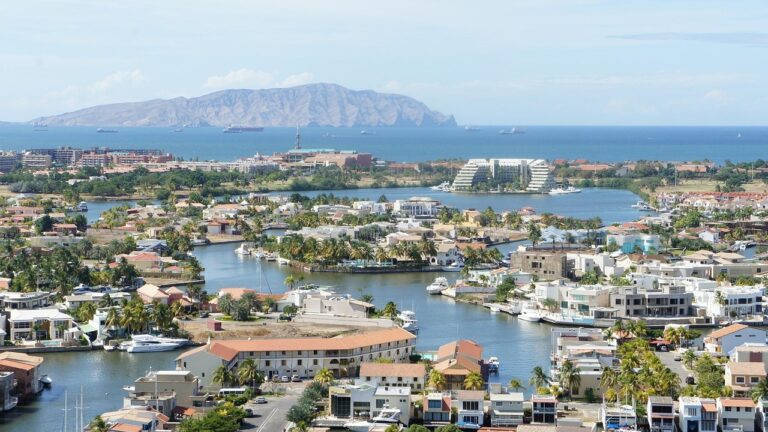
Cross Port, Venezuela
US Sanctions and Seized Tankers Crimp Venezuela Oil
Washington: The year 2025 closed with the United States imposing fresh sanctions on oil-rich Venezuela. Washington announced a new tranche targeting companies and oil tankers accused of facilitating Venezuelan crude exports in defiance of long-standing U.S. restrictions, extending economic, legal, and operational pressure on President Nicolás Maduro’s government. Recent reporting confirmed that some tankers linked to Venezuela’s shadow fleet have been seized or temporarily detained off its coast, producing delays in oil shipments and forcing rerouting by other vessels, according to U.S. authorities. Analysts say these moves, reinforced by U.S. warships and aerial surveillance over Venezuelan oil traffic in the Caribbean, are constraining Maduro’s operational freedom.
The measures, unveiled by the State Department and the Treasury Department, focus on what U.S. officials describe as a shadow network of traders and vessels generating revenue for Caracas while evading sanctions imposed on Venezuela’s state-run oil industry. Four companies were sanctioned for operating in Venezuela’s oil sector, and four oil tankers linked to those entities were blocked and formally added to the Treasury Department’s Specially Designated Nationals and Blocked Persons List. These designations trigger asset freezes and sweeping transaction prohibitions under U.S. law.
Treasury, through its Office of Foreign Assets Control, said the designated entities had been involved in transporting Venezuelan oil in violation of U.S. measures imposed on Petróleos de Venezuela S.A., or PDVSA. PDVSA was first designated under U.S. sanctions in January 2019, with additional blocking measures introduced later that year. Since then, enforcement has expanded beyond PDVSA itself to target foreign-based traders, ship managers, and vessels, reflecting Venezuela’s growing reliance, according to U.S. authorities, on opaque ownership structures, frequent reflagging, and a dispersed global “shadow fleet” to sustain exports. According to U.S. authorities and independent maritime analysts based in the United States, Europe, and global shipping hubs, monitoring Venezuelan oil shipments under sanctions, the shadow fleet often disguises vessel ownership, alters flags, and disables tracking systems to evade detection, allowing Venezuelan oil to continue moving despite U.S. restrictions.
Treasury Secretary Scott Bessent said the administration would not allow the Maduro government to profit from oil exports while, in Washington’s assessment, contributing to narcotics trafficking and destabilising activities. His remarks echo earlier U.S. actions taken under separate legal authorities, including criminal indictments unsealed in 2020 and standing U.S. rewards for information leading to arrests. U.S. officials have consistently maintained that these criminal cases are legally distinct from oil-sector sanctions and are pursued through different institutional channels, even as they form part of the broader pressure posture toward Caracas.
Officials said the latest designations complement sanctions imposed earlier this month, including actions announced on December 11 and December 19 against PDVSA-linked officials, associates, and vessels. Taken together, the December measures illustrate a cumulative enforcement approach rather than a shift in strategy, aimed at steadily increasing the commercial, legal, and compliance risks associated with Venezuelan oil trade rather than imposing an outright embargo.
The four companies sanctioned are Aries Global Investment Ltd, Corniola Limited, Krape Myrtle Co. Ltd., and Winky International Limited, entities registered across China, Hong Kong, and the Marshall Islands. U.S. authorities said these firms held ownership or operational interests in vessels that had transported Venezuelan oil. The tankers designated and blocked are the crude oil carriers Della, Nord Star, and Valiant, alongwith the oil products tanker Rosalind, also known as Lunar Tide. By adding both the companies and the vessels to the SDN List, the United States has extended restrictions to shipping insurers, port operators, banks, and counterparties that might otherwise facilitate their operations.
As a result of the designations, all property and interests in property of the listed companies and vessels that fall under U.S. jurisdiction are frozen and must be reported to OFAC. The prohibitions extend automatically to any entities owned, directly or indirectly, by 50 per cent or more by the designated parties. U.S. persons are generally barred from engaging in transactions involving the blocked entities or vessels unless authorised by a specific or general licence.
Treasury cautioned that the reach of the sanctions extends beyond the United States. Foreign individuals, shipping operators, insurers, and financial institutions may also face exposure to U.S. penalties if they facilitate transactions or provide services linked to the designated entities or tankers, even when operating outside U.S. territory. Violations of U.S. sanctions can result in civil or criminal penalties, and enforcement may be pursued on a strict liability basis, meaning intent need not be proven.
Alongside these financial and legal measures, the sanctions unfold against a reinforced U.S. security presence in the Caribbean region. Since 2020, and including renewed deployments in recent months, the United States has maintained forward-deployed naval and air assets actively monitoring tanker movements in the Caribbean, providing operational leverage over Venezuela’s oil traffic.
U.S. officials said that Venezuelan oil exports continue, often routed through increasingly opaque networks, as sanctions enforcement extends beyond Venezuela itself into global shipping, insurance, and financing systems. Caracas has responded by strengthening domestic legislation criminalising support for the seizure of tankers or enforcement measures perceived as hostile, with penalties reportedly reaching up to 20 years in prison. According to U.S. authorities and independent maritime analysts, the combination of financial restrictions, criminal prosecutions, operational enforcement, and forward-deployed military pressure has progressively narrowed the operational space for Venezuelan oil, even as Washington maintains that the measures remain economic and legal rather than kinetic.
The announcement followed President Donald Trump’s signing of a continuing resolution funding the federal government through January 30, allowing the Treasury Department to resume normal operations after a brief disruption. The administration presented the timing as evidence of policy continuity and enforcement resolve rather than escalation.
Washington has long argued that illicit oil trading provides the Maduro government with critical financial resources and undermines efforts to restore democratic governance in Venezuela. Caracas has rejected U.S. sanctions as unlawful and labelled U.S. actions “piracy,” while some international observers have cautioned that aggressive maritime enforcement risks broader geopolitical friction. U.S. officials said the latest action serves as a warning that companies and vessels involved in the Venezuelan oil trade continue to face significant sanctions risks, as enforcement increasingly targets the global logistics networks sustaining those exports rather than relying solely on pressure against PDVSA itself.
In reiterating that sanctions are intended to induce behavioural change rather than function solely as punishment, Treasury officials pointed to established legal processes through which designated parties may seek removal from the sanctions list if they demonstrate compliance with U.S. law. For now, U.S. authorities say, the combination of financial restrictions, legal action, and forward-deployed operational pressure will remain central to Washington’s strategy toward Venezuela, even as Caracas continues to deny the legitimacy of those measures and contest their impact.
– global bihari bureau