 By Vidyadhar Date*
Bollywood Veteran’s Terrifying Park Collapse
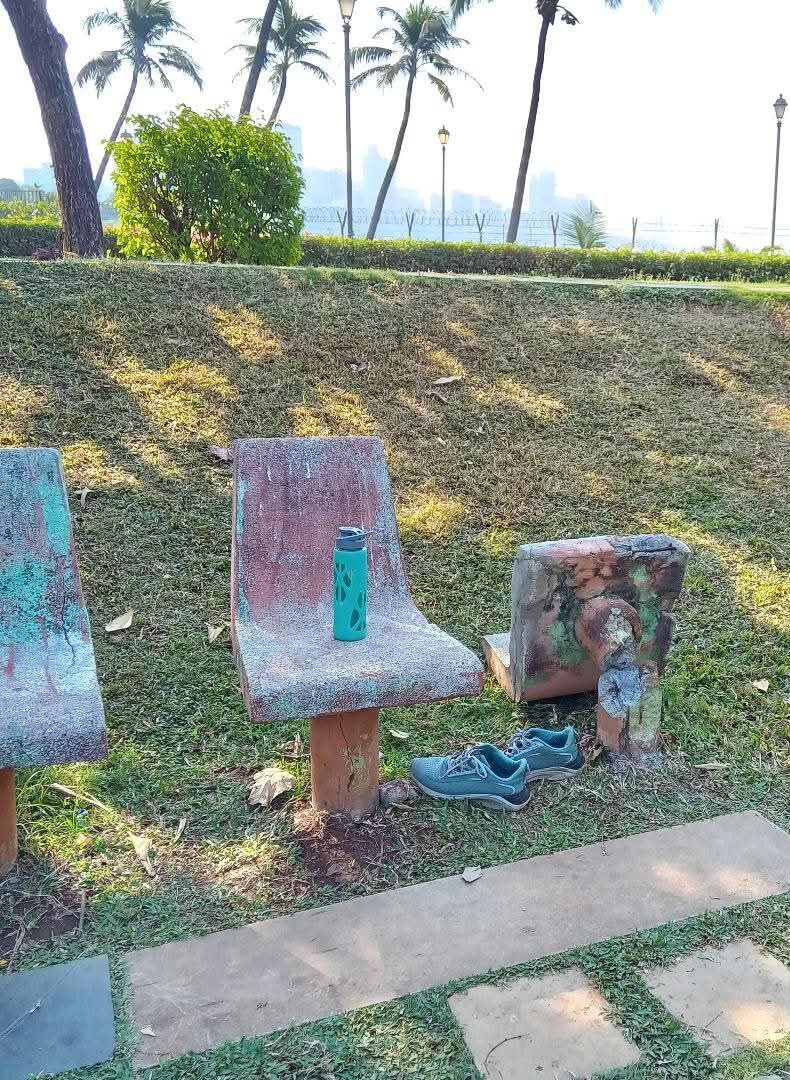
Mumbai: In the early morning haze of Bandra’s seaside Joggers’ Park, where the salty breeze mingles with the rhythmic thud of sneakers on paths, a dramatic scene unfolded that could have scripted into one of Bollywood’s thrillers. Naresh Malhotra, a veteran producer and director nearing 80, known for helming the iconic film Shahenshah starring Amitabh Bachchan, was deep into his stretching routine on a cement bench, guided by his trainer. Suddenly, the seat gave way beneath him, crashing to the ground and sending him tumbling backwards onto his back and the rear of his head. It was a heart-stopping moment – the kind where a split second could mean severe injury to the brain or neck, the worst nightmare for anyone, especially at his age. Miraculously, he escaped with just a narrow miss, shaken but upright, thanks to quick help from nearby joggers who rushed over to assist.
Shoddy Renovation Nearly Kills Film Legend
I witnessed it all from a short distance away, drawn by the unusual sight of this distinguished figure exercising in the park I’d frequented for over fifty years. As a journalist, curiosity pulled me closer after the dust settled. Malhotra, recovering on a nearby seat with his driver standing guard, shared a few words – enough to reveal his storied career in cinema. But this personal brush with danger opened a wider lens on the park itself, an iconic Mumbai landmark that’s as much a character in local lore as the people who visit it.
Mumbai’s Seafront Gem Ruined by Greed
Nestled along the Arabian Sea, Joggers’ Park isn’t just a green oasis; it’s a cultural touchstone. Created nearly three decades ago from barren public land by builders like Lokhandwala, Raheja, and Rizvi, it was efficiently managed by the Lokhandwala Trust with a modest Rs 2 entry fee – far less than some other private parks. That era brought sensible upkeep, fostering a space so beloved it inspired a 2003 Hindi drama film of the same name, directed by Anant Balani and written by Subhash Ghai, starring Victor Bannerjee, Perizaad Zorabian, and Divya Dutta. Shot right amid its paths and sea views, the movie captured the park’s romantic, rejuvenating essence and even turned a tidy profit at the box office.
But change came in 2016 when the municipal corporation took over, making entry free for all – a move that sparked nearly 10,000 signatures in protest from those fearing it would invite “riff-raff” and lead to decline. Such concerns smacked of bias against the poor, ignoring how the corporation runs other free parks like Kamala Nehru atop Malabar Hill without vandalism, welcoming school groups and families alike. At first, the transition seemed positive: the park looked greener, brighter, with fresh paint on railings and gates. Yet, what followed was a costly renovation that dug up the grounds for years, closing sections and transforming this eco-friendly haven into something far less harmonious.
Costing around Rs 9 crore – funds that could have prioritised the city’s needy – the so-called beautification involved heavy machinery churning through greenery, uprooting grass only to replant it with soil hauled from afar, robbing rural areas of their natural resources. Incongruous statues now crowd once-open spaces, reducing precious green cover. Worst of all, the children’s play area, once a simple, earthy spot with slides and swings where kids connected with nature’s soil and trees for natural immunity, has been smothered in concrete and topped with colourful artificial turf. This synthetic surface, laced with poisonous chemicals, rubber, and plastic, hides hazards beneath its vibrant facade. It’s controversial worldwide, criticised by experts like British specialists who decry its short lifespan, environmental toll – no moisture absorption, no habitat for insects or birds – and potential health risks from synthetic additives. The EU even probes it for carcinogens and microplastics.
Toxic Turf Traps Kids in Bandra’s Iconic Park

In Mumbai’s sweltering climate, such turf heats up dangerously, fails to soak up rainwater, and exacerbates flooding – a growing crisis the authorities ignore while concretising every inch in the name of progress. Researchers like Nyedra W. Booker and Stephanie Fox-Rawlings from the National Centre for Health Research warn that children, with their developing bodies, face amplified risks from these chemicals. Parents must choose playgrounds wisely, opting for natural surfaces to shield their little ones. Ironically, the renovation’s play area for physically and mentally challenged children, inaugurated by Aaditya Thackeray a couple of years back with kids from local municipal schools in attendance, now stands locked and unused – a poignant waste, especially knowing the corporation supports free classes for such children in places like Khar Danda and Kherwadi.
This isn’t just poor planning; it reeks of deeper issues. Sensible voices once championed the public sector, but here the corporation has squandered resources post-takeover, unlike the judicious spending by private builders before. Old gardeners, the malis, maintained it beautifully with shaded sitting areas under roofs for rain or sun protection – now gone, replaced by torturous, poorly designed lighting that blinds evening visitors. Facilities crumble quickly, seats like the one that felled Malhotra a testament to shoddy work by ignorant contractors, with civic officials turning a blind eye. Crores poured into needless changes, perhaps to line pockets, while media outlets paint rosy pictures or peddle bogus tales, like the Times of India’s absurd story of a “supernatural” pillar promoted by a local corporator – all hype, no substance.
The real tragedy? This model risks spreading. Housing societies and schools with big grounds are eyeing astroturf for elite games, turning public spaces into commercial ventures at nature’s expense. Powerful lobbies push these environmentally damaging contracts, robbing kids of open play while the rich hoard alternatives. In a city where the poor cram into dim, airless homes, parks like this are lifelines for recreation and democracy – historic battlegrounds for public rights. Deny them, and you erode the community’s soul.
Yet, amid the flaws, Joggers’ Park endures as a unique seaside gem, drawing joggers, families, and even Bollywood elders like Malhotra. His close call serves as a wake-up: true beauty lies in preservation, not reinvention. As Mumbai grapples with floods and vanishing greens, perhaps it’s time to listen to the park’s quiet plea – maintain what works, protect the vulnerable, and let nature breathe.
*Senior journalist