War’s End in Sight? Ukraine Pivots Between US Plan and EU Guard
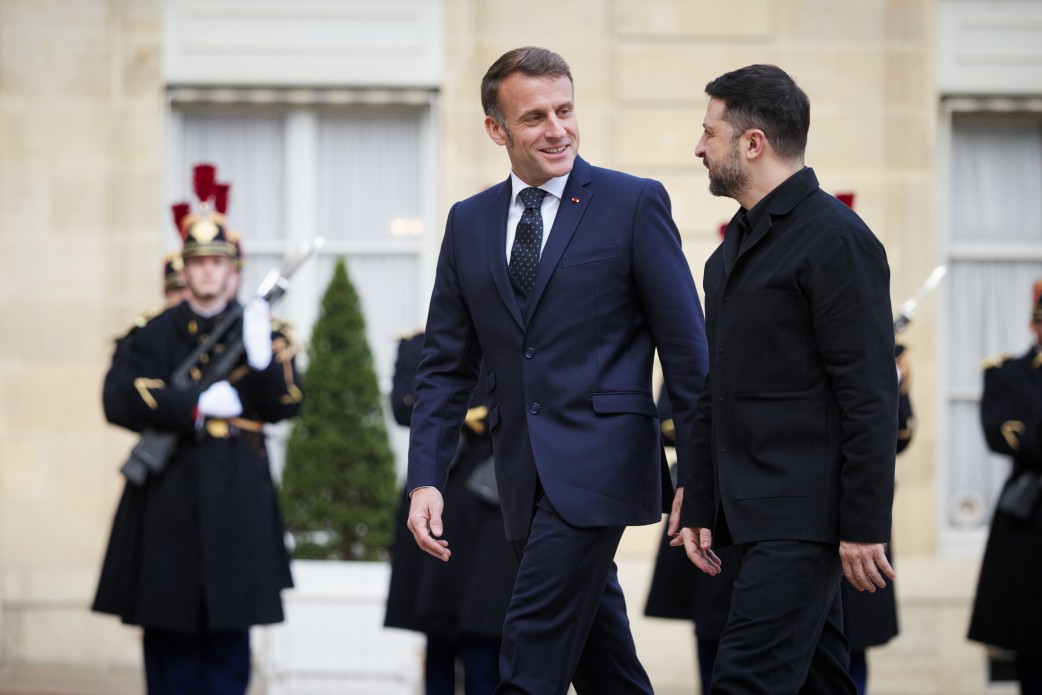
Paris: Ukrainian President Volodymyr Zelenskyy’s visit to the Élysée Palace and the joint call that followed today with eleven European leaders and the NATO Secretary General were publicly staged as a display of unity and momentum toward peace. The private diplomatic picture appears more complicated. What Europe showcased as cohesion looks more like a race to shape the terms of ending the war, and to ensure that whatever “peace” emerges does not fracture Western security architecture or turn Ukraine into a future liability.
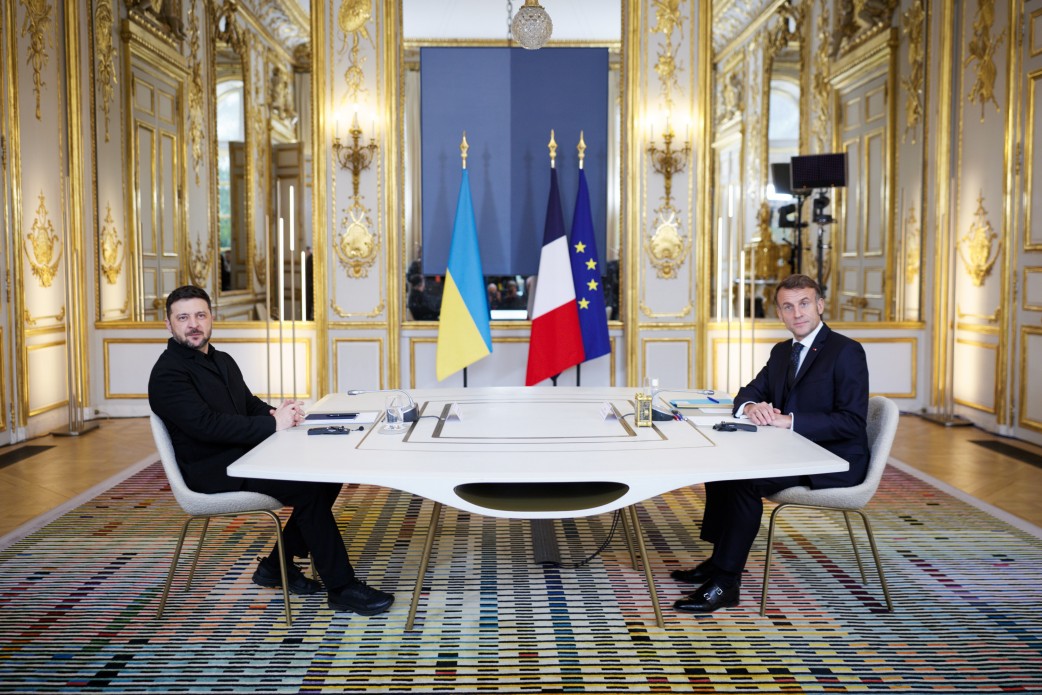
Zelenskyy and French President Emmanuel Macron held a lengthy closed-door meeting in Paris before convening a joint call with German Chancellor Friedrich Merz, Polish Prime Minister Donald Tusk, Italian Prime Minister Giorgia Meloni, Finnish President Alexander Stubb, Dutch Prime Minister Dick Schoof, Denmark’s Mette Frederiksen, Norway’s Jonas Gahr Støre, European Council President António Costa, European Commission President Ursula von der Leyen, NATO Secretary General Mark Rutte and, indirectly representing the United Kingdom, National Security Adviser Jonathan Powell. The choreography was clear: Europe wished to demonstrate that it was not a passive spectator in negotiations involving the United States.
The leaders emphasised that “the war must be brought to a dignified end,” a carefully chosen phrase that avoids specifying concessions, sequencing or guarantees. Zelenskyy warned that durability, not speed, would be the measure of success. “Peace must become truly durable. The war must end as soon as possible. Much now depends on the involvement of every leader,” he said afterwards. French officials interpreted the wording as validation of Paris’s recent diplomatic posture, which has been framed around “confidence-building” with Washington while signalling firmness toward Moscow. Other European capitals hear it differently: durability means security guarantees; security guarantees mean long-term military commitments that several governments are reluctant to spell out in public.
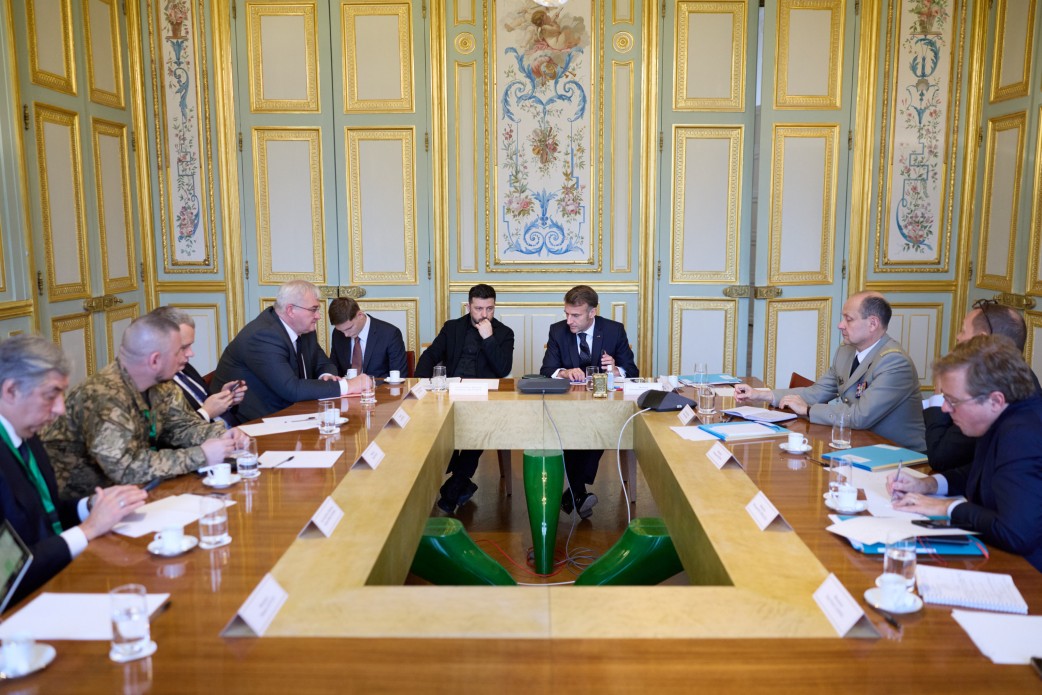
European leaders continue to agree on broad principles and diverge on implementation. Berlin, Rome and Helsinki are aligned on defensive guarantees and economic stabilisation; Paris pushes for a strategic European role to avoid over-dependence on Washington; Warsaw and London favour hardline deterrence. Their joint statement, therefore, concentrated on symbolism rather than details: coordinated negotiations, shared priorities, and continuing support. The gaps will be addressed privately or postponed.
The subtext of the Paris diplomacy is the Florida talks. Zelenskyy arrived in Paris on December 1, 2025, directly after the latest round of U.S.-Ukraine negotiations in Florida. He briefed Macron and later the wider group on discussions with Secretary of State Marco Rubio and National Security and Defence Council Secretary Rustem Umerov. Rubio cast the negotiations as a comprehensive design for Ukraine’s future, not only for ending the fighting but for “helping Ukraine be safe forever” and “enter an age of true prosperity.” Umerov echoed the sentiment, praising the “super supportive” American team and emphasising the future architecture: reconstruction arrangements, economic acceleration, energy security, and non-recurrence of aggression.
The weekend’s meetings in Florida, conducted between the U.S. delegation — including Marco Rubio (Secretary of State), envoy Steve Witkoff, and others — and a Ukrainian delegation headed by the head of Ukraine’s National Security and Defence Council, represent the most consequential secretive leg of the current diplomatic push. Participants described the discussions as “productive but complicated,” signalling that war termination is not merely about ceasefire mechanics but about designing a durable security architecture to underpin Ukraine’s future sovereignty. The core issues reportedly remaining unsettled — borders, NATO aspirations, military size, sequencing of guarantees — are being refined into a revised plan. That plan will now likely be carried to Moscow by Witkoff for discussion with the Russian side, while Kyiv presses Western capitals for parallel guarantees, and Paris positions itself to influence reconstruction and security arrangements.
Neither Rubio nor Umerov detailed the unresolved issues, but their remarks made plain that the Florida meetings were not about ceasefire mechanics alone. The reference to “another party that’ll have to be a part of the equation” and the note that Steve Witkoff would be travelling to Moscow later in the week indicates a triangular structure — United States, Ukraine and Russia — with Europe determined not to be sidelined. That explains the urgency behind the multilateral Paris call. It was not merely solidarity; it was Europe signalling that it expects a role, if not a veto, in the eventual settlement.
The joint communications also surfaced a familiar tension: the public insistence on unity masks a strategic hierarchy. Ukraine retains frontline legitimacy but has constrained leverage; the United States holds maximal influence over sequencing and security architecture; Europe holds reconstruction funding and long-term security guarantees. The party with the most public enthusiasm — Ukraine — is the one most exposed to the consequences of concessions. The party with the most decisive power — the United States — is operating on its own negotiation timetable. Europe wants to appear indispensable but needs internal alignment before it can be operationally so.
This is why Paris mattered. Europe wants to ensure that peace terms are not negotiated over its head. Paris insists on a strategic role; Berlin, Rome and Helsinki prefer a cautious, legalistic security guarantee model; Warsaw and London favour hard deterrence. None of these positions is reconcilable yet, so the public statements focused on symbolism — solidarity, coordination and resilience — while deferring substance. Diplomacy is moving, but unity is still performative.
Moscow chose the same day to shift the atmosphere. The Russian Foreign Ministry issued a sharply worded statement condemning NATO Military Committee Chairman Admiral Giovanni Cavo Dragone’s remarks to the Financial Times, suggesting that “pre-emptive strikes could be considered as defensive actions” in response to “hybrid attacks.” The Russian MFA called the suggestion “extremely irresponsible” and accused NATO of being prepared “to continue escalating” and “undermine efforts to resolve the Ukrainian crisis.” The line was clear: if Europe is staging talks about ending the war, Russia will frame NATO as the party poisoning diplomacy. The MFA’s messaging also served a second purpose — to portray any future compromise on Moscow’s part as generosity rather than weakness.
Later that evening, the Kremlin released the report and images of Russian President Vladimir Putin’s visit to the Joint Force command post — even though the visit itself had occurred late on November 30. The sequencing meant that Moscow’s battlefield messaging reached the public on the same day Western capitals were emphasising diplomacy.
Zelenskyy’s repeated reference to “clear priorities: diplomacy, defence and energy” reflects the pressure points. Diplomacy means frameworks for talks; defence means immediate military support while negotiations continue; energy means preventing Ukraine’s infrastructure collapse through the winter. Ursula von der Leyen confirmed that the European Commission is focused on “strengthening Ukraine’s resilience” rather than shifting into pre-reconstruction planning — a choice that reinforces the sense that the war remains in a transitional rather than terminal phase.
The message from NATO Secretary General Mark Rutte was similarly pragmatic: the alliance will continue coordination and maintain contact in the coming days. Rutte did not describe the end state because NATO does not yet have a consensus on the follow-on security model. The spectrum of views runs from full NATO membership to a bilateral security guarantees architecture outside NATO — concepts that are mutually exclusive.
For now, diplomacy advances through phrases broad enough to satisfy all parties because none of them has agreed on a detailed structure for peace. The political value lies in sequencing: the United States signals progress to its domestic audience; Europe signals unity to strategic competitors; Ukraine signals agency and commitment to its population and allies. The strategic value, however, depends on the unpublicised part of the negotiations — mechanisms, enforcement, timelines, resource flows, and security guarantees.
The convergence of these moves — Paris diplomacy, Florida negotiations, the Russian MFA’s reaction to NATO rhetoric and Putin’s battlefield stagecraft — illustrates that the war is now in a phase where public and private tracks diverge. In public, leaders speak of peace, sovereignty and resilience. In private, they pursue leverage: Washington through security architecture and reconstruction design; Europe through influence over guarantees and funding; Russia through territorial control and diplomatic framing.
The underlying dynamic has not changed. Peace will not be determined by the eloquence of the joint statements issued from Paris, nor by the rhetorical condemnations flowing from Moscow, nor by the footage of commanders bending over maps at a military headquarters. It will be determined by the interplay of military outcomes, strategic risk-taking and the willingness of capitals to convert words of support into irreversible commitments.
Nonetheless, the military and domestic-political context significantly constrains how any diplomatic breakthrough can be implemented. On the military front, as of late 2025, the steady flow of U.S. weapons to Ukraine has slowed under Donald Trump’s administration: new aid is now subject to a “capability review,” and some high-end air-defence and precision-weapon shipments, including Patriot missiles, were suspended earlier this year. This has increased Ukraine’s dependence on European military assistance, but European aid remains more fragmented and may not fully compensate for reduced U.S. deliveries. On the domestic front in the United States, the 2025-session Congress is deeply polarised: while a bipartisan minority argues for continued robust support for Ukraine as essential to U.S. commitments and global deterrence architecture, many others are pushing for stricter oversight, clearly defined “exit criteria,” and tighter budgetary controls — reflecting widespread public fatigue over prolonged foreign-military spending. In Ukraine itself, recent political turmoil complicates Kyiv’s negotiating leverage: the resignation of top aide Andrii Yermak after an anti-corruption investigation has triggered a major cabinet reshuffle and cast doubt on internal cohesion at a moment when unity is critical. And in Russia, despite heavy sanctions and international isolation, the economy has so far proved more resilient than many expected — allowing Moscow to sustain military operations while stoking national-symbolic rallies of patriotism and boosting domestic legitimacy. The result: even if diplomatic track-work advances, the gap between pledges and real capacity — and the domestic constraints on all sides — means that converting an agreement on paper into lasting peace will be a steep uphill climb.
For now, diplomacy accelerates but ambiguity endures — and every side is working to enter the closing negotiation phase in the strongest position possible.
The next moves will not be ceremonial. Further European meetings are expected in the coming days, followed by continued conferencing between Kyiv and Washington. The Russian leg, signalled indirectly by Secretary Rubio, will follow. The diplomatic choreography remains public; the trade-offs remain private.
Europe’s leaders describe the moment as a rare alignment around a common goal. They did not explain what happens if alignment fails.
— global bihari bureau