India Hails COP30 Gains as Fossil Fight Stalls
COP30 Outcome Suits India as Fossil Text Drops Out
New Delhi/Belém: India’s reading of the 2025 United Nations Climate Change Conference (COP30) in Belém underscores a deep, structural tension: in a summit marked by bold declarations has emerged a profound reticence on fossil fuels! Despite more than eighty countries pushing for a roadmap to phase out non-renewable energy, the final Belém Package makes no explicit mention of “fossil fuel phase-out.” For New Delhi, this omission carries political significance, and the Indian government’s official statement reflects a carefully calibrated satisfaction: it welcomes the progress on climate finance and equity, but retains a clear eye on the fault lines that remain unresolved.
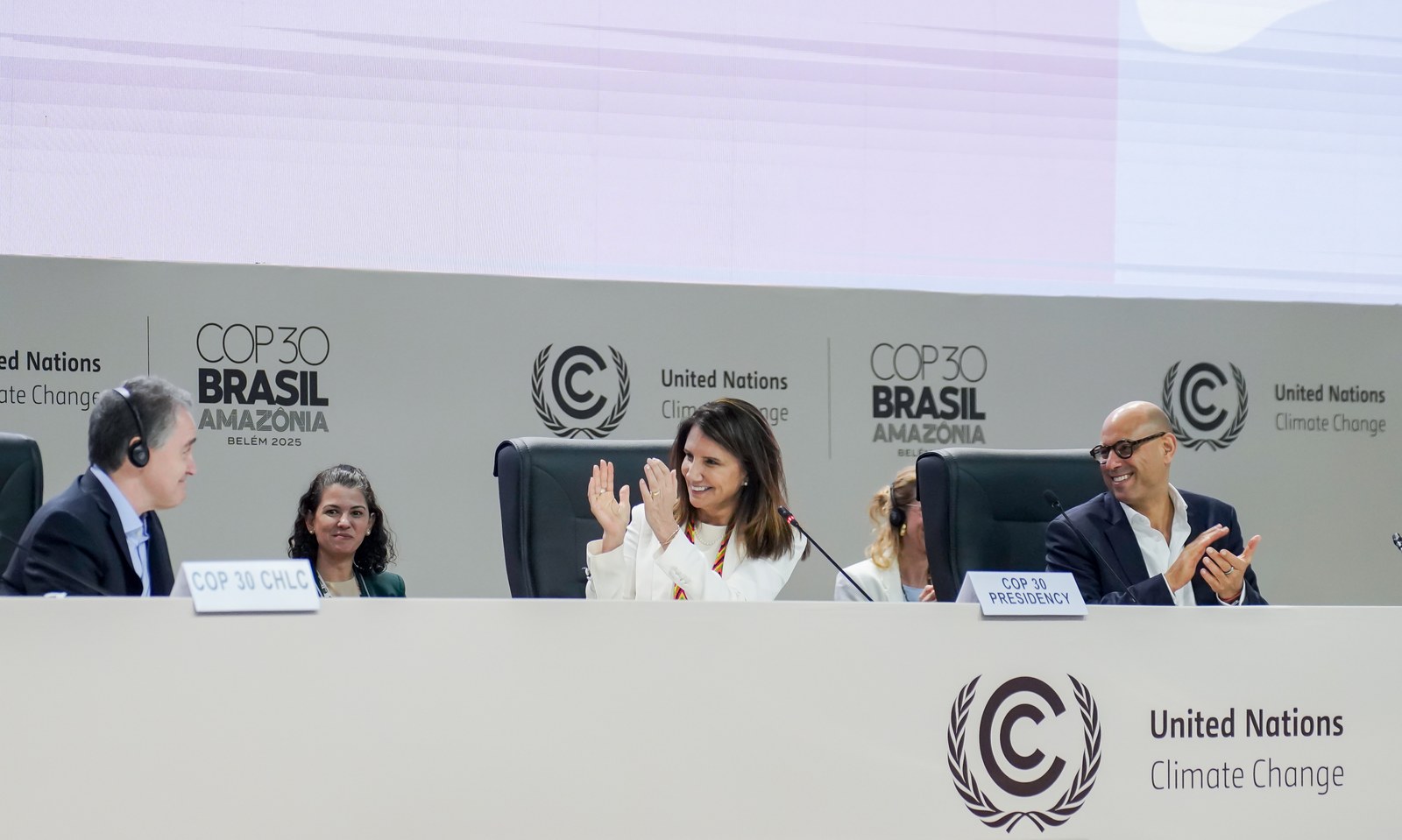
In its High-Level Statement delivered at the COP30 closing plenary, India praised the Presidency’s leadership, rooted in inclusion and the Brazilian spirit of Mutirão. New Delhi underscored that the absence of a fossil-fuel phase-out mandate does not necessarily signal failure — rather, it reaffirms the delicate balance that developing countries, particularly India, have insisted upon: mitigation ambition must be matched by respect for development realities and equitable burden-sharing. From India’s perspective, the decision to omit binding fossil-fuel language preserves its sovereign space to chart a gradual yet real energy transformation.
India placed special emphasis on the Global Goal on Adaptation (GGA), celebrating the equity dimension of the decisions made and warning that the burden of climate change must not fall disproportionately on those who bear the least historical responsibility. The government’s statement noted that tripling adaptation finance by 2035—one of the headline COP30 outcomes—is a step toward recognising justice for climate-vulnerable nations. But India also views this commitment through its own national lens: adaptation remains deeply relevant for its rural, agrarian and monsoon-exposed states, and New Delhi will press fervently for the promised flow of funds to reach farmers, flood-prone regions and low-income communities.
One of COP30’s most politically resonant decisions for New Delhi was the establishment of a Just Transition Mechanism. By formalising support for communities and workers most exposed to economic disruption, the mechanism reflects India’s insistence that an energy transition must not penalise livelihoods in coal-heavy states or cost jobs in fossil-fuel–dependent regions. The absence of a fossil-fuel exit mandate, in this light, becomes less a gap and more a political choice: India gains flexibility to align its transition with both climate goals and social realities, while delegitimising demands that risk undermining economic stability.
Another notable thread in India’s COP30 framing was its concern about climate-related trade measures. In its official statement, India explicitly welcomed the space opened in Belém for discussing “unilateral trade-restrictive climate measures,” warning that carbon border taxes and similar policies are increasingly being deployed in ways that harm developing economies and undermine equity. For India, this is not a side issue — it is central: the fight for fair trade-linked climate rules is now bound up with the fight for climate justice.
India also reiterated that those with the least responsibility for global emissions must not be overburdened with mitigation obligations. This concern is magnified by the fact that, although 80 countries backed a roadmap to phase out non-renewables, the final text avoids locking in any specific fossil-fuel commitment. India’s messaging suggests that while it is open to transition, it will not accept demands that ignore its scale of energy needs, energy poverty, and development priorities.
The cameo of absent U.S. leadership — Washington declined to send a formal federal delegation — only intensified the strategic space for India and other emerging economies. Without a major power driving fossil-fuel exit mandates, the summit became less about enforcing a universal energy timeline and more about building a financing architecture that allows developing states to make voluntary, nationally designed trade-offs. From New Delhi’s point of view, that is precisely the kind of multilateralism it can work with: one that supports ambition but does not undermine sovereignty or development.
On balance, COP30’s outcome may look to some like a compromise that fell short on fossil responsibility. But for India, it is a cautiously judged diplomatic success: it preserves policy space, strengthens its case on climate finance, and secures institutional tools like just transition. As the global conversation moves to Türkiye for COP31, New Delhi will likely push hard on finance delivery, equity frameworks, and keeping fossil phase-out out of any coercive multilateral mandate. For domestic policymakers, the challenge now is to translate Belém’s architecture into implementation — not just promises.
– global bihari bureau