Railways Cuts Bulk Cement Freight, Revamps Logistics and Sustainability
Containerised Cement Movement Signals Industry Shift
New Delhi: Indian Railways today announced a structural overhaul of cement logistics by introducing a flat freight rate for bulk cement movement in containers and unveiling a new policy for Bulk-Cement Terminals, a reform that the government says will reduce costs for consumers while reshaping the environmental footprint of one of India’s most transport-intensive industries. The scheme was launched in New Delhi on 18 November 2025, with the Railways Ministry confirming that bulk cement moved through containers will now be charged at a uniform ₹0.90 per tonne per kilometre on a Gross Tonne Kilometre basis, replacing the previous system of weight- and distance-based slabs.
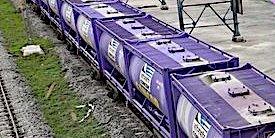
The reform is anchored in containerised, multimodal logistics. The ministry has specified standardised tank-container units measuring 20 ft by 8 ft by 8.5 ft, capable of carrying a 26-tonne payload with a 31-tonne gross weight. Designed to enable rapid mechanised loading and unloading, each operation is expected to take around 25 to 30 minutes, substantially reducing turnaround time. Complementing this is a new policy enabling the establishment of rail-linked Bulk Cement Terminals equipped with silos, hoppers, storage, and mechanised handling infrastructure intended to support smooth transfer from manufacturing to consumption centres.
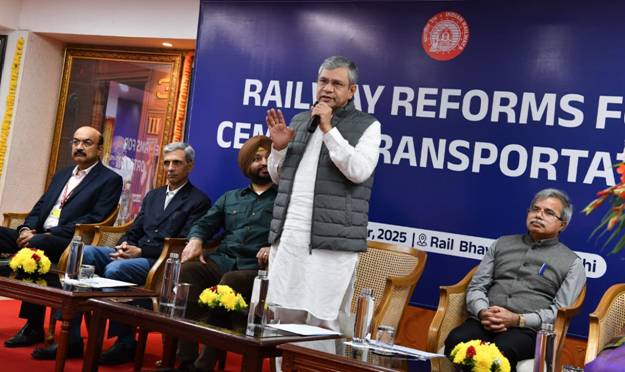
At the unveiling event in New Delhi, Ashwini Vaishnaw, the Union Minister for Railways, described the reforms as a “game changer” that will reduce cement transportation costs for middle- and low-income households building homes. Beyond cost savings, the ministry highlighted potential environmental and logistical benefits: enabling larger consignments, reducing spillage and packaging losses, minimising reliance on road transport (and thus road congestion and emissions), and facilitating faster turnaround through mechanised loading/unloading.
Impact on Cement Prices and Market Dynamics
The new freight regime is expected to exert downward pressure on cement prices, particularly along long-haul routes where logistics costs historically account for 18–25% of retail prices. Scenario analysis suggests that for a 50-kg bag transported over 500 km, freight savings could range from ₹8–₹10 per bag, while per-tonne savings may reach ₹150–₹250 depending on distance. Long-haul corridors such as Chhattisgarh to Bihar or Andhra Pradesh to Assam could see logistics cost reductions of 15–20%. Institutional buyers like ready-mix concrete operators and infrastructure developers are expected to see the most immediate benefit, while retail consumers may experience a slower pass-through of savings depending on dealer margins and adoption rates.
Regions with existing rail-linked infrastructure, including Maharashtra, Gujarat, Rajasthan, Tamil Nadu, and Andhra Pradesh, are likely to benefit sooner, whereas areas lacking terminals will experience a slower transition. Over the medium term, as tank-container adoption scales and terminals become operational nationwide, the reform could contribute to more uniform price bands across states, reducing historical regional volatility.
Environmental Implications
The policy is expected to have a positive environmental impact. Rail freight emits significantly less carbon per tonne-kilometre than diesel trucks, and with India’s broad-gauge network nearly fully electrified, the environmental benefits are amplified. A shift from road to rail could reduce cumulative CO₂ emissions, diesel consumption, and urban particulate pollution along industrial corridors. Containerised bulk handling and mechanised terminals will also minimise spillage and fugitive dust, reducing particulate release in surrounding communities.
Additionally, by decreasing dependence on single-use 50-kg cement bags, the reform is projected to reduce packaging waste, while fewer trucks on highways will alleviate congestion and secondary emissions. The movement of larger consignments per trip further improves energy efficiency and lowers the sector’s overall carbon footprint.
Operational Considerations and Implementation Timeline
Despite the clear advantages, several operational challenges remain. The rapid establishment of Bulk Cement Terminals across the country is crucial to realise the full benefits. Adequate capacity at origin and destination points, synchronisation of production and rail dispatch schedules, and workforce training for container handling are essential for smooth adoption. Extremely short-haul or very long-haul routes may require additional adjustments under the flat ₹0.90/TKM rate, and coordination with state authorities for land acquisition and permissions will influence rollout speed.
The Railways Ministry has indicated that terminals will be rolled out in phases, prioritising industrial and high-volume corridors first, with broader nationwide coverage expected over 12–24 months. Early adoption in states like Maharashtra, Gujarat, Tamil Nadu, and Andhra Pradesh is anticipated to demonstrate the system’s efficacy, which could encourage wider uptake by manufacturers across India.
Industry Perspective and Strategic Context
Industry stakeholders have generally welcomed the reform, citing potential cost reductions and improved predictability for supply chains. Trade associations such as the Indian Cement Manufacturers Association (ICMA) have highlighted that containerised logistics will enable better route planning and reduce dependency on road haulage, though they caution that initial investment in tank-containers and terminal handling systems could be a limiting factor.
The reform also aligns with broader improvements in India’s freight logistics. India is now among the world’s largest freight carriers, daily track expansion has accelerated, and electrification of the broad-gauge network supports sustainability. For the cement sector, containerised bulk logistics represents global best practice, offering reduced wastage, improved predictability, and a lower environmental impact.
Comparative Benchmarking and Economic Implications
Internationally, bulk cement freight rates vary widely, with many countries charging higher per-tonne-km rates due to longer distances or less electrified rail networks. India’s flat ₹0.90/TKM positions the country competitively and encourages modal shift from trucks to rail. Secondary economic benefits include potential reductions in road maintenance costs and improved traffic flow on highways, further extending the reform’s value beyond direct cost savings.
Risks and Limitations
Key risks include delayed terminal approvals, uneven regional adoption, resistance from truck-based transporters, and short-term logistical bottlenecks during the transition phase. The success of the initiative hinges on coordinated planning, timely infrastructure deployment, and industry willingness to shift from traditional road-based logistics.
Conclusion
The Railways’ bulk cement policy represents a structural shift rather than a marginal adjustment. It promises lower transportation costs, more predictable supply chains, and environmental benefits. The ultimate impact on both consumers and manufacturers will depend on the uniformity of rollout, adoption of tank-container movement, and the extent to which cost savings are passed along the supply chain. For industry stakeholders, this policy signals an opportunity to optimise logistics, modernise supply chain strategies, and position India’s cement sector in line with global best practices for containerised bulk transport.
– global bihari bureau