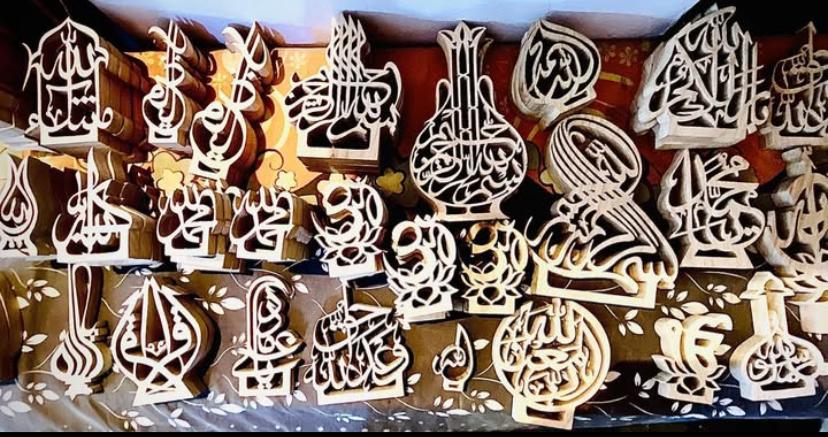
Wood Carving by Delhi's Mushtaq Ahmed and Mohd. Ameen Farooqi
Bihar’s Golden Weave: Sikki and Papier-Mâché Shine
New Delhi: Beneath the ancient arches of Humayun’s Tomb, where bougainvillaea vines trace the whispers of empires long past, a 10-year-old child pauses mid-stride, his screen-weary eyes locking onto a flicker of gold. A master artisan from Bihar kneels beside him, her weathered hands parting strands of sikki grass like threads of sunlight. “Feel it dance, child—like fireflies in the marsh,” she says softly, guiding his small fingers into the weave. What begins as a simple basket becomes the child’s first tether to tales his grandparents spun by kerosene lamps: stories of resilient rivers and unyielding roots, far from Delhi’s relentless hum.
This quiet alchemy unfolds in earnest this weekend, November 21 to 23, 2025, as Sundar Nursery’s historic amphitheatre awakens to the SPIC MACAY Folk & Tribal Arts–Crafts Festival. A three-day tapestry of sound and skill, woven by the 48-year-old youth movement SPIC MACAY—founded by Padma Shri awardee Dr Kiran Seth to breathe life into classical and folk traditions—the event transforms Delhi’s urban edge into a living mosaic of India’s heartlands. Backed by the Aga Khan Trust for Culture, Delhi’s Department of Art, Culture and Language, Sudha Sangini, and Doordarshan, it honours a singular vow: to let every child glimpse the “inspiration and mysticism” cradled in our shared heritage, through over 5,000 programmes rippling across more than 100 towns each year.

At the heart of this gathering beat the stories of two Bihari artisans, whose crafts form the festival’s luminous core—a duet of endurance turning scarcity into splendour. Rubi Devi, 55, harvests sun-kissed sikki reeds from Madhubani’s flood-prone marshes for a 400-year-old Mithila rite she learned barefoot at dawn: splitting stalks, dyeing them in turmeric’s blaze or indigo’s depths to weave mats cradling dreams, lamp shades mimicking harvest moons, and coasters blooming with peacock mandalas of unyielding grace. Now empowering over 200 tribal women through collectives that defy Bihar’s tempests, her works have lit up Delhi’s 2019 Trade Fair and the National Crafts Museum’s halls.

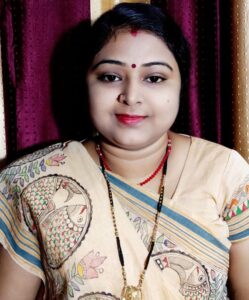
Besides Rubi, Anubha Karn, in her 40s, resurrects Mughal-era papier-mâché with her grandmother’s Rajasthan filigrees, moulding recycled newsprint alongside awardee husband Avdhesh Kumar into vases vortexed with Madhubani epics, festive trays brimming with family sweets, and lidded boxes hoarding sacred lore. Surviving the pandemic’s hush by fusing pulp with Gond geometries in Bhopal forges—birthing hybrid lamps illuminating uprooted journeys—she joins Rubi in SPIC MACAY’s “Support the Artists” and “Save The Artist” spotlights.

“This grass is our roots, woven tight to outlast any flood,” Rubi declares, echoed by Anubha’s plea: “What yields, we yield stronger still.” Together, they urge festival-goers—from hurried executives to wide-eyed Aaravs—to knead reeds and shape scraps side by side, forging amulets and heirlooms that pulse with earth’s quiet thrum and refuse’s fierce return, a seamless bridge from urban haste to ancestral rhythm.
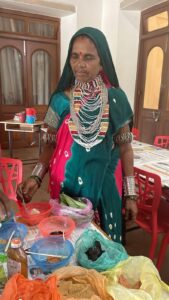
Yet it’s the daylight that truly roots this revelry, as Sundar Nursery unfurls into a bustling craft village, where award-winning artisans become living bridges between fading villages and curious crowds, inviting hands to tame earth and fibre in generations-old rites. This chorus swells from Rubi and Anubha’s shared glow: Madhya Pradesh’s Gangu Bai, 62, a Bhil Adivasi from Jhabua’s parched hills, dots canvases with arrows repelling shadows and peacocks summoning storms—marks daubed on childhood hut walls for tribal shields, evolving from Bhopal museum drudgery to pioneer Bhuri Bai’s trail in the ’90s, now commanding galleries while sowing seeds in son Subhash and village youth, her brushes unearthing buried bonds. Delhi’s Mushtaq Ahmed and Mohd. Ameen Farooqi inscribe invocations on vellum and veneer; Manoj Kumar kneads terracotta into watchful deities; Sambhav Shyam spirals Gond’s veiled verdancy; Chandrakant Mahala carves Warli’s stark village sagas; Tripura’s Subrata Chakraborty twists bamboo into lore-laden cradles. Together, they defy oblivion, their labours an anthem of miles traversed, secrets salvaged, strokes stitching the frayed.
As twilight drapes the nursery’s 90-acre haven of Mughal ruins and rare blooms, evenings ignite with rhythms spanning the subcontinent, counterpoint to the day’s tactile intimacies. Friday opens with Tamil Nadu’s piercing Mangala Isai— S. Kandaswamy’s Nadaswaram summoning temple echoes—yielding to West Bengal’s fiery Purulia Chhau, Tarapada Rajak’s masked dancers whirling like epic embers; Jharkhand’s Saraikela Chhau glides in shadowed grace with Biswanath Kumbhakar evoking forest phantoms, before Kerala’s Ottanthullal seals the eve in Kalamandalam Mohanakrishnan’s sly, satirical verses.
Saturday delves deeper: West Bengal’s Baul singers— Lakshman Das’s river-born minstrels—serenade stars with hymns of elusive love; Tripura’s Hojagiri sways in Debasis Reang’s trance of earthen devotion, clay pots perched impossibly; Manipur’s Dr Nganbi Chanu unleashes Thougal Jagoi, a bamboo-clawed lion prowling folklore’s frontiers.
Sunday surges triumphant: Telangana’s Ghussadi pounds under Kanaka Sudarshan’s peacock-crowned revellers in jubilant agrarian dirge; Meghalaya’s Wangala thunders homage to harvest deities, drums like monsoons; the Warsi Brothers from Rampur unfurl Qawwali’s rapturous storm, verses dissolving boundaries in shared ecstasy.
Through it all burns the festival’s quiet flame, as convenor Suman Doonga articulates: “We inspire young minds, safeguard our cultural trove, and nurture the guru-shishya lineage—an open summons to savour India’s kaleidoscopic artistry in its undimmed vigour.”
In SPIC MACAY’s grand weave—concerts, rambles, reels, asanas, all volunteer-spun—such sparks endure, fanning reverence from fleeting touch. Open to every wanderer, gratis as the breeze through these timeless groves, the gathering beckons not as spectacle, but summons: a span from drummer’s distant throb to the novice’s nascent line. India’s narratives? No dusty tomes, but vital veins, awaiting palms like the child’s to pulse them onward. Dare you lend yours to the loom?
– global bihari bureau