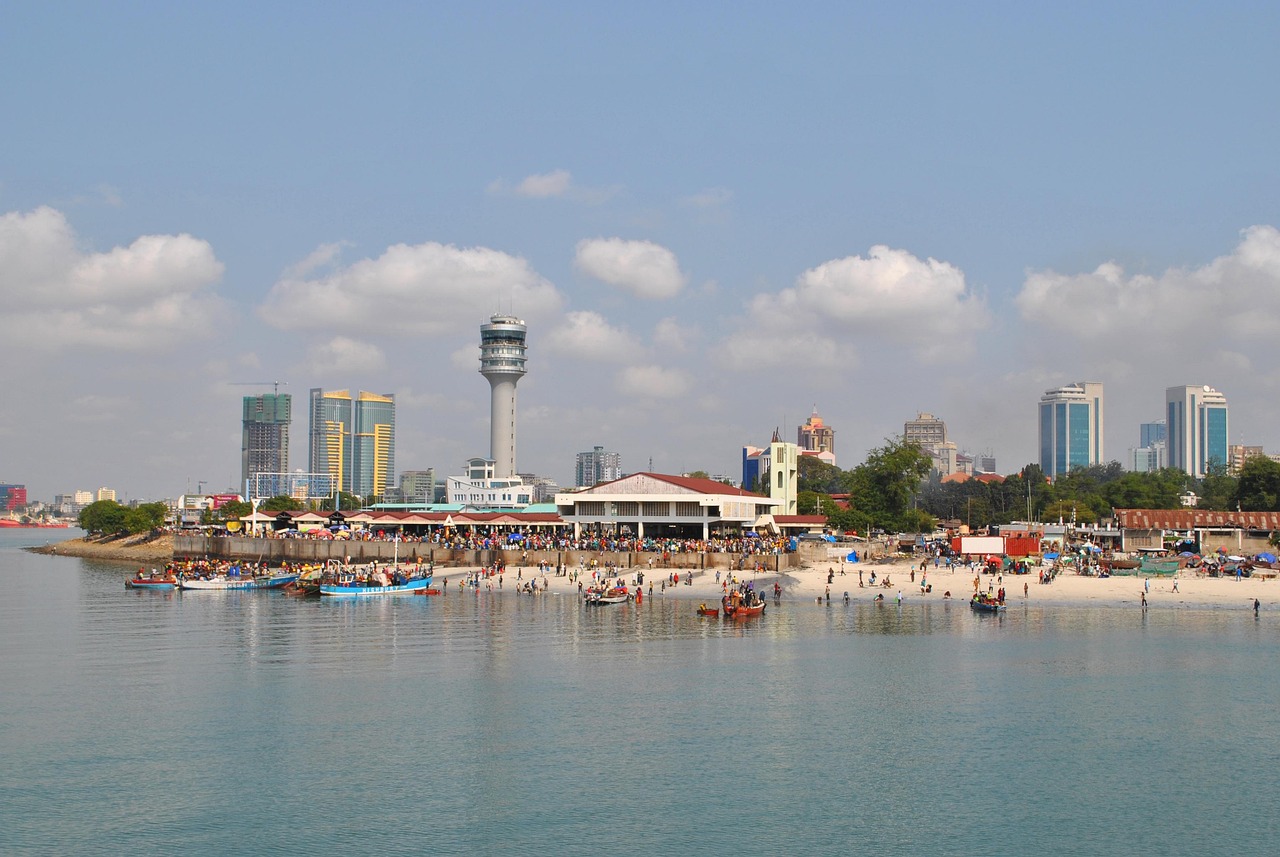
Dar es Salaam
Tanzania’s 2025 Election Crisis:
Protests Erupt Over Disputed Vote
Opposition Claims Hundreds Dead
Curfew, Internet Blackout Follow Election
Dar es Salaam/Geneva: Violent demonstrations have swept through Tanzania following the October 29, 2025, general election, which covered presidential, parliamentary, and local contests across the mainland and semi-autonomous Zanzibar archipelago.

The polls, administered by the Independent National Electoral Commission (INEC), saw incumbent President Samia Suluhu Hassan of the ruling Chama Cha Mapinduzi (CCM) projected to secure a decisive victory in preliminary state media tallies, with CCM’s Hussein Mwinyi winning 74.8 per cent in Zanzibar according to the Zanzibar Electoral Commission, amid opposition allegations of fraud. Security forces deployed tear gas, live ammunition, and military units to disperse crowds blocking roads, burning vehicles, and targeting polling stations, resulting in a nationwide curfew and internet blackout without official explanation.
The United Nations Office of the High Commissioner for Human Rights (OHCHR) reported credible accounts of at least 10 deaths in Dar es Salaam, Shinyanga, and Morogoro, while Chadema—Tanzania’s main opposition party, formally known as Chama cha Demokrasia na Maendeleo (Party of Democracy and Development)—claimed approximately 700 fatalities based on party networks’ hospital tallies— a figure unverified by independent sources.
Protests, entering their third day on October 31, 2025, spread to Arusha, Mwanza, and border points like Namanga with Kenya, where demonstrators obstructed routes. Army chief Jacob Mkunda condemned the unrest and called protesters “criminals,” marking the first major military mobilisation in three decades of multiparty rule. The internet shutdown, confirmed by NetBlocks, affected nationwide connectivity, stranding tourists, delaying flights, including those of Tanzania’s national airline, and barring foreign journalists from mainland coverage. Voter turnout remained low amid the chaos, with demonstrations defying the curfew in Dar es Salaam neighbourhoods such as Mbagala, Gongo la Mboto, Kiluvya, Salasala, Yombo, and Tegeta.
OHCHR spokesperson Seif Magango, briefing in Geneva on October 31, expressed alarm over the deaths and injuries, attributing them to security forces’ use of firearms and tear gas. He urged restraint from authorities, including avoidance of unnecessary or disproportionate force such as lethal weapons, and called on demonstrators to remain peaceful while de-escalating tensions. Magango demanded full adherence to international human rights obligations, immediate restoration of internet access to enable freedoms of expression, association, and assembly, unconditional release of those in arbitrary detention, due process and fair trials for others in custody, and prompt, impartial investigations into all election-related violence with accountability for perpetrators. He noted that communication restrictions further erode public trust in the electoral process. Amnesty International verified two deaths on October 29—one civilian and one security officer—via social media evidence and urged independent probes into lethal force, while stating it had information suggesting at least 100 killed overall, though it has not published a nationwide tally.
Chadema spokesperson John Kitoka, speaking from hiding to evade arrest, reported around 700 deaths over three days on October 31, including 350 in Dar es Salaam and over 200 in Mwanza, derived from health worker accounts during party visits to hospitals and clinics; the toll could be higher due to potential nighttime killings under curfew, he added. A security source estimated more than 500 dead, possibly 700-800 nationwide, while a diplomatic source cited evidence for at least 500. Tanzania’s Foreign Minister Mahmoud Thabit Kombo denied excessive force on October 31 and provided no official figures, with hospitals refusing disclosures amid reprisal fears. Human rights activist Tito Magoti reported at least five deaths based on initial ground accounts.
The unrest followed Chadema’s disqualification by INEC on April 12, 2025, for refusing to sign the Electoral Code of Conduct, a decision the party viewed as legitimising an unfair system and announced via verified X (formerly Twitter) by Secretary General John Mnyika using the hashtag #NoReformsNoElection. INEC cited Article 162(1)(a) of the 2024 Presidential, Parliamentary and Councillors’ Elections Act, which mandates preparation and publication of the code in the Government Gazette following party consultations, as the basis, though the act does not explicitly list disqualification as a penalty. Chadema chief attorney Rugemeleza Nshala described it as unconstitutional, arguing it contravened Article 39(1) of the 1977 constitution on candidate qualifications—Tanzanian birth citizenship, age 40 or older, party nomination, parliamentary or Zanzibar House eligibility, and no tax evasion convictions—and a 1995 Court of Appeal ruling (Attorney General v. Radio Tanzania Dar es Salaam) affirming fair elections. The disqualification barred Chadema until 2030 and affected the second-largest opposition, Alliance for Change and Transparency (ACT-Wazalendo), after candidate Luhaga Mpina’s double exclusion—first over primary nomination lapses, then on September 15, despite a High Court reversal—leaving 16 candidates from minor parties. Hassan, nominated in January 2025 with running mate Emmanuel Nchimbi and confirmed on August 27, faced limited regional challenges from smaller groups during the August 28 to October 28 campaign focused on infrastructure, education, and stability.
Chadema’s exclusion stemmed from its “No Reforms, No Election” campaign, launched March 23, 2025, in Mbeya Region, demanding an independent INEC (where all seven commissioners are currently presidentially appointed), transparent voter registration for the 37.7 million eligible participants (up from 29.8 million in 2020, per INEC statements), full international observer access, equal media coverage, and amendments to restrictive laws under the Political Parties Act and National Elections Act. Rallies commenced on January 18 in Dar es Salaam, where Lissu proclaimed the slogan, followed by events in Mwanza, Arusha, and Dodoma. A February 14 reform proposal to Hassan, who succeeded John Magufuli in March 2021, received no response. Authorities banned assemblies in Mbeya (March 3), Tanga, and Morogoro for security reasons. The campaign trended on social media by June with “Hakuna Uchaguzi Bila Marekebisho,” though government spokesperson Gerson Msigwa called it “nonsense” and suspected manipulation, prompting Tanzania Communications Regulatory Authority monitoring.
Lissu, a former Singida East MP (2010–2020), lawyer, and 2017 assassination attempt survivor shot 16 times, intensified calls on April 3, 2025, via a Dar es Salaam rally speech and YouTube video, accusing police of 2024 local election rigging under presidential orders (“Mapolisi wanatumika kuiba kura wakiwa na vibegi”) and CCM-aligned judges. Arrested April 9 in Mbinga, Ruvuma Region, alongside Southern Zone Chairperson Aden Mayala, Felius Festo, Shija Shebeshi, and his bodyguard amid tear gas dispersal, Lissu faced four charges April 10 at Kisutu Resident Magistrate’s Court: one under Penal Code Section 39 for incitement to treason—alleging his speech urged rebellion and election obstruction, a non-bailable capital offense under Criminal Procedure Act Section 148(5) carrying possible death—and three under Cyber Crimes Act No. 14 of 2015 Section 16 for false information (up to three years imprisonment and fines). He pleaded not guilty; bail was denied on treason, leading to remand at Ukonga Prison’s death row section despite no conviction, with complaints of surveillance, denied worship, and restricted lawyer access.
Proceedings included delays: Lissu refused a virtual hearing on April 24, demanding in-person; Kenyan lawyer Martha Karua was arrested and deported on May 18 at Julius Nyerere International Airport; prison blocked counsel June 16, prompting self-representation; he appeared physically May 19, raising a fist to supporters, and was remanded until June. A September 8 High Court hearing continued the unresolved case. Amnesty International, the International Commission of Jurists, and Human Rights Watch condemned the charges as politically motivated breaches of free expression, assembly, and fair trial rights under the 1977 constitution and African Court standards.
Further arrests targeted two Chadema members on April 24 at a support rally; deputy secretary general Amani Golugwa on May 13 at Julius Nyerere Airport en route to Brussels; and regional chairpersons in Shinyanga and Kagera. Amnesty documented 47 Chadema detentions from January–June 2025. Enforced disappearances encompassed Chadema secretariat member Ali Mohamed Kibao, found dead in September 2024, post-Tanga abduction, and Tanzania’s former Cuba ambassador; UN experts noted over 200 cases since 2019, including 83 during the campaign.
Post-disqualification, Chadema promoted abstention, rural “reform caravans” by youth leader John Pambalu, and an August 15 47-page reform document. May 1 Workers’ Day protests displayed slogan banners; a September 7 “Mashujaa Day” event led to dozens arrested for illegal assemblies. An August 28 High Court ruling overturned a Registrar of Political Parties order nullifying Chadema leadership over mainland-Zanzibar resource disparities, though the registrar cited pending service.
International observers decried the repressive environment. Freedom House rated Tanzania “not free” in 2024, down from “partly free” in 2020. Amnesty’s October 19 briefing, “Wave of Terror Sweeps Across Tanzania”, detailed assembly disruptions, activist curbs, and fear among journalists and civil society. Human Rights Watch highlighted risks from abductions and unfair trials. The European Parliament’s foreign affairs committee termed the vote a “fraud” on October 30 amid “repression, intimidation, and fear.” Southern African Development Community, East African Community, and a 23-member Great Lakes Region mission observed despite initial accreditation hurdles. The African Commission on Human Rights and UN experts raised alarms over rights deterioration.
Chadema demands the release of arbitrary detainees, communication restoration, violence probes, and reforms, insisting outcomes lack legitimacy absent change. Analysts label the system “competitive authoritarianism,” akin to Rwanda, the Ivory Coast, and Cameroon. Hassan encouraged participation while voting in Dodoma. With INEC results pending on October 31, the crisis underscores democratic backsliding in East Africa.
– global bihari bureau