
Trade Watch Q4: India Balances Gains, Global Pressures as its FY25 Trade Hits $1.73 Trillion Services and Aerospace Lift India’s Trade Outlook
NITI Aayog Flags Shifts in Trade and Export Patterns
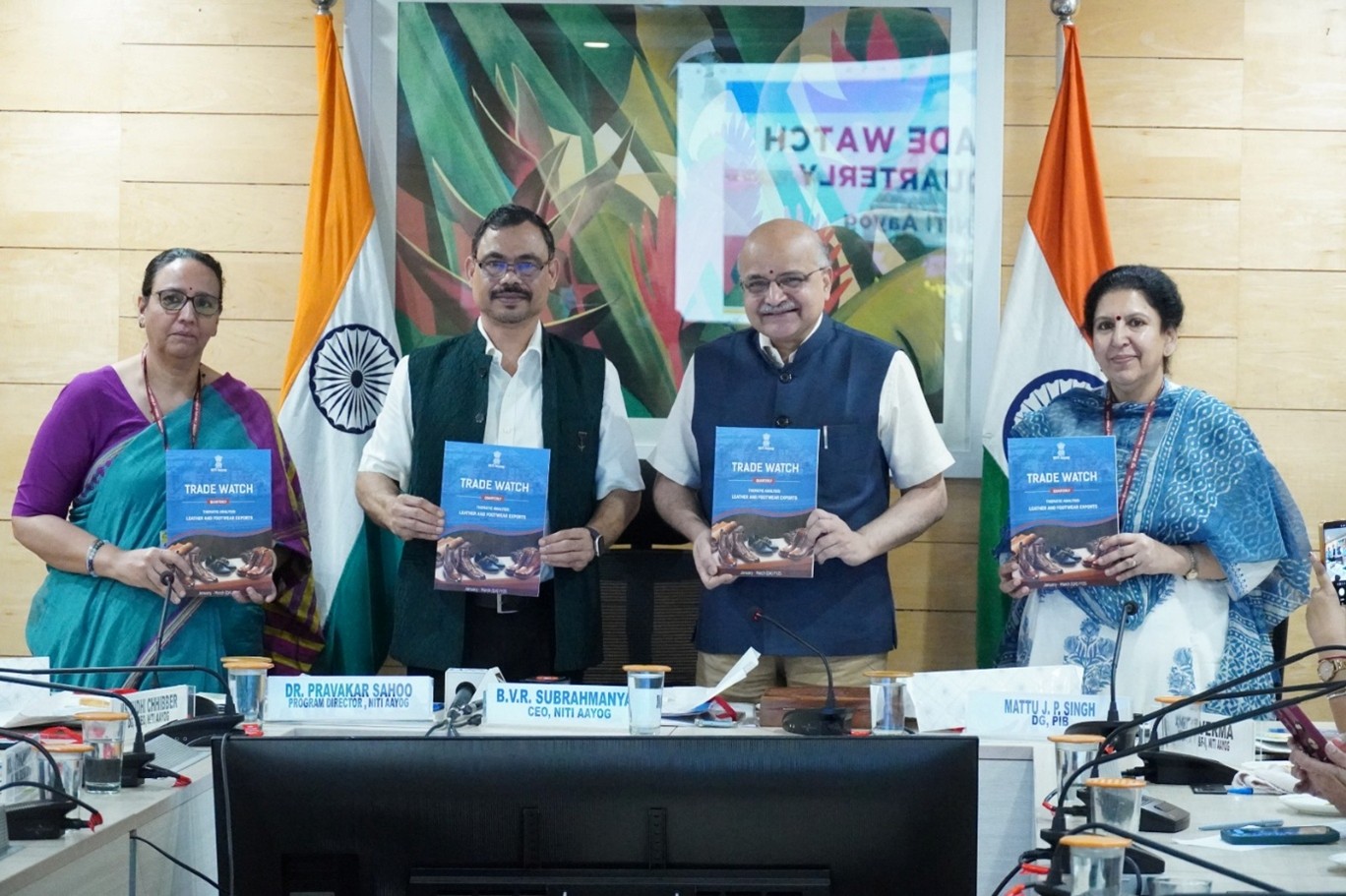
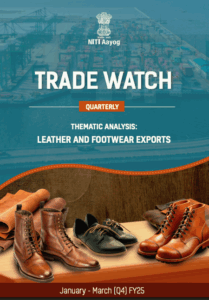 New Delhi: India’s trade performance remained resilient in the final quarter of the financial year 2024–25, with total trade valued at USD 441 billion, marking a 2.2 per cent increase over the same period last year. The data, released in the fourth edition of Trade Watch Quarterly for Q4 FY25 (January–March 2025), was unveiled today in New Delhi by B.V.R. Subrahmanyam, Chief Executive Officer of NITI Aayog. The report offers an expansive review of India’s merchandise and services trade trends, highlighting both enduring strengths and emerging structural challenges.
Subrahmanyam, while releasing the study, emphasised that services exports, aerospace, and high-value manufacturing continue to anchor India’s external trade resilience. He noted that India must adapt swiftly to shifting global demand patterns, diversify its export base, and boost competitiveness in non-leather footwear and other labour-intensive sectors. The country, he said, needs to strengthen its foothold in global value chains while keeping a close watch on geopolitical disruptions that could reshape trade flows.
According to the report, India’s total trade in FY25 stood at USD 1.73 trillion, representing a 6 per cent year-on-year growth. Exports reached USD 823 billion, while imports were valued at USD 908 billion, resulting in a trade deficit of USD 84.8 billion. The services sector emerged as the standout performer, with exports touching a record USD 387.5 billion, a 13.6 per cent rise from the previous year, driven by robust performances in IT, telecommunications, and business services. Services imports grew modestly, enabling a surplus of USD 53 billion in Q4 FY25 alone.
In contrast, merchandise exports contracted by 4.3 per cent year-on-year in the fourth quarter due to a sharp decline in key categories such as mineral fuels (–37.8%) and organic chemicals (–14.5%). Despite this, sectors such as electrical machinery, pharmaceuticals, and cereals showed encouraging growth. Imports grew marginally by 1.84 per cent, supported by higher demand for nuclear reactors, electrical machinery, and inorganic chemicals, suggesting a continued appetite for technology-intensive and industrial inputs.
The report noted that India’s export basket remains structurally misaligned with global demand. Roughly 66 per cent (USD 15.8 trillion) of global import demand is concentrated in products where India’s market share is just 0.2 per cent, while only 3 per cent (USD 1.5 trillion) of global imports lie in categories where India has a high 18.2 per cent share. This imbalance underscores the need for strategic alignment of India’s export structure with international consumption trends, particularly in technology-driven and sustainability-linked sectors.
Regionally, trade patterns also reflected evolving dynamics. North America emerged as India’s most dynamic export destination, with exports growing 25 per cent and accounting for a quarter of total exports. Exports to the European Union (EU), Gulf Cooperation Council (GCC), and Association of Southeast Asian Nations (ASEAN), however, witnessed moderation due to subdued demand conditions. On the import side, the United Arab Emirates (UAE) overtook Russia as India’s second-largest supplier, driven by substantial gold inflows under the Comprehensive Economic Partnership Agreement (CEPA). Imports from China surged as well, fuelled by strong demand for portable computers and electronic goods.
The Trade Watch study also examined sectoral shifts that point to India’s evolving export sophistication. Between 2020 and 2024, India’s overall exports grew at a compound annual growth rate (CAGR) of 10 per cent, outpacing the world import CAGR of 6 per cent. The aerospace sector stood out, expanding at a remarkable 44 per cent CAGR to reach USD 7.4 billion, while electronics also saw significant gains, reflecting India’s growing participation in advanced manufacturing and supply chains.
A dedicated segment of the report assessed India’s leather and footwear industry, which employs 4.4 million people and contributes significantly to export earnings. In 2024, India’s leather and footwear exports were valued at USD 5.5 billion, representing 1.8 per cent of the USD 296.5 billion global market. India remains competitive in prepared leathers (revealed comparative advantage above 6), leather apparel (RCA 5.35), and saddlery (RCA 4.18). However, these strengths are concentrated in niche, low-demand categories, while India’s participation in non-leather and sustainable footwear—a segment valued at USD 110 billion globally—remains minimal.
The report noted that in 2024, the United States, Germany, France, and Italy together accounted for nearly 30 per cent of global import demand for footwear. These are key markets where India has significant scope to expand its presence, provided it aligns production and design with changing consumer preferences. Although India has started shifting towards value-added leather articles and footwear, the study observed that this structural shift has yet to translate into tangible market share gains.
The study called for a comprehensive strategy to strengthen competitiveness in this sector. It recommended modernising fragmented MSME clusters by developing vertical industrial complexes and plug-and-play parks with shared access to testing, compliance, logistics, and machinery. It also emphasised the importance of apprenticeship-based skilling, R&D for design innovation, and domestic production of soles, moulds, and synthetic uppers to bridge material and technological gaps.
Highlighting the twin challenge of global shifts towards non-leather and sustainable products, the report said India faces both “a test of adaptability and a window of opportunity.” Investing in green technologies, design-driven manufacturing, and R&D capabilities could help the country reposition itself in global value chains.
Ultimately, the Trade Watch Quarterly for Q4 FY25 portrays a complex but hopeful picture: a services sector at record highs, steady merchandise performance despite headwinds, and a trade structure gradually transitioning toward higher value addition. As Subrahmanyam noted, sustaining India’s trade resilience will depend on how quickly the country aligns its manufacturing and export competitiveness with global demand shifts while leveraging its human capital, digital infrastructure, and industrial innovation to secure a stronger presence in the world economy.
– global bihari bureau