Volatile Rates Hit Global Trade
Critical Minerals Spark Trade Tensions
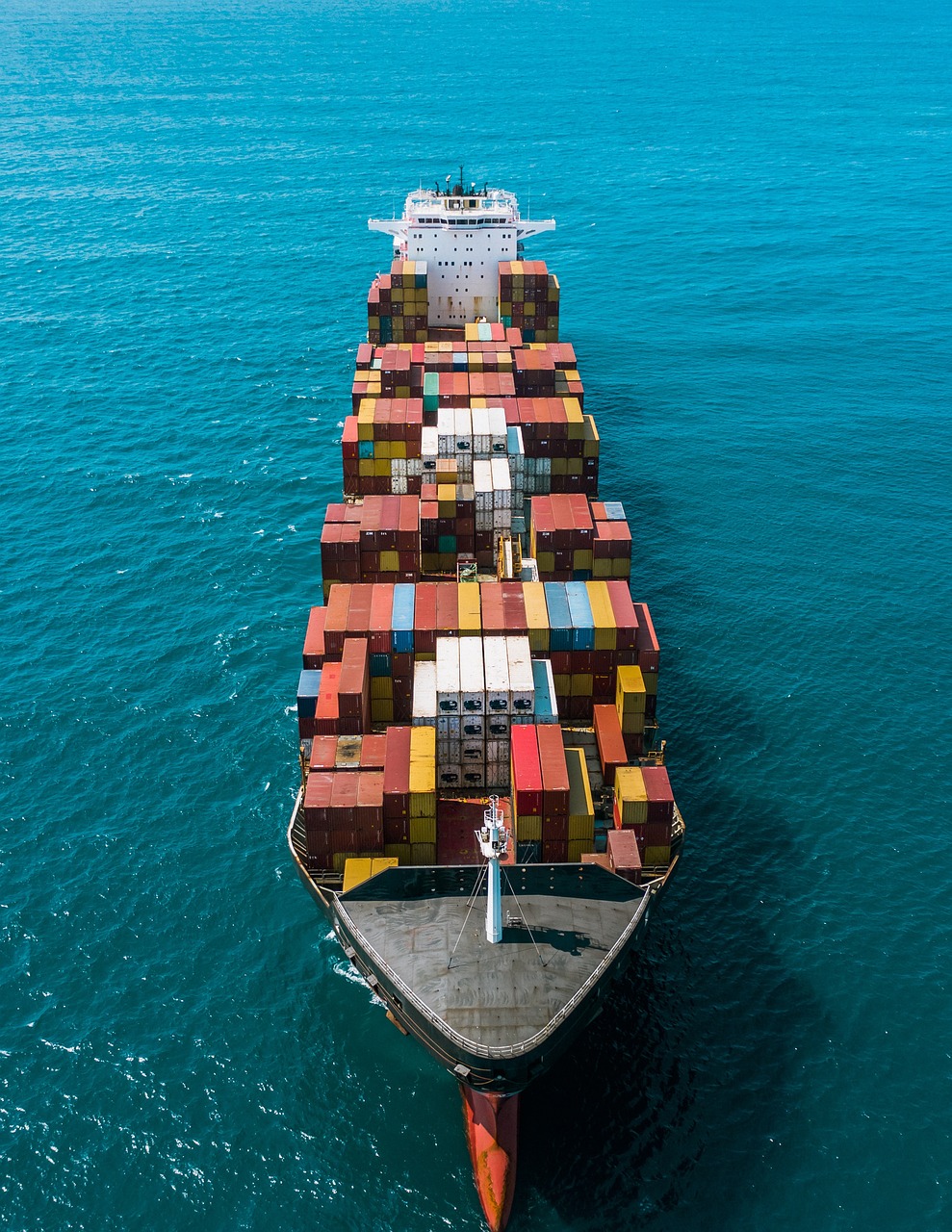
Geneva: Global shipping, moving over 80% of the world’s merchandise trade, is entering a period of fragile growth, rising costs and mounting uncertainty, according to The Review of Maritime Transport 2025: Staying the course in turbulent waters, released by the United Nations Conference on Trade and Development (UNCTAD) today.
After firm growth last year, seaborne trade is expected to stall in 2025, with volumes barely rising (+0.5%). Long-distance rerouting caused by geopolitical tensions kept ships busier last year, with a record of nearly 6% growth in ton-miles. “The transitions ahead – to zero carbon, to digital systems, to new trade routes – must be just transitions,” said UNCTAD Secretary-General Rebeca Grynspan. “They must empower, not exclude. They must build resilience, not deepen vulnerability.”
Political tensions, new tariffs, shifting trading patterns and reconfigured shipping lanes are reshaping the geography of maritime trade. The United States of America and several trading partners have announced policy measures, including new tariffs, port fees and targeted restrictions on port calls in the United States by foreign-built or foreign-operated vessels.
These measures may further affect shipping costs and routes. The result is more rerouting, skipped port calls, longer journeys and ultimately increased costs. Energy shipping is also in transition: Coal and oil volumes are under pressure from decarbonization efforts, while gas trade continues to expand. Critical minerals — essential for batteries, renewable energy and the digital economy as a whole — are becoming a new source of tension in global trade, with competition to secure supplies and add value domestically. Maritime logistics are key for developing countries in seizing critical minerals opportunities.
This muted growth projection marks a sharp slowdown from the 2.2% increase in seaborne trade volumes recorded in 2024, when disruptions like the Red Sea crisis forced vessels to detour around the Cape of Good Hope, extending voyages by up to two weeks and inflating operational expenses. Suez Canal transits plunged 70% by May 2025 compared to 2023, as heightened security threats in the region persisted, while the Strait of Hormuz—handling 11% of global trade and one-third of seaborne oil—remains vulnerable to potential escalations that could further choke energy supplies. These geopolitical flashpoints not only prolonged routes but also contributed to a 5% rise in maritime greenhouse gas emissions last year, undermining progress toward international climate commitments and highlighting the sector’s environmental footprint, which accounts for about 3% of global emissions.
Freight markets have mirrored this turbulence, with rates exhibiting unprecedented volatility that shows no signs of abating. The Shanghai Containerised Freight Index, a benchmark for container shipping costs, averaged 2,496 points in 2024—a staggering 149% increase from the previous year—driven by supply chain bottlenecks and demand surges. Spot rates for a 40-foot container hit $3,600 in July 2024 before moderating somewhat, yet they linger well above historical norms, potentially fueling a 0.6% uptick in global consumer prices by the end of 2025 as higher transport costs filter through to goods. Dry bulk carriers, transporting commodities like coal, iron ore, grain, and fertilisers, saw rates climb amid robust demand and fleet constraints, though an influx of new tonnage in 2025 could temper this, easing pressures on food and raw material imports for agriculture-dependent economies. Tanker segments experienced a sharp rally in June 2025, fueled by risk premiums in chokepoints, which could exacerbate energy price swings and challenge households in import-reliant nations.
UNCTAD’s advocacy for “just transitions” comes at a pivotal moment, as the sector grapples with the triple challenge of decarbonization, digitalisation, and route reconfiguration. Currently, just 8% of the global fleet—totalling over 2 billion tons in capacity—is retrofitted or designed for alternative fuels such as liquefied natural gas (LNG) or emerging options like ammonia and methanol, leaving the industry exposed to volatile fossil fuel prices and regulatory penalties. Ship recycling rates, vital for phasing out inefficient vessels, remain subdued at around 1% of the fleet annually, but the Hong Kong International Convention for Safe and Environmentally Sound Ship Recycling, which entered force in June 2025 and now governs 90% of the market, is poised to enforce stricter standards, potentially reducing hazardous waste from breaking yards in South Asia and Turkey. The International Maritime Organization (IMO), the United Nations agency overseeing global shipping rules, is slated to consider its Net-Zero Framework for adoption in October 2025, introducing a universal fuel standard and greenhouse gas pricing mechanism from 2028 that could raise $100 billion annually for a transition fund, channeling support to small island developing states and least developed countries hardest hit by rising fuel costs.
The scramble for critical minerals underscores how maritime trade intersects with the green energy boom, with demand for lithium, cobalt, nickel, and rare earths projected to quadruple by 2040 to power electric vehicles, solar panels, and data centres. Resource-rich developing nations in Africa and Latin America stand to gain from value-added processing, but escalating shipping expenses—up 20-30% on key routes due to rerouting—coupled with port bottlenecks, risk locking them out of markets dominated by advanced economies. For example, delays at major hubs like Singapore and Rotterdam have averaged 48 hours in 2025, up from 24 hours pre-crisis, eroding competitiveness and inflating inventory costs for exporters. UNCTAD stresses the urgency of upgrading port infrastructure with green technologies, such as shore power for berthed ships to cut idling emissions, and digital innovations like port community systems and maritime single windows, which have slashed clearance times by 50% in adopters like Estonia but remain underutilised in 70% of developing ports due to funding gaps and cybersecurity vulnerabilities.
Ports themselves are battlegrounds for resilience, with climate change amplifying risks from extreme weather—such as the 2024 Panama Canal drought that halved transits—and urban sprawl straining capacity. UNCTAD estimates that $50-100 billion in annual investments is needed globally for resilient infrastructure, including automated cranes and AI-driven traffic management, to handle a projected 50% rise in container volumes by 2050. Yet, in low-income regions, where ports handle 90% of external trade, underinvestment perpetuates a cycle of congestion and higher fees, disproportionately burdening small and medium enterprises. Emerging trends like nearshoring and friend-shoring, spurred by U.S. tariffs and supply chain diversification, are fostering regional trade blocs, potentially boosting intra-African shipping under the African Continental Free Trade Area, but they also fragment global networks, raising questions about efficiency for distant exporters.
Beyond immediate disruptions, the report forecasts a modest rebound, with maritime trade expanding at 2.4% annually from 2025 to 2029, outpacing the global economy’s 2.1% clip, led by a 2.7% uptick in containerised goods as e-commerce surges. However, this trajectory hinges on mitigating risks from fraudulent ship registries, which have proliferated amid sanctions evasion and now comprise 5% of the fleet, compromising safety and seafarer welfare—evidenced by a record 2,000 crew abandonments in 2024. Amendments to the Maritime Labour Convention in 2027 aim to bolster protections, including mandatory wage guarantees and repatriation funds. UNCTAD urges multilateral action: stabilising policies to curb tariff unpredictability, fostering public-private financing for fleet modernisation (estimated at $1.5 trillion by 2050 for net-zero compliance), and enhancing data transparency via blockchain to combat illicit trades. With merchandise trade values nearing $34 trillion in 2025, these steps could transform shipping from a vulnerability hotspot into a driver of inclusive growth, ensuring that the oceans’ arteries pulse equitably for all nations.
– global bihari bureau