Washington: The expiration of 500 metric tons of high-energy biscuits, part of U.S. emergency food reserves, has prompted a review of global humanitarian aid operations. State Department Spokesperson Tammy Bruce, during a July 17, 2025, briefing, clarified, “Of the one million tons of food distributed annually by the United States, 500 metric tons of high-energy biscuits… represents less than one per cent of the food aid that we distribute around the world,” noting the U.S.’s role as a leading food aid provider, contributing 45% of the World Food Programme’s 2024 budget.
These biscuits, stored in hubs like Dubai, South Africa, and Italy, support crises like earthquakes or conflicts. Bruce addressed waste concerns, stating, “There is a dynamic where we’re going to destroy… emergency food rations that might expire, and then replenish that,” highlighting a $10 million inventory review and efforts to repurpose the biscuits. The issue surfaced amid Gaza’s severe humanitarian crisis, where Bruce noted Hamas’s obstruction of aid, including 70 million meals delivered via the Gaza Humanitarian Foundation, while an Israeli blockade has stranded 6,000 aid trucks.
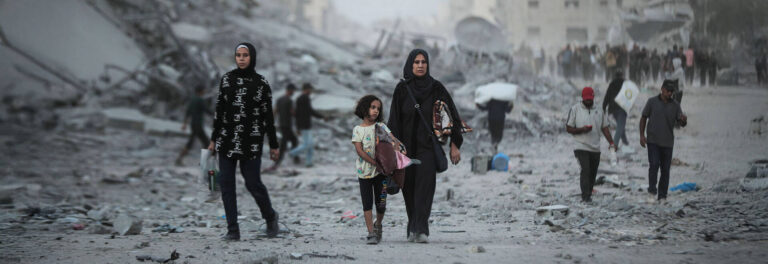
Gaza faces severe challenges, with 17,000 child deaths since October 2023, 28 daily child deaths, waterborne diseases, and hospital dysfunction due to fuel shortages. Bruce acknowledged, “We know. War is horrible,” responding to questions about U.S. aid levels, stating, “Of course we’re not happy. Who’s happy with these developments? It is – it’s war.” She emphasised U.S. efforts, noting, “We’re proud of being Americans because of what we’ve been able to accomplish for the world,” citing 70 million meals despite Hamas’s actions, including holding hostages and attacking aid routes. An Israeli strike on Gaza’s Holy Family Church, killing three, including an 88-year-old woman, prompted Bruce to say, “Israel did express a deep sorrow over the damage and over any civilian casualties,” urging investigations. A July 14, 2025, shelling in Rafah killed two and injured nine, with survivors reporting gunfire at aid seekers. The blockade since March 2, 2025, risks the spoilage of aid, with 1.9 million displaced and one million children facing malnutrition.
The U.S.’s $200 million to Gaza in 2024, part of $1.5 billion in global aid, faces challenges in Hamas-controlled areas and due to Israel’s restrictions. Deputy Secretary of State Richard Rigas, testifying on July 16, 2025, called the biscuit expiration “distressing” but noted, “We’re still the biggest giver of aid anywhere in the world, by far.” A digital tracking system and $20 million for Gaza’s water infrastructure aim to improve delivery. Bruce’s battery analogy, “They’re there in the event of an emergency, and if you wait long enough… you have to get rid of it,” explained reserve replenishment. The U.S. supports 1.2 million Syrians with $300 million, alongside UNRWA and WFP efforts. Social media posts noted both oversight concerns and ongoing aid commitments.
Gaza’s crisis, with deaths near aid hubs, including the Rafah incident, reflects delivery challenges. The U.S. pushes for aid corridors, alongside Syria’s ceasefire efforts. Analytically, the biscuit expiration is a minor logistical issue but highlights inefficiencies in conflict zones, where Hamas’s control and Israel’s blockade complicate aid. The U.S.’s $200 million for Gaza, including health support, is significant, but coordination with UN agencies and pressure on regional actors are essential to address Gaza’s needs and ensure effective aid delivery.
However, the U.S. itself is in the eye of the storm, by slashing humanitarian assistance to the UN. Over 11.6 million refugees risk losing aid access due to funding cuts, says Dominique Hyde, UNHCR Director of External Relations. This means approximately one in three refugees and other vulnerable individuals normally supported by the UN refugee agency (UNHCR) are expected to lose out from funding cuts, it said on July 18, 2025.
Out of UNHCR’s $10.6 billion funding requirement this year, only 23 per cent has been fulfilled so far, Hyde said, adding that the funding crisis stems from large foreign aid cuts by donor countries such as Sweden, France, and Japan, compounded by slashed United States humanitarian assistance.
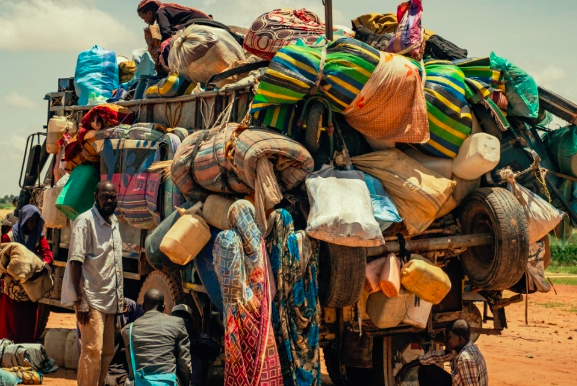
Forced displacement is increasing worldwide while humanitarian aid is declining sharply, creating a “deadly cocktail” that puts displaced populations at grave risk, a new UNHCR report notes. The UN agency reported that it has been forced to halt or suspend approximately $1.4 billion in assistance programmes, including a 60 per cent cut in emergency relief supplies in many countries, such as Sudan, Chad, and Afghanistan. Critical support such as medical aid, education, shelter, nutrition, and protection are among the services lost. Women and girls are disproportionately impacted. The agency says it has to drop one quarter of its support to programmes that provide protection and response to gender-based violence, including to survivors.
– global bihari bureau