Scarce Drops, Lost Knowledge: India’s Water Literacy Cure
In Delhi’s Mehrauli, Gajendra Yadav, a Member of the Legislative Assembly, stands by a temple well revived by Haryana’s well-diggers, their ancestral craft restoring a vital natural resource to a parched community. This small triumph contrasts with a dire crisis: India’s rivers are choked with pollution, aquifers are shrinking, and 21 cities, including Delhi, face groundwater depletion by 2030, according to the National Institution for Transforming India (NITI) Aayog’s 2024 report.
With 256 districts overexploiting groundwater and 20% of wells contaminated by nitrates and uranium, per the 2024 Groundwater Quality Report, the nation grapples with inefficient irrigation, flood-drought cycles, unscientific cropping patterns, and a lack of community participation.
Water literacy—understanding water’s ecological, social, economic, and cultural role as a natural resource—is the key to reversing this tide. Experts across India call for a Water Resources University to spread this literacy, training specialists and empowering communities to safeguard this lifeblood.
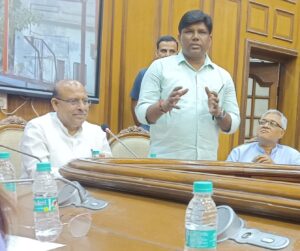
At a round table on “Dry Wells, Water Bodies, and the Environment,” conceptualised by Delhi-based non-governmental organisation, Sampurna, and held in the Delhi Assembly on June 26, 2025, Delhi Legislative Assembly Speaker Vijender Gupta endorsed establishing such a university in Delhi, envisioning it as a beacon to transform India’s water narrative from scarcity to sustainability.
Water literacy transcends saving a bucket of water; it’s about mastering the intricate dynamics of this natural resource—its exploitation by cartels, encroachment of water bodies, watershed management, determining environmental flow of rivers, integration of civil engineering with hydrology to ensure road constructions don’t obstruct water flow and storage, classifications of dams, river basin management, groundwater recharge, rejuvenation of rivers, and the systems of canals, ponds, and wells.
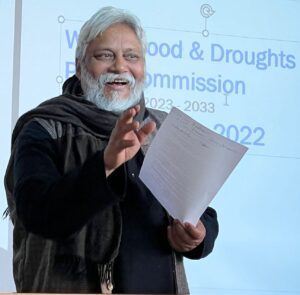
Dr. Rajendra Singh, the Ramon Magsaysay Award-winning “Waterman of India,” brings a profound perspective from decades of reviving rivers and communities. He laments, “India, a country that believes in the universe, once understood water’s profound role through the five Mahabhutas—soil, sky, air, fire, and water. Today, it has no university to teach its essence—its spirituality, behaviour, and economic, social, and political aspects.”
Dr. Singh envisions water literacy as a fusion of science and cultural reverence, fostering expertise in managing river basins, recharging groundwater, rejuvenating rivers, understanding canal systems, and ensuring equitable access to this natural resource. He argues that India’s ancient wisdom, which made it the “Guru of the world” through its understanding of water’s spiritual and scientific depths, is fading. Without a Water University, Singh warns, India cannot become “water-respectful or intelligent,” risking its 4% share of global freshwater against 18% of the world’s population.
The Waterman’s call aligns with the United Nations World Water Development Report 2025, which emphasises integrated education to manage water’s ecological interconnections, critical for India’s upstream-downstream river systems. Dr. Singh’s work, from rejuvenating Rajasthan’s rivers to inspiring nationwide conservation, underscores the urgency of institutionalising this knowledge to address flood and drought management, water pollution, and equitable sharing.

Dr. Rajendra Poddar, a former director of the Water And Land Management Institute, Dharwad (Karnataka) and a distinguished water management scholar, provides a comprehensive blueprint for a Water Resources University to tackle India’s fragmented water governance, characterized by poor water use efficiency, unscientific management, soil degradation, groundwater depletion, water pollution, and inadequate conservation of water bodies.
With 256 districts overexploiting groundwater and 20% of wells polluted, Poddar proposes a multidisciplinary, technology-specific, goal-oriented institution offering academic programmes to train a new generation of water experts. These include Bachelor of Technology programmes in Water Resources Management and Water Technology to train engineers in sustainable systems, including integrating civil engineering with hydrology to design infrastructure that supports water flow and storage; Master of Science and Master of Arts degrees in Climate and Hydrology, Irrigation Water Management, Water Law and Policy, and Ground Water Resources to produce experts in river basins, dam classifications, and governance; and skill-based programmes like Diploma in Irrigation Management, Diploma in Participatory Irrigation Management, Certificate Course in Micro Irrigation, and Certificate Course in Drainage Management to empower farmers and technicians.
Dr. Poddar envisions the university driving research into soil degradation, watershed management, water pollution, conservation and development of water bodies, including rivers, treatment and recycling of wastewater, water disputes, and water policy and law. It would develop robust participatory irrigation management systems, promote modern inventions like Supervisory Control and Data Acquisition systems and micro-irrigation, and craft water laws to ensure social justice through equal water sharing. The university would publish textbooks, host seminars, and offer short courses to spread literacy from primary to Doctor of Philosophy levels, closing the irrigation potential gap, saving billions of litres, creating skilled and unskilled jobs in water industries, curbing rural migration, balancing rural-urban development, and boosting agricultural production for food and water security. Poddar and Gupta see Delhi, with its educational hub and connectivity, as the ideal home for this “world-class, solutions-oriented” institution, setting a historic model for the nation and globe.
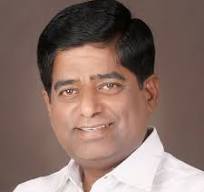
Veeramalla Prakash Rao, former Chairman of the Telangana Water Resources Development Corporation, warns of the exploitation of water as a natural resource: “Since the beginning of civilisation, people protected natural resources judiciously, but greed has turned water into a commercial product, now costing as much as milk.” This shift burdens the poor, exacerbating health and social inequities.
Rao champions water literacy to teach water’s scientific properties, its memory and behaviour, soil-water relations, precipitation patterns, crop water requirements, watershed management, and conservation techniques like recharge, reduce, reuse, and recycling, alongside the relationship of water with the environment and the five Mahabhutas. He envisions a Water University offering courses on these topics, conducting awareness seminars, and establishing a publication division to produce textbooks from primary to Doctor of Philosophy levels. He stresses shifting from exploitative practices—like flood irrigation consuming 85% of freshwater, or building dams, lift schemes, and barrages without a conservation focus—to sustainable methods. His insights, drawn from years overseeing water projects, emphasise that without such education, “we can’t meet the demand of water for future generations,” especially as agriculture faces shortages due to inefficient practices.
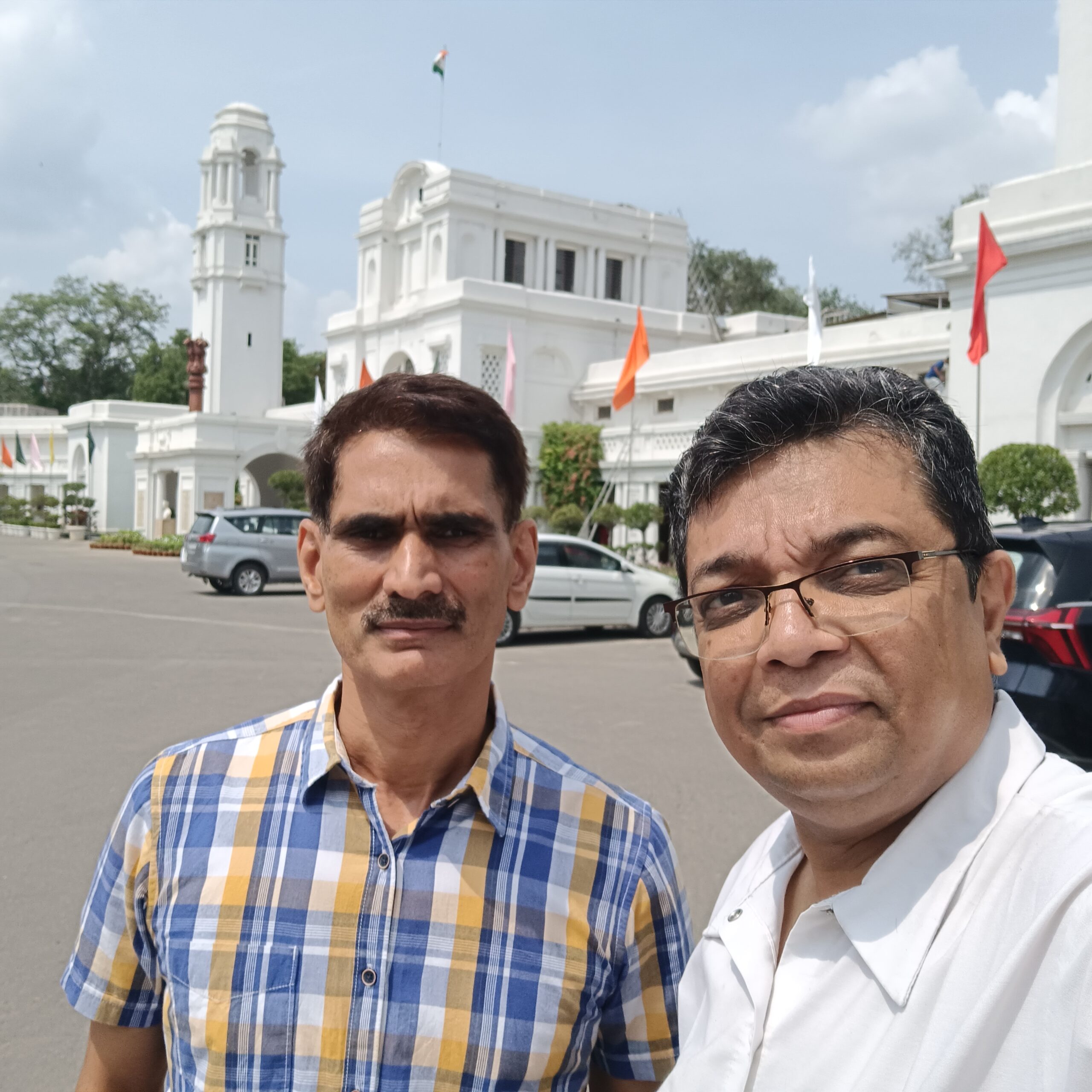
Human stories ground this vision in urgency. In Dwarka locality of Delhi, Diwan Singh, a veteran environmentalist and founder of Natural Heritage First, rallied a community to revive a water body, overcoming initial resistance. “Water is the most basic element of life, the most unique feature of our planet, responsible for life not yet found elsewhere in the universe, yet we treat it as if it exists solely for humans, ignoring the entire ecosystem,” he says. He warns that neglecting this natural resource has led to its degradation, with fresh water turning into a costly product due to severe mismanagement, necessitating huge budgets to clean it. He advocates for water literacy to reconnect communities with their resources, countering state overreach and cartel exploitation, and sees a Water University as essential to teach conservation, community governance, and ecological balance for sustainable coexistence.
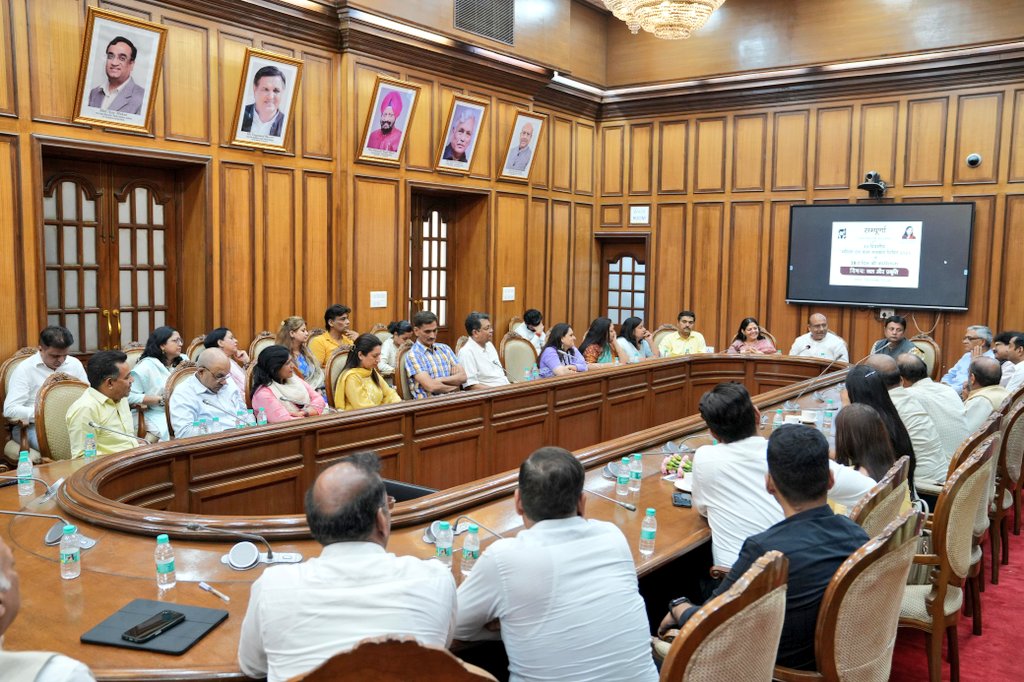
At the round table in the Delhi Assembly, the power of native wisdom was evident in the story of the pond in Rashtrapati Bhavan’s Mughal Garden, revived through the traditional knowledge of villagers from the Alwar district of Rajasthan.
Gajendra Yadav’s success with Haryana’s well-diggers and the Rashtrapati Bhavan pond restoration highlight the power of native wisdom. A Water University must teach such indigenous practices alongside modern science, empowering communities to resist exploitation by those who treat water as a commercial asset, drawing on Nobel laureate Elinor Ostrom’s principles of community-managed commons. When Supreme Court lawyer Rajendra Prasad argued that a university wouldn’t solve Delhi’s immediate crisis, the response was clear: it’s a larger vision to train experts who grasp water’s dynamics and economics. With 600 million Indians facing high to extreme water stress, this literacy is a lifeline to address demand-supply gaps, pollution, water disputes, and the conservation of water bodies.

Dr. Shobha Vijender, Sampurna’s founder, declared, “Restoring our water bodies is not just an environmental effort; it is a vital step towards ensuring a sustainable future for our city.” The symposium’s unanimous resolution called for a scientific approach, community participation, and institutional commitment to tackle Delhi’s water and environmental crises.
China’s Hohai University, supporting the River Chief System with 300,000 overseers, reduced Yangtze River pollution by 30% since 2016 and improved water quality in 70% of monitored sites, per state data, offering a model for success. India’s water university could surpass this by blending its cultural reverence for water as a Mahabhuta with modern technologies like micro-irrigation and Supervisory Control and Data Acquisition systems.
Delhi Assembly Speaker Vijender Gupta’s endorsement of a Delhi-based university signals the city’s readiness to host this pioneering institution, leveraging its educational infrastructure and connectivity. It is time to act now. The government’s determination is crucial. Without this university, India risks a future where its parched land and thirsty minds lose their sacred springs to scarce drops, endangering ecosystems and communities alike.
*Deepak Parvatiyar is a senior journalist and a member of the World Water Council, France.