Kuno Welcomes Third Global Cheetah Batch
India’s Cheetah Count Rises to 48
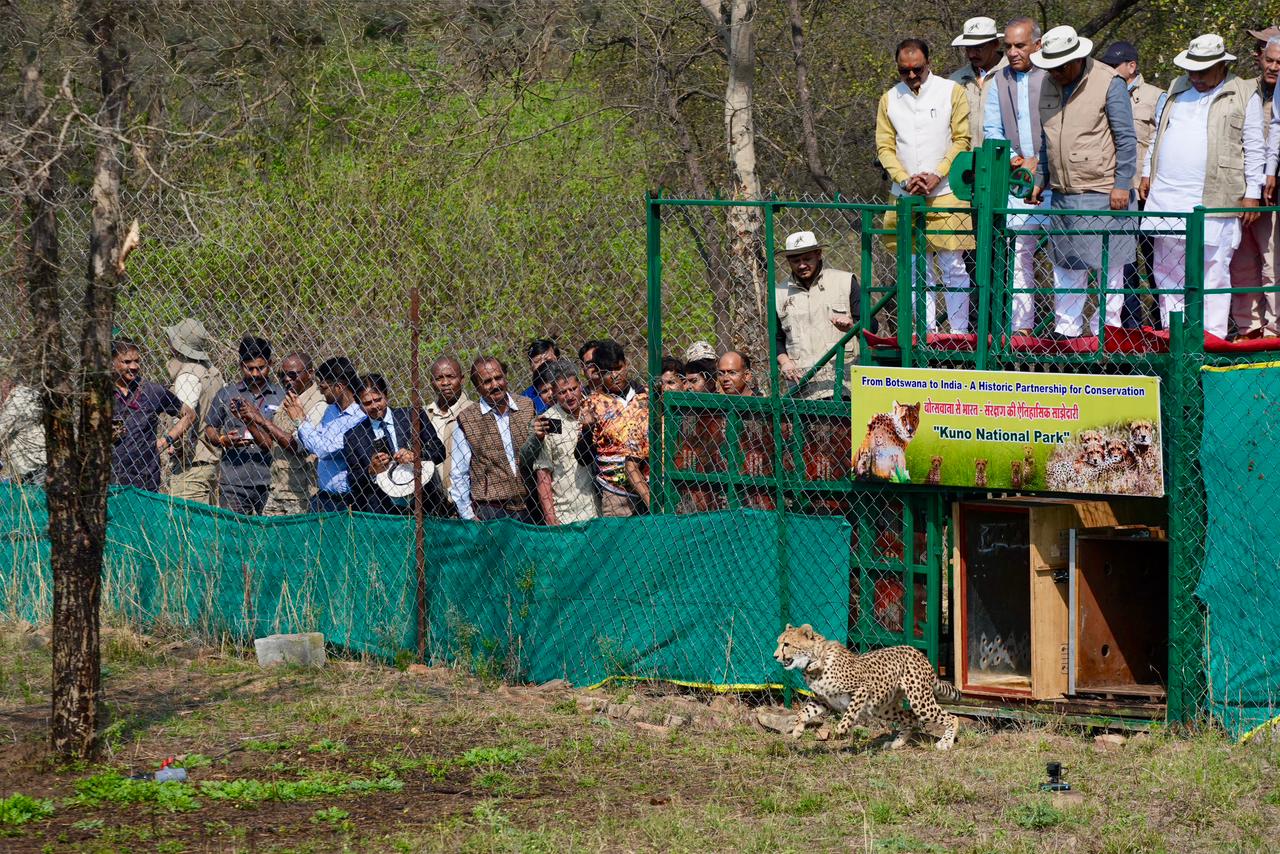
Sheopur: The gates of quarantine enclosures at Kuno National Park opened quietly on February 28, 2026, as nine cheetahs from Botswana stepped into a new continent, extending a wildlife experiment that has captured global attention. Union Environment, Forest and Climate Change Minister Bhupender Yadav personally welcomed the animals — six females and three males — describing their arrival as “adding to the purrs in Kuno.”
In a message posted on X, the Minister recalled how eight cheetahs from Namibia were reintroduced to India on September 17, 2022, followed by 12 from South Africa in February 2023. “I welcome our new friends from Botswana and wish they thrive and multiply in India’s wild,” he wrote, adding that under the leadership of Prime Minister Narendra Modi, Project Cheetah has made significant progress.
With the Botswana cohort included, officials said India’s cheetah population has reached 48 — a figure that includes adults, sub-adults and cubs, including those currently in quarantine and managed enclosures. Of these, 39 are presently active within Kuno’s landscape, including 28 cubs born in India since the programme began. The birth of these cubs — the first recorded in the country in more than seven decades — has become the emotional centrepiece of the project.
The cheetah was declared extinct in India in 1952 after decades of hunting, habitat degradation and the shrinking of grasslands. The last known individuals were shot in what is now Chhattisgarh in the late 1940s. For years, conservationists debated whether reintroduction was ecologically viable. The surviving Asiatic cheetah population in Iran was too small and fragile to serve as a source. After prolonged scientific review, the Supreme Court of India in 2020 granted conditional approval for the introduction of African cheetahs on an experimental basis, clearing the way for what would become the world’s first intercontinental translocation of a large carnivore into the wild.
Kuno, in Sheopur district of Madhya Pradesh, was chosen after years of preparation. Ironically, the park had originally been developed decades earlier as a potential relocation site for Asiatic lions from Gujarat. Several villages were voluntarily relocated from its core area to create inviolate space, laying the groundwork for large carnivore restoration long before cheetahs entered the picture.
The first eight cheetahs from Namibia arrived amid international fanfare in September 2022. Twelve more from South Africa followed in early 2023 to strengthen the genetic base. The Botswana partnership, formally initiated in December 2024, reflects India’s effort to diversify that base further and build long-term resilience. During President Droupadi Murmu’s state visit to Botswana in November 2025, the selected cheetahs were formally handed over to India after veterinary checks and quarantine at Mokolodi Nature Reserve. They were flown to India on February 27, 2026, aboard a C-17 Globemaster aircraft of the Indian Air Force before being airlifted by helicopter to Kuno.
Yet the journey has not been without turbulence. Several adult cheetahs from the earlier batches died in 2023 and 2024 due to causes that included kidney ailments, infections linked to radio collars, and stress-related complications. The deaths triggered public debate over habitat suitability, prey density, climate adaptation and monitoring protocols. Wildlife authorities responded by modifying collar designs, intensifying veterinary oversight and adjusting management strategies in what they described as an adaptive conservation approach.
Despite setbacks, breeding success offered a counter-narrative. In March 2023, a Namibian female gave birth to cubs at Kuno — the first cheetah births in India since Independence. While some cubs did not survive the vulnerable early months, successive litters followed. Today’s tally of 28 India-born cubs has become a symbol of cautious optimism for conservationists who see reproduction as the clearest sign of ecological adjustment.
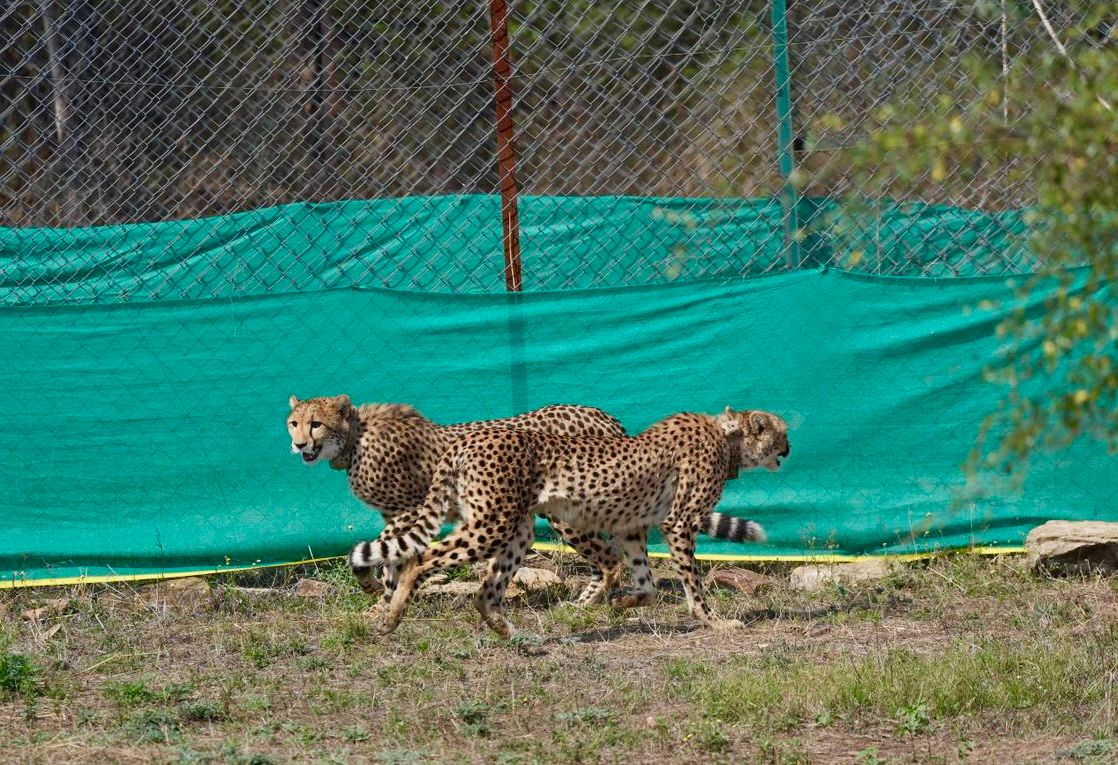
Project Cheetah’s ambitions extend beyond species revival. Conservation planners argue that the initiative is also about restoring India’s grassland and open forest ecosystems — habitats often overshadowed by tiger-centric conservation models. Cheetahs, as cursorial predators adapted to open terrain, are expected to help rebalance prey populations and draw attention to the ecological value of these landscapes.
The concentration of animals in Kuno, however, has revived discussion about identifying additional release sites. Wildlife authorities have publicly acknowledged the need for a network of habitats to ensure long-term viability and prevent over-dependence on a single park. Expanding the landscape, experts say, will be crucial if the growing population is to become genuinely free-ranging.
For communities around Kuno, the cheetahs represent both uncertainty and opportunity. Livestock safety concerns persist, yet tourism interest has increased, and the park has drawn global visibility. The human dimension — relocation, coexistence, compensation mechanisms — remains intertwined with the ecological experiment unfolding inside the park’s boundaries.
As the nine Botswana cheetahs settle into quarantine, watched closely by veterinarians and forest staff, their presence adds another layer to a story that blends diplomacy, science and public imagination. For a country that once lost the cheetah to extinction, each new arrival carries symbolic weight. Whether Project Cheetah ultimately succeeds in establishing a stable, self-sustaining population across connected landscapes will determine if this bold conservation gamble becomes a model for the world — or a lesson in the limits of ecological restoration.
– global bihari bureau