

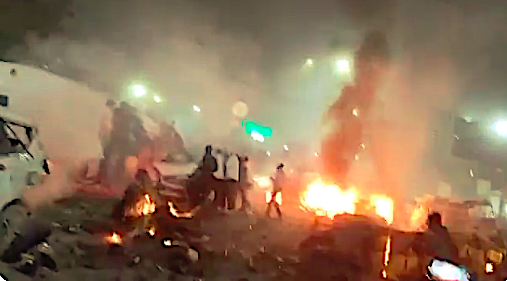
The scene of the blast site after a car explosion killed at least 8 near Red Fort Metro Station in Delhi today evening.
Delhi blast, Faridabad cache and Kashmir raids: a coordinated terror plot
360kg Bomb Stash in Delhi NCR – Seized!
2,900kg Explosives Netted in J&K Op
Inter-State JeM Module Dismantled
Srinagar/New Delhi: At least eight people were killed and many injured when a car exploded near Gate No. 1 of the Red Fort Metro station in Old Delhi’s crowded Chandni Chowk during evening rush hours at around 6.52 pm today, setting off fires that engulfed multiple parked vehicles and shattered nearby windows. Emergency services rushed seven fire tenders to the scene, and local hospitals received multiple fatalities and seriously injured victims as the capital reeled from a sudden, high-impact blast in a heavily trafficked, symbolic precinct of the city.
That late-evening explosion in Delhi unfolded against the background of a sweeping, multi-state counter-terror operation that same day in which the Jammu & Kashmir Police, working in coordination with Haryana and other state police forces, said it had seized explosives and dismantled an inter-state and trans-national terror module linked to the proscribed organisations Jaish-e-Mohammed (JeM) and Ansar Ghazwat-ul-Hind (AGuH).
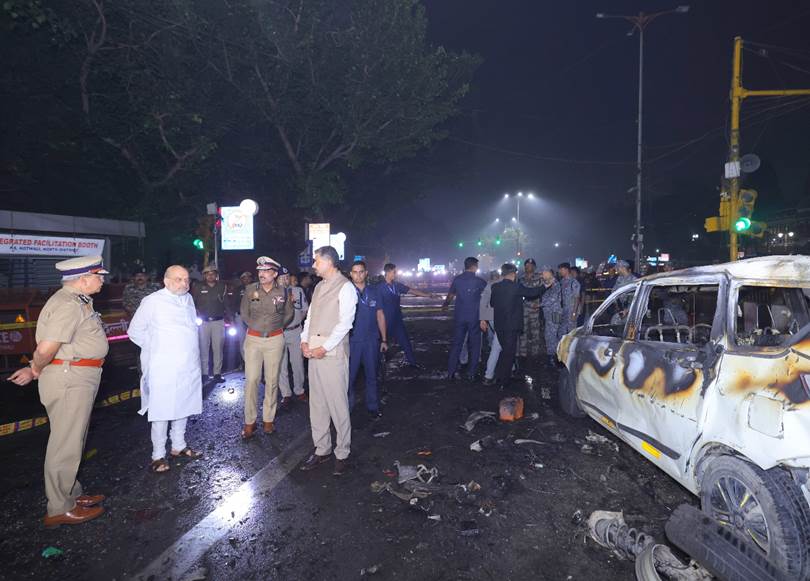
The Union Home Minister, Amit Shah, said that a thorough investigation of the case has been initiated from “every angle”. He said that as soon as information about the incident was received, teams from the Delhi Police Special Cell, Crime Branch, the National Investigation Agency (NIA), the National Security Guard (NSG) and Forensic Science Laboratory (FSL) reached the spot, and were working to find out the cause of the blast. He added that the investigation is being carried out from all angles, and until the evidence collected from the scene is analysed, no possibility is being ruled out.
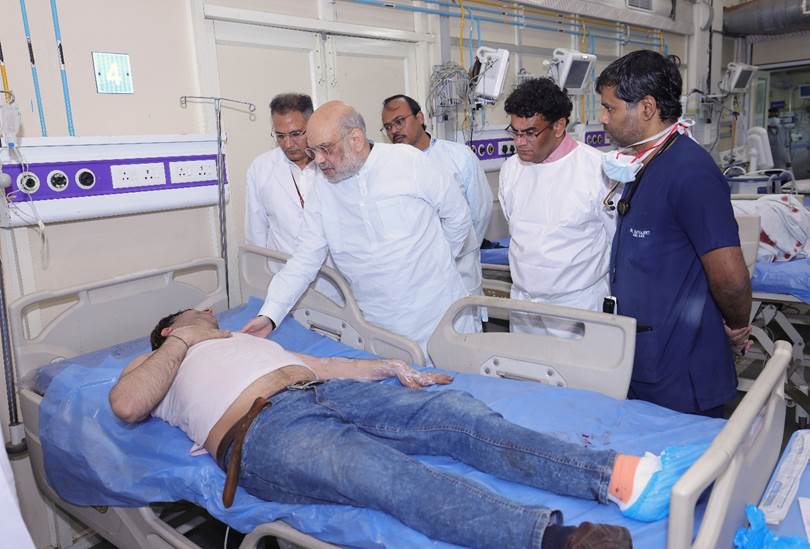
Shah visited the hospitals where the injured were admitted and receiving treatment.
The Prime Minister’s office stated that Prime Minister Narendra Modi reviewed the situation with Home Minister Amit Shah and other officials after the blast. Modi also condoled the loss of lives in the Delhi blast, and wished an early recovery for the injured. “Those affected are being assisted by authorities,” he stated.
In Delhi, forensic teams and the Delhi Police Special Cell immediately sealed off the area of the explosion as investigators began piecing together cause, device type and any possible links to the larger counter-terror operation announced the same day.
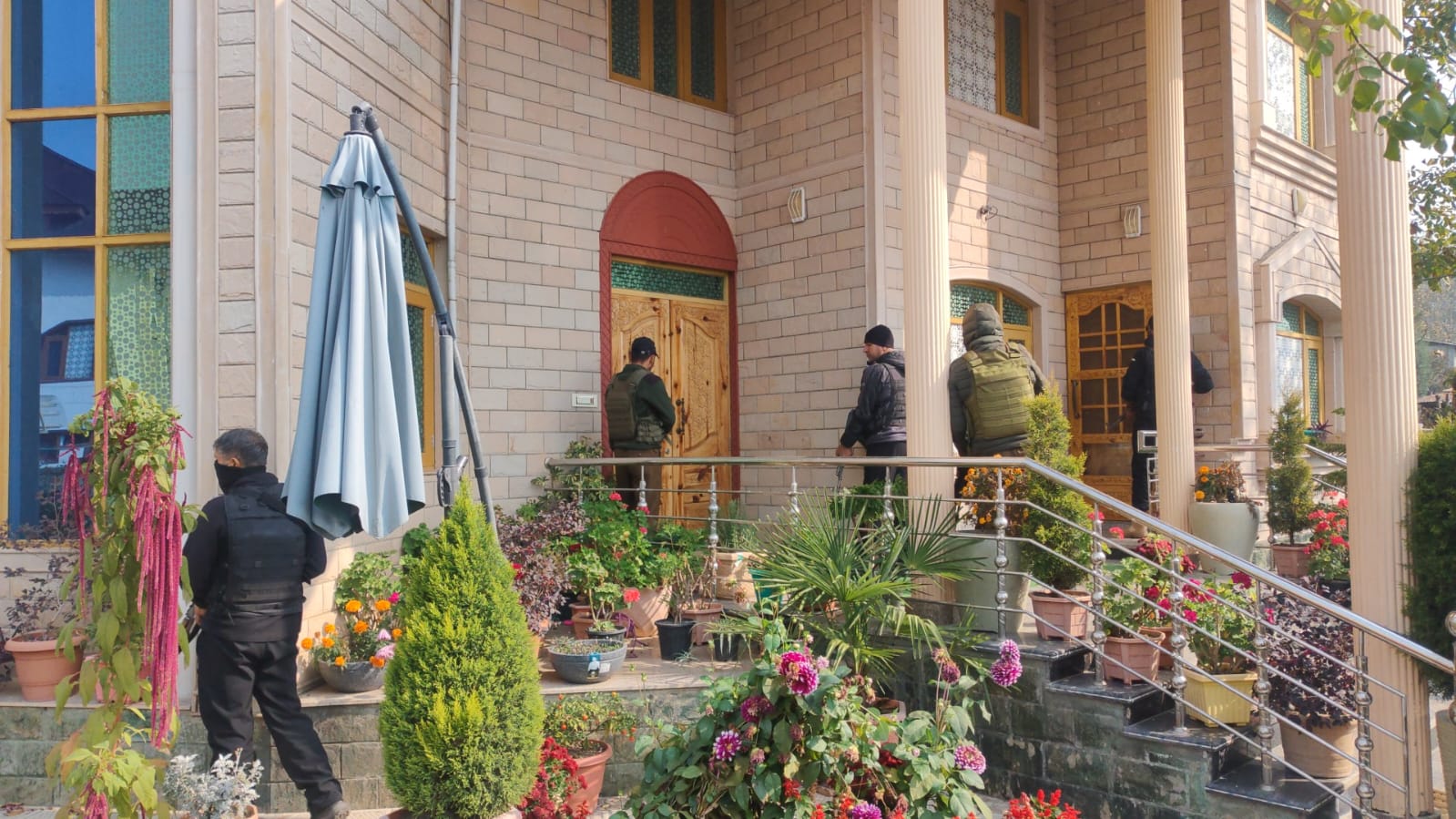
Earlier today, the Jammu and Kashmir Police (J&K Police), working in coordination with Haryana Police, Uttar Pradesh Police (UP Police) and central intelligence agencies, announced the dismantling of an inter-state and transnational terror module linked to the proscribed organisations JeM and AGuH. The operation resulted in the recovery of an unprecedented volume of improvised explosive device (IED) precursor chemicals, assembled explosive components and conventional arms across multiple states. Police and multiple national outlets, citing official briefings, place the total recovery of IED-making material at approximately 2,900 kilograms, consisting of ammonium nitrate, potassium nitrate, sulphur and other reagents capable of being combined into high-intensity explosive devices.
Device forensics also led to the identification of a location in Dhauj village, Faridabad, in the Delhi National Capital Region (NCR). Acting on that intelligence, police carried out a raid in which the 360-kilogram of suspected ammonium nitrate stored in containers and buckets, and associated arms and timers were recovered alongside weapons and bomb-making components, including remote timers, detonating circuits, metal sheets, walkie-talkies, batteries and suitcases used for transport. An AK-type assault rifle was recovered, along with pistols including a Beretta and a Chinese-made “star” pistol, multiple magazines and several dozen rounds of live ammunition. Investigators stated that this material, taken together, was sufficient to fabricate multiple large IEDs capable of causing extensive damage in high-density civilian zones.
Simultaneous and follow-up searches in Kashmir and adjoining districts recovered the remaining precursor chemicals and components, amounting to approximately 2,900 kilograms in total. Police have stated that these were not military-grade explosives such as RDX (Research Department Explosive), but precursor substances capable of being converted into powerful homemade explosive charges when combined with detonators and packed appropriately. The presence of electronic timers, walkie-talkies, remote triggers and specially-cut metal sheets suggests an intention to construct multiple IED devices designed for placement rather than single-use improvised detonations.
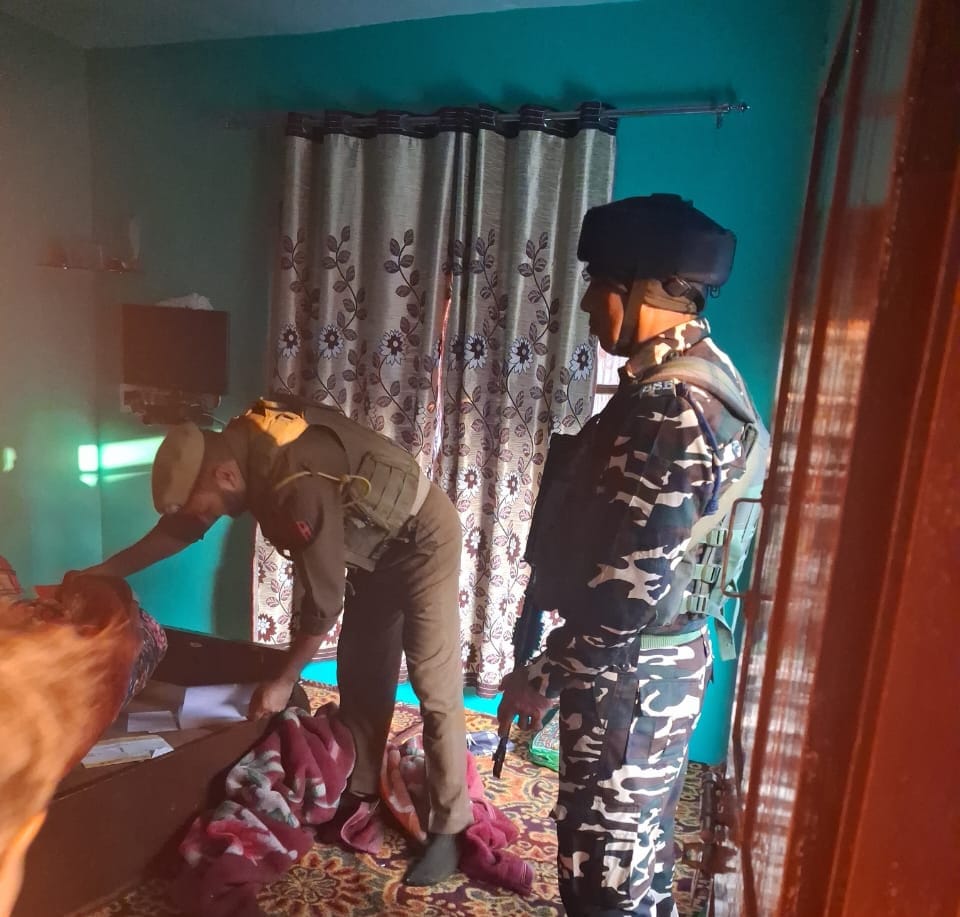
The chronology that led to these seizures began weeks earlier. On 19 October, police in Srinagar found posters containing messaging linked to Jaish-e-Mohammed appearing in the Bunpora/Nowgam area. The posters were not treated as a routine provocation; instead, they triggered targeted surveillance, questioning and structured phone and digital forensic work. Over roughly two weeks, the probe widened. Data retrieved from seized devices and communication patterns suggested links extending beyond Kashmir into professional and academic networks in other states. The investigating officers identify this phase as crucial: it yielded names of individuals who were neither previously listed militants nor known overground workers (OGWs), but medical and technical professionals who allegedly acted as recruiters, fund-raisers, logisticians and liaisons under the cover of social, academic or humanitarian activities. Police describe this feature of the module as “white-collar terror facilitation,” noting that such individuals possess the legitimacy, mobility and digital access needed to discreetly manage logistics and communication channels.
The series of arrests that followed covered multiple districts in Jammu and Kashmir, including Nowgam in Srinagar, Kulgam, Pulwama, Shopian and Ganderbal, and extended beyond the state to locations in Uttar Pradesh and Haryana. Some of the arrested individuals are reported to be highly educated, including medical professionals. Multiple suspects were transferred by air to Srinagar for custodial interrogation. According to investigators, the module relied on encrypted messaging platforms and compartmentalised communication groups. Several Pakistani and Pakistan-occupied-Kashmir (PoK) phone numbers, according to police briefings, were found in device logs, leading the Jammu & Kashmir Police to assert that the operational guidance and strategic direction of the module originated from handlers based across the Line of Control (LoC). The role of Jaish-e-Mohammed, as a Pakistan-based organisation, and that of AGuH, which has roots in al-Qaeda aligned ideology within the region, are central to the police account of the module’s orientation, recruitment line and intended objectives.
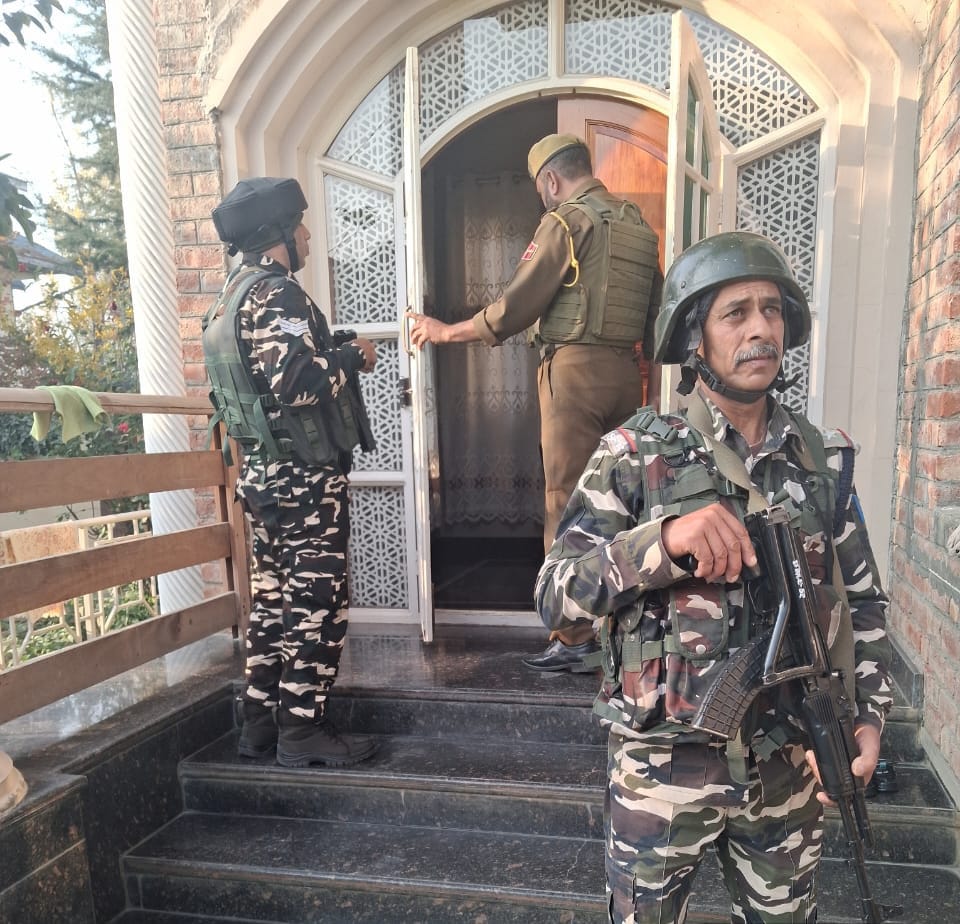
In the weeks preceding the seizure, district police units in Kashmir—particularly Srinagar, Kulgam and Anantnag—had intensified actions that now appear connected to the emerging intelligence picture. These included door-to-door UAPA-based search-and-seizure operations (UAPA = Unlawful Activities (Prevention) Act), cancellation of bail applications linked to earlier terror cases, scrutiny of SIM-card vendors and distributors, and cordon-and-search operations (CASO) in areas such as Lal Chowk and Kheribal. Police describe these not as isolated enforcement measures but as part of a steady escalation of pressure that disrupted communication and movement of suspected facilitators, eventually exposing links to the interstate network now under arrest.
On the strategic dimension, today’s car explosion in Delhi and the seizure have drawn attention back to the broader posture of India’s security framework following Operation Sindoor, the cross-border campaign conducted earlier in 2025. Officially, Operation Sindoor remains an active security posture rather than a closed event. The investigations into the Red Fort explosion and the seized material caches remain active.
The coming days are likely to yield a clearer picture of linkages, target planning, and the operational timeline of the disrupted module, as well as the extent to which the explosion in Delhi may be part of a larger plot, a contingency act or a pre-emptive strike executed under pressure of exposure.
For now, the evidence underscores an escalation in both capacity and ambition, and the state’s response has entered a phase aimed at not only arresting individuals but dismantling the networked ecosystem that enables planning, movement and execution. Therefore, it is a matter of speculation on whether there will be any formal government declaration announcing a new kinetic phase or a direct cross-border response tied specifically to the Delhi explosion and the seizures of explosives in Faridabad and Jammu and Kashmir.
The Jammu & Kashmir Police and state security command, led by Director General of Police (DGP) Nalin Prabhat, who convened a high-level security review immediately adjacent to the dates of the seizures, issued directives to reinforce checkpoints, quick-reaction teams, surveillance coverage and field movement.
The question of what comes next in policy terms, therefore, remains answered only in observable measures rather than in announced doctrine. On the ground, the signals point toward intensified arrests, extended custodial interrogations, increased inter-state investigative collaboration, accelerated digital forensics, UAPA charge expansion, further cancellation of bail for individuals suspected of aiding or sheltering operatives, and tightening of movement and telecommunication oversight in sensitive districts. Diplomatic consequences in the form of protest notes or public attribution to Pakistan may also follow if intelligence findings are elevated to a formal state-level accusation. Whether Operation Sindoor proceeds to a new overt kinetic or cross-border stage, however, is not presently confirmed by any on-record central statement. The consistent and verifiable fact is that the policing and intelligence machinery is currently focusing on dismantling the remaining logistical and financial nodes of the module and tracing recruitment pathways into medical and academic spaces that had previously received less attention in counter-terror investigations.
This case, therefore, stands at the intersection of three features: the Delhi blast, that killed many; the scale of the seizure, which is among the largest of IED precursor materials in recent years; the mode of the network, which used educated intermediaries and encrypted digital platforms rather than exclusively known militant operatives; and the geopolitical dimension, in which Pakistan-based handlers are alleged by the investigating police to have directed strategy and communication from across the Line of Control. The ongoing phase of the investigation is expected to clarify whether additional sleeper cells, facilitators or logistical partners remain active.
– global bihari bureau

Expressed clear links. Ahead of others