Rome: A groundbreaking study by the Food and Agriculture Organization of the United Nations (FAO) has cast a spotlight on the escalating crisis of agricultural land degradation in the Arab region.
The research, published today in the MDPI journal Agriculture, reveals that over 46 million hectares of agricultural land—two-thirds of the 70 million hectares affected by human-induced degradation across the region—are deteriorating at an alarming rate. This staggering figure, drawn from a comprehensive analysis of land degradation trends, underscores the urgent need for immediate action to restore these vital lands, the backbone of food production and livelihoods for millions in the Arab world.
Globally, the FAO estimates that 1.66 billion hectares of land are degraded due to human activities, with more than 60 per cent of this degradation impacting agricultural lands, including croplands and pastures that underpin 95 per cent of global food production. This widespread degradation poses a profound challenge to agrifood systems worldwide, threatening food security, economic stability, and environmental health.
In the Arab region, the crisis is particularly acute, driven by a confluence of unsustainable practices and intensifying ecological pressures. The excessive use of fertilisers and pesticides has poisoned soils, reducing their fertility and long-term productivity. Poorly managed irrigation practices have led to soil salinisation, rendering vast tracts of land unsuitable for cultivation. Compounding these issues are increasingly frequent sand and dust storms, rising temperatures, and severe water scarcity, all exacerbated by climate change. These factors are eroding the region’s croplands, which are critical for sustaining a growing population in an area already grappling with limited arable land.
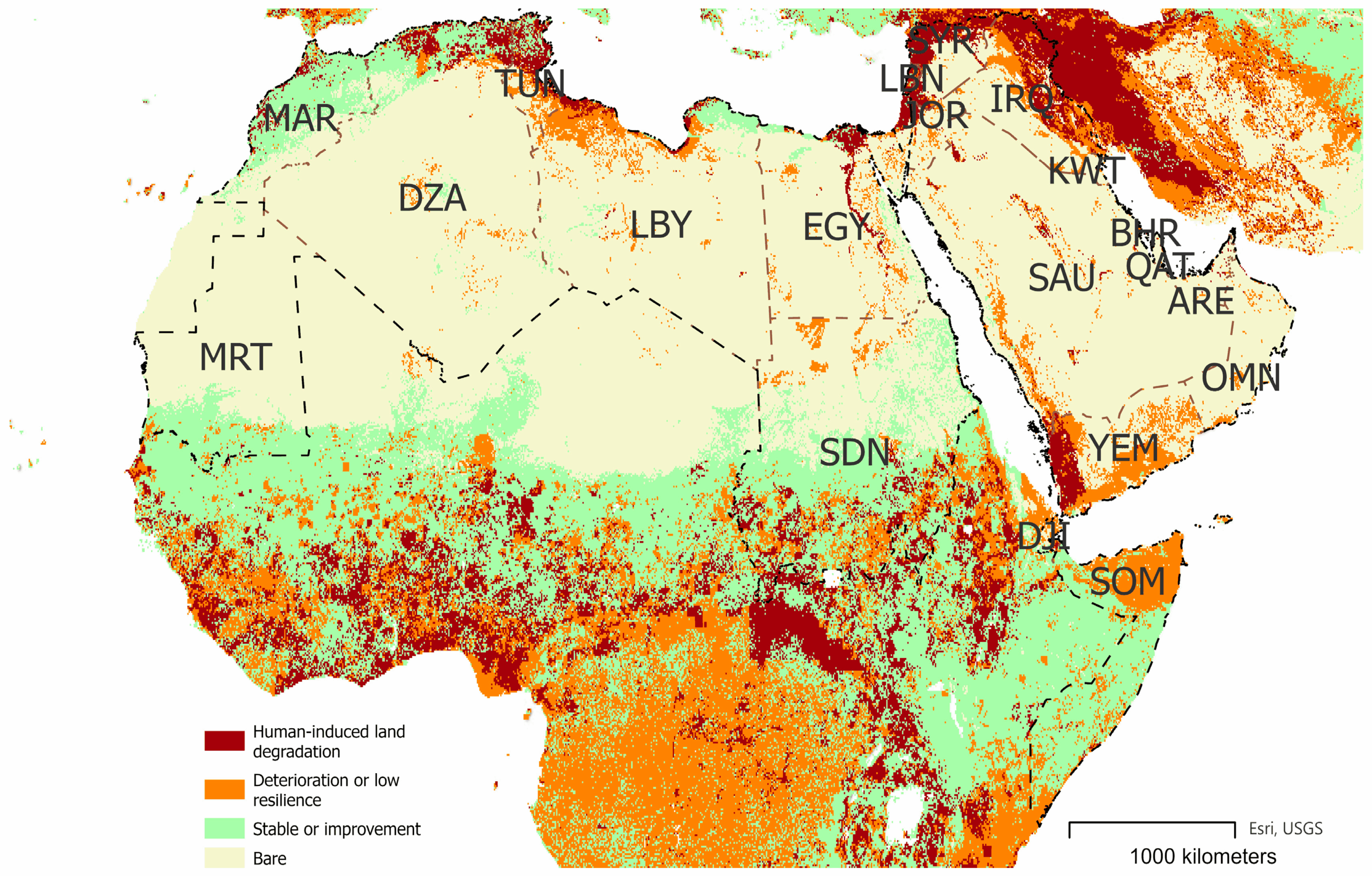
The FAO’s study, detailed in the journal article, emphasises the need for integrated solutions to halt and reverse this degradation. It advocates for sustainable soil, land, and water management practices that prioritise long-term environmental health over short-term gains. The goal is to achieve land degradation neutrality (LDN), a state where the amount and quality of land resources remain stable or improve, ensuring sustainable food production, biodiversity preservation, and resilience to climate change impacts. The research highlights a critical opportunity for the Arab region: restoring just 26 million hectares of degraded cropland could reduce the yield gap by up to 50 per cent for oil crops and enable cereal, root, and tuber crops to reach their full potential. This restoration could significantly enhance food security, providing a lifeline for communities dependent on agriculture. However, the region is falling alarmingly short of global restoration targets, with less than 4 per cent of its land currently designated for restoration efforts, a shortfall that reflects both the scale of the challenge and the limited resources allocated to address it.
The study calls for a dedicated regional initiative to foster collaboration among Arab countries, tailored to their unique environmental, social, and economic contexts. Such an initiative would enable nations to share expertise, resources, and innovative practices to restore agricultural lands, strengthen food security, reduce poverty, and build agrifood systems capable of withstanding the region’s harsh environmental conditions. The FAO’s proposal aligns with the momentum generated at the United Nations Convention to Combat Desertification (UNCCD) 16th Conference of the Parties (COP16), held in Riyadh in December 2024. This historic conference, the first time COP16 was hosted in the Arab region, marked a turning point in global efforts to combat land degradation. The Riyadh Action Agenda, launched during the event, outlined a bold framework to advance land restoration, improve drought and water resilience, and promote sustainable agrifood systems to prevent further degradation. The agenda emphasises the need for collective action to address the interconnected challenges of desertification, land degradation, and drought, which disproportionately affect the Arab region.
The Arab region’s vulnerability to these issues made it a fitting host for COP16, where the FAO played a pivotal role in shaping global policy. The organisation’s advocacy was instrumental in securing Decision 19/COP.16, a landmark UNCCD commitment focused on avoiding, reducing, and reversing the degradation of agricultural lands. This decision recognises the critical link between healthy land and food security, particularly in regions like the Arab world, where environmental pressures are intensifying. The FAO’s efforts extend beyond policy advocacy to practical, on-the-ground solutions. The organisation leads the NENA Regional Investment Framework for Ecosystem Restoration and Development Solutions, developed in collaboration with the United Nations Environment Programme (UNEP), UNCCD, and the League of Arab States. This framework promotes “champion countries” to spearhead scalable restoration projects, encouraging regional leadership and innovation. For example, countries like Jordan and Morocco have already begun piloting restoration initiatives, leveraging local knowledge to rehabilitate degraded lands.
Additionally, the FAO has introduced the Suitability Crop Platform, an innovative tool detailed in the study that provides critical soil and crop data to guide sustainable agricultural planning. This platform enables farmers and policymakers to make informed decisions about crop selection and land management, optimising yields while minimising environmental harm. By integrating data on soil health, water availability, and climate conditions, the platform supports precision agriculture, helping to mitigate the impacts of degradation and climate change. These initiatives are part of a broader FAO strategy to embed land restoration into national policies across the Arab region, enhancing resilience to climate change and supporting biodiversity and livelihoods in dryland areas, which dominate the region’s landscape.
The journal article further elaborates on the region’s unique challenges, noting that the Arab region’s arid and semi-arid climates make its agricultural lands particularly susceptible to degradation. Sand and dust storms, which have increased in frequency and intensity, deposit sediments that further degrade soil quality, while water scarcity limits the potential for irrigation-based recovery. Rising temperatures, projected to increase by 2–4°C by 2050 in some parts of the region, exacerbate these challenges, reducing crop yields and straining already limited water resources. The study also highlights the socio-economic impacts of degradation, including reduced agricultural productivity, increased food prices, and heightened poverty, particularly in rural communities dependent on farming.
The FAO’s findings serve as both a stark warning and a comprehensive roadmap for action. Without urgent intervention, the degradation of the Arab region’s agricultural lands could deepen food insecurity, exacerbate poverty, and undermine the region’s ability to adapt to climate change. Yet, the study offers hope, outlining a path forward through restoration, sustainable practices, and regional cooperation. By leveraging tools like the Suitability Crop Platform, implementing the NENA Regional Investment Framework, and building on the commitments of COP16, the Arab region has an opportunity to reverse the tide of degradation, secure its agricultural future, and contribute to global efforts to build resilient, sustainable food systems. The FAO’s call to action is clear: the time to act is now, before the region’s precious agricultural lands are lost to the encroaching threats of desertification and climate change.
– global bihari bureau