 By Nava Thakuria*
Impunity Haunts Journalist Killings Worldwide
PEC Seeks Global Commission to Protect Journalists
As the global media fraternity observes the ‘International Day to End Impunity for Crimes Against Journalists’ on 2 November, it renews its appeal for stronger global action to counter impunity and its devastating consequences. The Geneva-based media rights and safety body, Press Emblem Campaign (PEC), in a statement marking this United Nations-recognised day, revealed that since the beginning of 2025, at least 153 journalists and media workers have been killed worldwide. Two-thirds of them fell victim to armed conflicts, even though they were clearly identified as the press. The organisation noted that the death toll recorded in just ten months had never before reached such a level.
PEC urged UN member states to back the creation of an independent international commission under the authority of the UN Secretary-General or the High Commissioner for Human Rights. This body, it proposed, would investigate serious violations of international humanitarian, criminal, or human rights law committed against journalists, and recommend measures to strengthen national legislation, accountability systems, and redress mechanisms for victims.
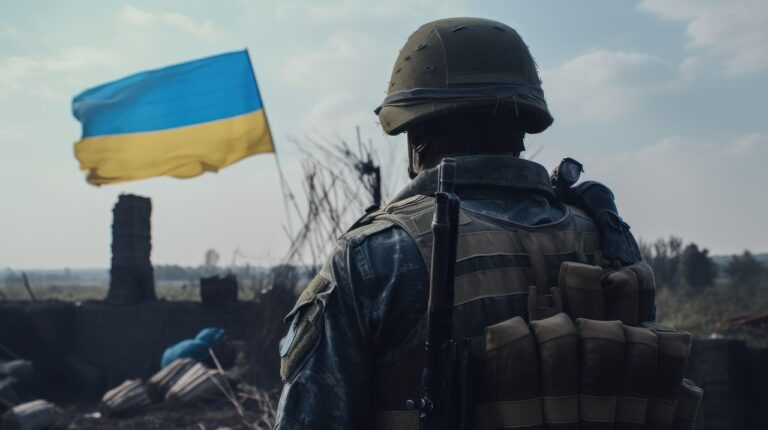
According to PEC, the 2025 deaths were reported from 29 countries. The Gaza Strip accounted for the highest toll, with 57 journalists killed, followed by the war between Ukraine and Russia with 11, Yemen 11, Mexico 10, Sudan 7, India 6, Pakistan 5, Bangladesh 4, Ecuador 4, Iran 4, the Philippines 3, and Syria 3. Two journalists each were killed in Afghanistan, Colombia, Honduras, Iraq, Lebanon, Nigeria, Peru, the Democratic Republic of Congo, and the United States, while one was killed in Brazil, Guatemala, Haiti, Nepal, Saudi Arabia, Somalia, Turkey, and Zimbabwe.
“Never before have so many journalists been killed without investigations being carried out to identify those responsible and bring them to justice,” said Blaise Lempen, President of PEC (pressemblem.ch). He stressed that the international community must act decisively to stop this tragedy. When a journalist is killed and the crime goes unpunished, it sends out the message that such killings are acceptable. Allowing the killers of journalists to walk free, he said, delivers a chilling signal that the powerful can silence voices, crush families, erase stories, and escape accountability. Families of these journalists are left bereft and powerless, and the collective right to know is ultimately stolen.
Impunity for crimes against journalists remains a grave concern across South and Southeast Asia. Continuing the trend, India has lost six journalists so far in 2025 — Mukesh Chandrakar, Raghavendra Vajpayee, Sahadev Dey, Dharmendra Singh Chauhan, Naresh Kumar, and Rajeev Pratap Singh — to violence. Pakistan followed with the killings of AD Shar, Abdul Latif, Syed Mohammed Shah, Imtiaz Mir, and Tufail Rind. Bangladesh reported the murders of Assaduzzaman Tuhin, Bibhuranjan Sarkar, Wahed-uz-Zaman Bulu, and Khandahar Shah Alam, while in the Philippines, Juan Johny Dayang, Erwin Labitad Segovia, and Noel Bellen Samar were killed. Afghanistan lost Abdul Ghafoor Abid and Abdul Zahir Safi, and Nepal reported the murder of Suresh Rajak during the same period.
Once known as a trouble-torn region, Northeast India has in recent years shown an encouraging record, avoiding any journalist killings over the past eight years, even though incidents of misbehaviour, assault, and threats against media persons continue. Tripura last witnessed the murders of Shantanu Bhowmik and Sudip Datta Bhaumik in 2017. Earlier, in 2013, the Bangladesh-bordering State had recorded the killings of three media employees — Sujit Bhattacharya, Ranjit Chowdhury, and Balaram Ghosh.
The previous year, Manipur and Assam reported the murders of Dwijamani Nanao Singh and Raihanul Nayum respectively. Before that, Assam had witnessed nearly 25 journalist killings since 1987, including Kamala Saikia, Punarmal Agarwala, Pabitra Narayan Chutia, Dipak Swargiary, Parag Kumar Das, Manik Deuri, Panja Ali, Nurul Haq, Ratneswar Sarma Shastri, Dinesh Brahma, Indramohan Hakasam, Prahlad Gowala, Bodosa Narzary, Mohammad Muslemuddin, Anil Majumdar, and Jagajit Saikia, among others. Shockingly, most of these cases remain legally unresolved, denying justice to the bereaved families.
*Senior journalist