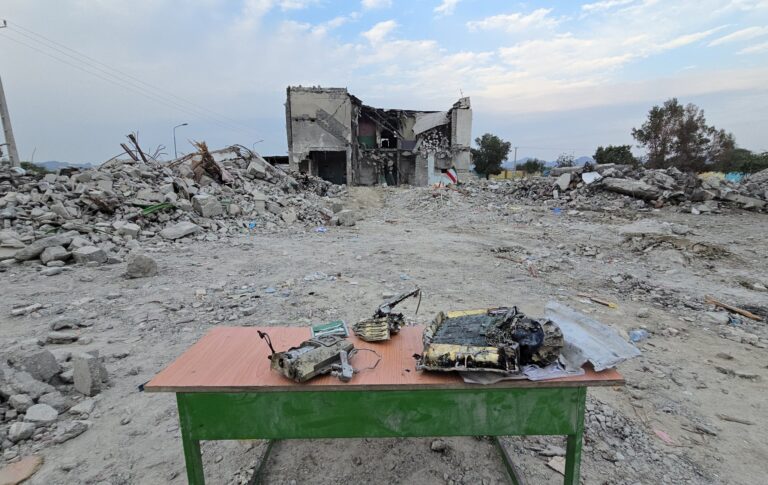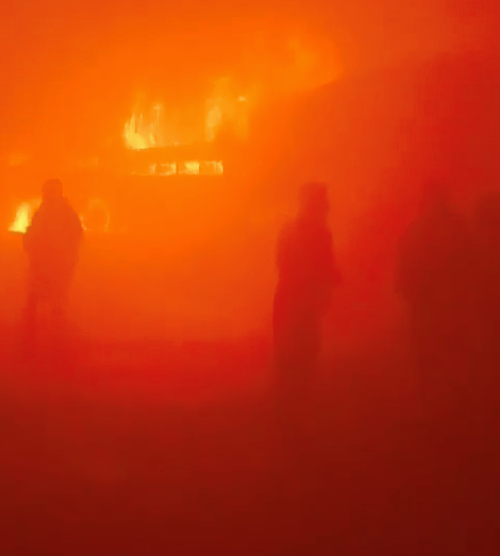
The Yamuna Expressway accident today.
Dense Fog Triggers Deadly Multi-Vehicle Crash on Yamuna Expressway
Mathura: At least 13 people were killed, and dozens were injured in a major multi-vehicle collision on a high-speed Yamuna Expressway in Mathura district of Uttar Pradesh in the early hours today, after dense fog reduced visibility to near zero, local authorities said.
The crash occurred between 4:00 am and 4:30 am near Milestone 127 under the jurisdiction of Baldev Police Station, on the Agra–Noida stretch of the Yamuna Expressway, a six-lane, access-controlled highway connecting New Delhi with the historic city of Agra, in Mathura district of Uttar Pradesh state. The expressway is operated by the Yamuna Expressway Industrial Development Authority, a state-run body responsible for traffic management, maintenance and safety systems along the corridor.
Mathura Senior Superintendent of Police Shlok Kumar and District Magistrate Chandra Prakash Singh said dense fog was the primary factor behind the crash, with visibility reported to be well below 50 metres at the time, leaving drivers little time to react. According to district officials, about ten to eleven vehicles, including several long-distance passenger buses and private cars, were involved in a chain collision. Preliminary accounts suggest the crash began with a rear-end collision in extremely low visibility, after which the following vehicles were unable to brake in time, triggering a pile-up. Some vehicles caught fire after the impact, leading to severe burn injuries and making rescue operations more difficult.
Emergency services were deployed within minutes. Fourteen fire engines and multiple rescue teams worked for nearly four hours to extinguish fires, free trapped passengers and clear the roadway. Traffic on the expressway was halted and later restored after debris removal and safety checks. Officials said the expressway is equipped with closed-circuit television cameras, emergency patrol vehicles and ambulances stationed near toll plazas, all of which were mobilised during the response.
Authorities said no immediate evidence of overspeeding, mechanical failure, or vehicle malfunction had emerged, though a formal investigation is underway to determine whether fog-related speed restrictions, warning signage or other safety protocols were in effect at the time of the accident.
India’s national weather agency, the India Meteorological Department, had issued high-risk fog warnings for parts of northern India, cautioning motorists about hazardous early-morning driving conditions and advising reduced speeds and the use of fog lights. Officials said the investigation would also examine how these advisories were communicated to expressway users.
By today evening, the district administration confirmed 13 deaths. Between 60 and 66 injured people were taken to government and private hospitals in Mathura and the nearby city of Agra, including the district hospital in Mathura, the Baldev Community Health Centre, private hospitals, and Sarojini Naidu Medical College, Agra. Hospital officials said most injuries were non-critical, though several victims suffered burns.
Some of the deceased were identified as residents of neighbouring districts in Uttar Pradesh. Due to the extent of injuries, forensic identification, including DNA testing, was required in certain cases, officials said. According to District Magistrate Chandra Prakash Singh, with sixty to sixty-six injuries managed at district hospitals, Baldev CHC, private units, and Agra’s SN Medical College, none were in critical condition. Identified losses included forty-four-year-old Akhilendra Pratap Yadav from Prayagraj, seventy-five-year-old Rampal from Maharajganj, and others linked to Gonda and Azamgarh, as DNA tests and post-mortems proceeded under Chief Medical Officer Dr Radha Vallabh amid procedural holds.
Prime Minister Narendra Modi expressed condolences in a statement, announcing an ex gratia payment of ₹200,000 (two lakh rupees) from the Prime Minister’s National Relief Fund to the next of kin of each deceased, and ₹50,000 (fifty thousand rupees) for each injured person. In a message posted on X (formerly Twitter), he said the loss of lives was “extremely painful” and wished a speedy recovery to the injured.
Uttar Pradesh Chief Minister Yogi Adityanath also announced state assistance of ₹200,000 per deceased, directed senior officials to oversee treatment of the injured, and ordered a magisterial inquiry. A First Information Report has been registered to examine possible lapses, including adherence to fog-related traffic protocols. The President and Vice President of India separately conveyed condolences.
The crash has renewed attention on road safety risks during winter fog in northern India, particularly on high-speed expressways used heavily by overnight buses and freight traffic. Road safety researchers have repeatedly warned that fog-related pile-ups are a recurring hazard on northern Indian highways, especially during December and January.
India records one of the highest numbers of road deaths globally, with official figures showing more than 150,000 fatalities each year, a significant share of them occurring on national highways.
Government road-safety measures currently rest on the “four Es” framework—education, enforcement, engineering and emergency care. Recent initiatives include the rollout of the Bharat New Car Assessment Programme, mandatory safety features such as anti-lock braking systems, airbags and seat-belt reminders, deployment of Advanced Traffic Management Systems on selected highways, and the identification and treatment of accident-prone “black spots”.
While government agencies say they are expanding safety measures such as vehicle crash-testing standards, electronic traffic monitoring, emergency response systems and accident-prone location audits, independent experts note that real-time fog detection, dynamic speed enforcement and driver compliance remain uneven across corridors.
Authorities said further details would emerge once the investigation and forensic examinations are completed, including whether responsibility extends beyond individual drivers to systemic or operational failures.
– global bihari bureau