 By Deepak Parvatiyar*
A fragile ceasefire between Iran and Israel, brokered by U.S. President Donald Trump, took effect at 7:00 AM on June 24, 2025, aiming to halt the 12-day conflict threatening to destabilise the Middle East. The truce followed Iran’s missile strike on the U.S. Al Udeid Air Base in Qatar, which President Masoud Pezeshkian described as a necessary response to U.S. aggression against Iran’s nuclear facilities.
Speaking today, Pezeshkian declared, “Iran was compelled to respond to US crimes by attacking its air base in Qatar,” emphasising, “this does not mean Iran is in conflict with the government and people of Qatar.” He condemned U.S. and Israeli attacks on Iran’s Natanz, Isfahan, and Fordow nuclear sites as violations of international law, pledging Iran’s adherence to the ceasefire if Israel reciprocated. However, mutual accusations of violations, coupled with Qatar’s condemnation of Iran’s strike as a breach of its sovereignty, highlighted the truce’s precariousness, leaving Tehran’s residents caught between war’s devastation and internal repression.
The Al Udeid strike, which Pezeshkian and Iran’s Foreign Ministry spokesperson Esmaeil Baqaei Baqaei justified as retaliation for U.S. attacks on Iran’s nuclear facilities on June 21, heightened global tensions and shaped the ceasefire’s fraught aftermath. Baqaei defended the Al Udeid strike as self-defence under Article 51 of the UN Charter, reiterating Iran’s “good-neighbourliness” with Qatar.
Trump’s White House statement described Iran’s response as “weak,” noting 13 of 14 missiles were intercepted, with one deemed non-threatening, and thanked Iran for the early notice, claiming no American casualties. He later told ABC News he was “not happy” with both sides’ violations, using an expletive to express frustration over the conflict’s persistence, particularly as Iran’s strike on Qatar—a U.S. ally hosting Al Udeid—complicated diplomatic efforts.
Trump announced the ceasefire on Truth Social at 3:32 AM on June 24, outlining a 24-hour phased process: Iran would halt operations first, followed by Israel 12 hours later, culminating in an end to the “12 Day War.” He praised both nations’ “stamina, courage, and intelligence,” thanked Qatar for mediation, and expressed hope for regional peace.
Yet, the ceasefire faced immediate challenges. Israel’s Prime Minister’s Office reported a pre-ceasefire strike on June 24, targeting Tehran’s regime sites and eliminating hundreds of Basij and security personnel. After the truce announcement by Trump, Iran allegedly launched three missiles toward Israel, which were intercepted or caused no damage, prompting Israel to destroy a radar installation near Tehran.
Iran’s Foreign Minister Seyed Abbas Araghchi initially denied a formal ceasefire agreement, stating Iran would halt if Israel ceased aggression. Later, he confirmed Iran’s operations continued to “punish Israel,” with forces ready to defend “until their last drop of blood.” Israel refrained from further strikes after a Trump-Benjamin Netanyahu call, but the Israeli Defence Forces (IDF) vowed forceful responses to violations, with Chief of Staff LTG Eyal Zamir assessing the situation.
Earlier, Araghchi’s June 23 UN letter demanded condemnation of U.S. nuclear site strikes, warning of environmental risks. The UN Security Council’s emergency session, prompted by Araghchi’s letter, saw China, Russia, and Pakistan condemn the U.S. and Israeli actions, including the nuclear site strikes that triggered Iran’s retaliation, while the UK urged de-escalation through diplomacy.
Qatar today welcomed the ceasefire as a “meaningful step toward dialogue and diplomacy,” urging adherence to its terms and praising Trump’s facilitation. However, it strongly condemned Iran’s Al Udeid strike as a “blatant violation of its sovereignty and airspace” and international law, summoning Iran’s Ambassador Ali Salehabadi. Minister of State for Foreign Affairs Sultan bin Saad Al Muraikhi called the attack inconsistent with Qatar’s advocacy for dialogue and “close relations” with Iran, affirming Qatar’s right to respond under international law and urging diplomatic solutions to avoid escalation. Qatar intercepted 18 of 19 Iranian missiles, reporting no casualties, but emphasised collective efforts to deter “irresponsible actions.”
In Tehran, the human toll was vividly captured by a Global Bihari interview with a few residents on the condition of anonymity, who described a city under siege: “Here is a very bad situation. Still, we are safe, but all the time around us is full of rockets and bombs.” The residents’ claim of “safety” belies the terror of relentless attacks, with the previous night’s strikes—likely Israel’s 3:00 AM assault—“more terrible” than earlier ones, leaving residents “depressed, sad, and hopeless.” This psychological burden reflects Israel’s Operation Rising Lion, which achieved air superiority and targeted sites like Evin prison, condemned by the Office of the United Nations High Commissioner for Human Rights (OHCHR) as a humanitarian law violation due to fires and injuries. The OHCHR raised alarms over Evin prison’s targeting and Iran’s crackdowns, urging respect for freedom of expression and fair trials.
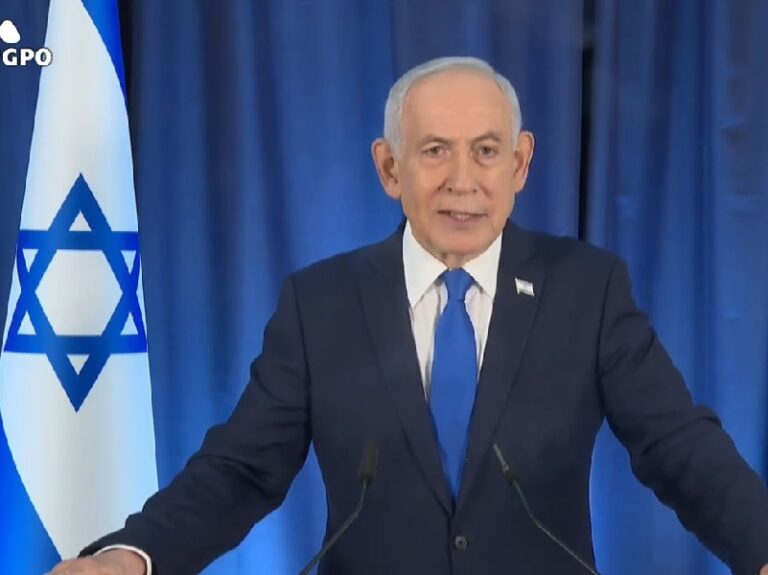
The resident’s rejection of the ceasefire—“Unfortunately, yes,” followed by “People don’t want a ceasefire, we want a regime change”—signals deep dissent, potentially echoing Israeli Prime Minister Benjamin Netanyahu’s June 13 address to Iranians. He urged them to seize the “opportunity to stand up” against the “oppressive Islamic regime,” weakened by Israel’s strikes on nuclear facilities, ballistic missiles, and key figures, invoking “Woman, Life, Freedom” and framing Israel’s fight as enabling Iranian liberation. The residents’ call for regime change suggests some Iranians may see Israel’s actions as a catalyst, though the interview lacks direct reference to Netanyahu’s appeal, indicating dissent may stem from internal grievances exacerbated by the conflict.
Some residents reported that over six million of Tehran’s about nine million residents fled north, facing crowded conditions, food shortages, and government arrests and killings for suspected espionage. OHCHR’s report of nine executions since June 13 and concerns over arbitrary detentions for cyber activities corroborate these claims, suggesting a crackdown fueling the desire for regime change. Those who remained, mostly stayed home, “watching the sky” amid explosions, a fatalistic choice reflected in “No any way,” likely due to distrust in bunkers or arrests in the north. The resident’s uncertainty—“We are not sure, maybe something will happen”—mirrors the ceasefire’s fragility, with Israel’s reported Iranian missile launches, Qatar’s condemnation, and Araghchi’s denial fostering distrust. Netanyahu’s invocation of Iran-Israel friendship and “light defeats the darkness” may resonate with the residents’ dissent, but the immediate reality of fear and repression limits civilian capacity to act.
Qatar’s condemnation of the Al Udeid attack as a violation of its sovereignty, despite its ceasefire support, underscored the strike’s destabilising impact, straining Iran’s regional ties. In Tehran, residents like those interviewed, yearning for regime change amid war’s devastation and government repression, highlighted the disconnect between diplomatic manoeuvres and civilian suffering, with the Al Udeid strike amplifying fears of escalation and undermining the ceasefire’s promise of peace.
Meanwhile, Pezeshkian, in a call with Malaysian Prime Minister Anwar Ibrahim, claimed Iranian unity, accusing Israel and the U.S. of expecting surrender during indirect talks. Ibrahim condemned Israel, supported Iran’s response, and hoped for peace talks.
Israel claimed Operation Rising Lion achieved all objectives, neutralising Iran’s nuclear and missile threats, eliminating a senior nuclear scientist, and striking Basij militants, as detailed in Netanyahu’s Security Cabinet meeting with the Defence Minister, IDF Chief-of-Staff, and Mossad Director.
*Senior journalist